
[Paper Review] A Multi-cubic-kilometer Neutrino Telescope in the Western Pacific Ocean
This paper proposes a multi-cubic-kilometer neutrino telescope in the Western Pacific Ocean to detect high-energy cosmic neutrinos, leveraging the exceptional optical clarity of deep Antarctic ice to extend IceCube’s sensitivity by an order of magnitude. By increasing the spacing between sensor strings to 250 meters—enabled by long photon absorption lengths—the proposed detector would achieve 10 km³ of instrumented volume with a construction cost comparable to IceCube, significantly enhancing the discovery potential for cosmic neutrino sources and cosmogenic neutrinos.
Parallel Talk presented at the XX International Workshop on Neutrino Telescopes - Venice 23-27 October 2023
Motivation & Objective
- To extend the sensitive volume of neutrino detection by an order of magnitude beyond IceCube to improve the discovery potential for astrophysical neutrino sources.
- To leverage the long photon absorption length in deep Antarctic ice to reduce construction costs while maintaining performance.
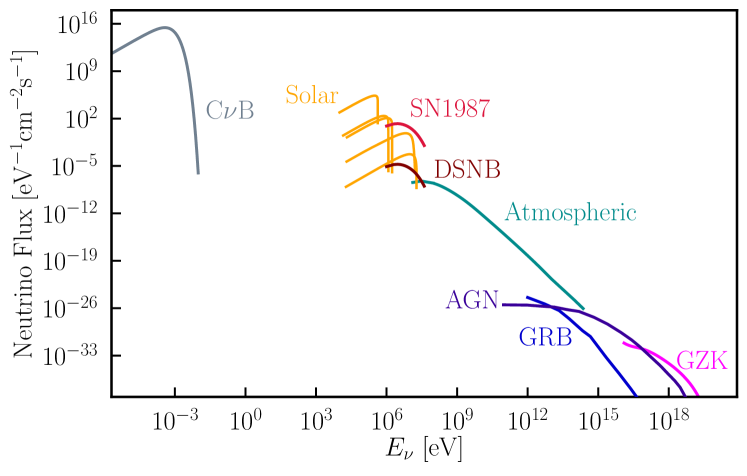
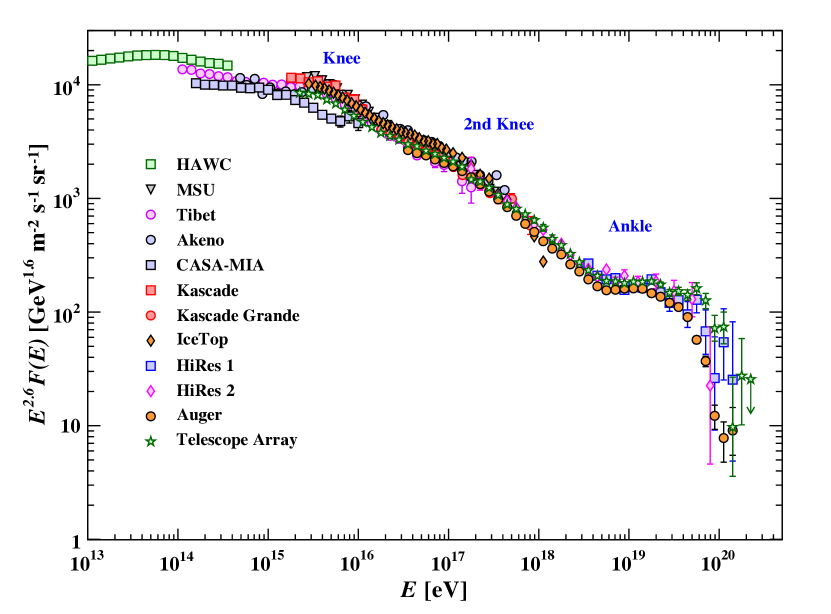
- To enable the detection of cosmogenic neutrinos, which are predicted to be produced in interactions of ultra-high-energy cosmic rays with cosmic microwave background photons.
- To support multimessenger astronomy by improving angular resolution and event rates for identifying sources of high-energy neutrinos.
- To advance the search for dark matter and precision tests of Lorentz invariance through increased sensitivity.
Proposed method
- Instrument 10 km³ of deep glacial ice at the South Pole with a sparse array of optical modules spaced up to 250 meters apart, exploiting the long photon absorption length in Antarctic ice.
- Use digital optical modules containing 31 3-inch photomultipliers to increase photocathode area, improve directional sensitivity, and reduce failure-prone components.
- Digitize and time-stamp all photomultiplier signals exceeding noise levels for online data filtering via optical fibers to shore.
- Maintain vertical string configurations anchored to the seabed with deadweights and buoyancy modules, similar to KM3NeT and Baikal-GVD.
- Integrate the new detector with existing neutrino telescopes (e.g., KM3NeT, Baikal-GVD) to enable joint studies of continuous sources and neutrino follow-ups of gravitational wave events.
- Utilize the enhanced event rate and angular resolution from longer muon tracks to identify sources at the 3σ level in the sky map.
Experimental results
Research questions
- RQ1Can a next-generation neutrino telescope with 10 km³ of instrumented volume be constructed at a cost comparable to IceCube?
- RQ2To what extent can the long photon absorption length in Antarctic ice allow for increased string spacing without degrading performance?
- RQ3What is the expected improvement in sensitivity to cosmogenic neutrinos with a 10 km³ detector compared to IceCube?
- RQ4How will the increased event rate and angular resolution enable the identification of astrophysical neutrino sources at the 3σ significance level?
- RQ5What is the potential for multimessenger astronomy and dark matter searches with a next-generation neutrino telescope?
Key findings
- The proposed detector would achieve an instrumented volume of 10 km³, representing a tenfold increase over IceCube’s sensitive volume.
- The long photon absorption length in deep Antarctic ice allows string spacing to be increased from 125 m to nearly 250 m without significant performance loss.
- The new design maintains cost-effectiveness by reducing the number of penetrators and connectors, while tripling the photocathode area per optical module.
- The improved angular resolution from longer muon tracks would enable the discovery of neutrino sources at the 3σ level in the 10-year sky map.
- A detector with five times higher sensitivity than IceCube would likely allow the observation of cosmogenic neutrinos, which are predicted to be produced in interactions of ultra-high-energy cosmic rays with cosmic microwave background photons.
- The synergy between the proposed detector and existing neutrino telescopes such as KM3NeT and Baikal-GVD is expected to enhance joint studies of continuous sources and neutrino follow-ups of gravitational wave events.
Better researchstarts right now
From reading papers to final review, dramatically reduce your research time.
No credit card · Free plan available
This review was created by AI and reviewed by human editors.