
[Paper Review] A Review of Digital Learning Environments for Teaching Natural Language Processing in K-12 Education
This paper reviews digital learning environments for teaching Natural Language Processing (NLP) in K-12 education, analyzing tools that support NLP tasks like sentiment analysis and text classification through intuitive, code-free interfaces. It identifies key gaps in accessibility for younger students, personalization, and pedagogical support, and proposes design improvements to enhance explainability, inclusivity, and age-appropriate engagement in NLP education.
Natural Language Processing (NLP) plays a significant role in our daily lives and has become an essential part of Artificial Intelligence (AI) education in K-12. As children grow up with NLP-powered applications, it is crucial to introduce NLP concepts to them, fostering their understanding of language processing, language generation, and ethical implications of AI and NLP. This paper presents a comprehensive review of digital learning environments for teaching NLP in K-12. Specifically, it explores existing digital learning tools, discusses how they support specific NLP tasks and procedures, and investigates their explainability and evaluation results in educational contexts. By examining the strengths and limitations of these tools, this literature review sheds light on the current state of NLP learning tools in K-12 education. It aims to guide future research efforts to refine existing tools, develop new ones, and explore more effective and inclusive strategies for integrating NLP into K-12 educational contexts.
Motivation & Objective
- To examine existing digital learning environments that teach NLP concepts in K-12 settings.
- To analyze how these tools support specific NLP tasks such as sentiment analysis, text classification, and part-of-speech tagging.
- To evaluate the explainability, usability, and educational effectiveness of these tools in classroom contexts.
- To identify critical gaps in current NLP education tools, particularly for younger learners and diverse student populations.
- To provide actionable design implications for future development of inclusive, age-appropriate, and pedagogically effective NLP learning environments.
Proposed method
- Conducted a comprehensive literature review of digital learning environments focused on NLP education in K-12.
- Categorized tools based on supported NLP tasks, interface design, and target grade levels.
- Evaluated tools for explainability, scaffolding, model evaluation, and deployment capabilities.
- Analyzed user studies and evaluations to assess learning outcomes and usability in educational settings.
- Identified recurring design patterns and limitations through thematic analysis of tool features and reported results.
- Synthesized findings into six key research gaps and proposed design implications for future tool development.
Experimental results
Research questions
- RQ1What types of NLP tasks are currently supported by digital learning environments in K-12 education?
- RQ2How do these tools support student understanding through explainability, visualization, and scaffolding?
- RQ3What are the major limitations in accessibility, personalization, and age-appropriateness of existing NLP learning tools?
- RQ4How do current tools evaluate student learning and model performance in educational contexts?
- RQ5What pedagogical strategies and design features are most effective for engaging K-12 students in NLP learning?
Key findings
- Most NLP learning tools focus on middle and high school students, with limited support for children under age 11.
- Existing tools often lack personalized scaffolding, resulting in suboptimal learning outcomes for diverse learners with varying skill levels.
- Evaluation metrics in tools are frequently underdeveloped, with limited support for model interpretability and student feedback.
- Few tools provide meaningful explanations of how NLP models work, reducing students’ conceptual understanding of core NLP processes.
- There is a lack of integration of real-world, culturally relevant data in learning activities, limiting student engagement and ethical awareness.
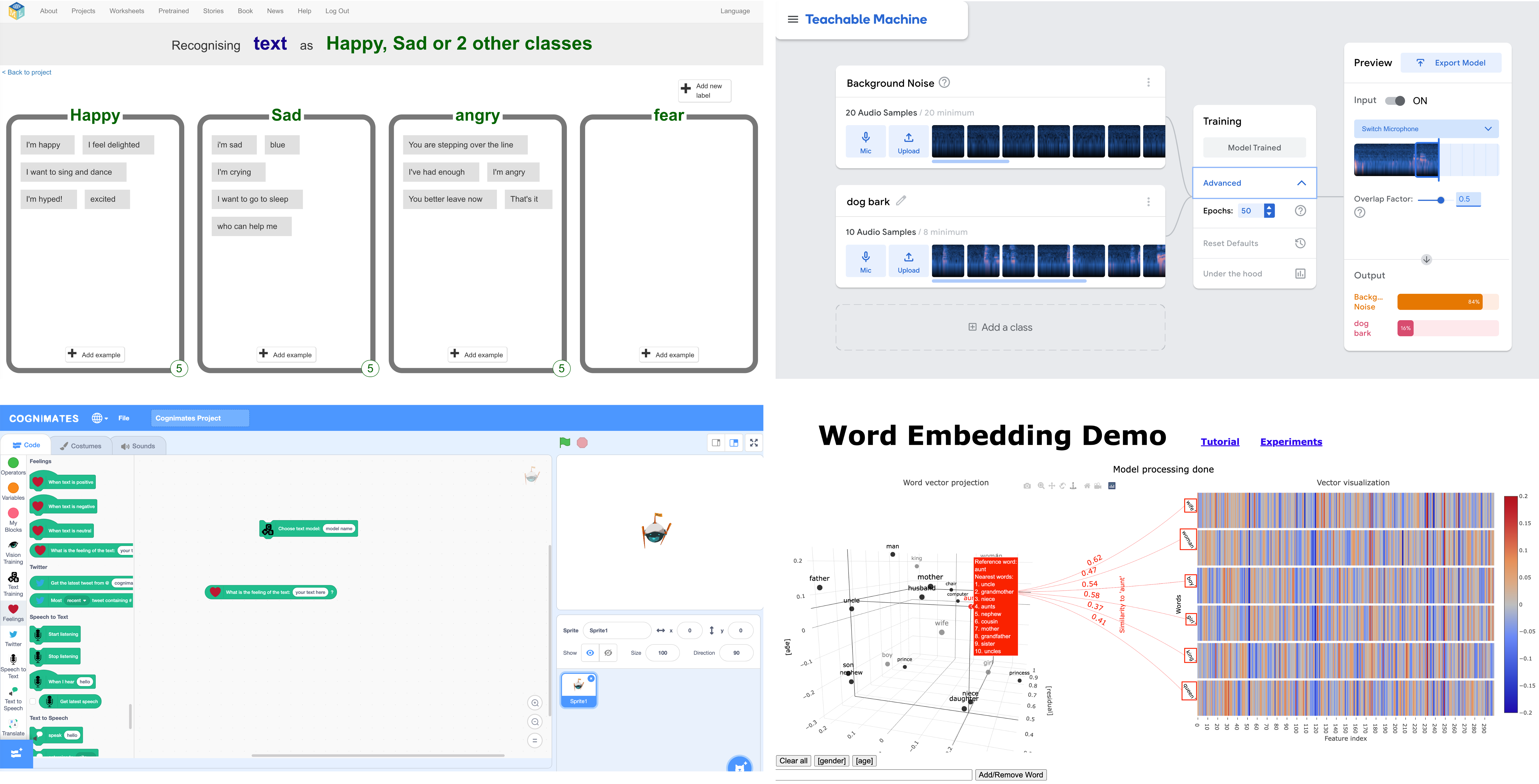
- Despite the availability of general AI tools like Teachable Machine, specialized NLP learning environments remain underdeveloped and less widely adopted in K-12 classrooms.
Better researchstarts right now
From reading papers to final review, dramatically reduce your research time.
No credit card · Free plan available
This review was created by AI and reviewed by human editors.