
[Paper Review] Airdrops: Giving Money Away Is Harder Than It Seems
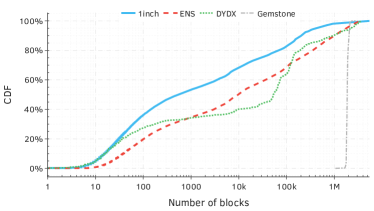
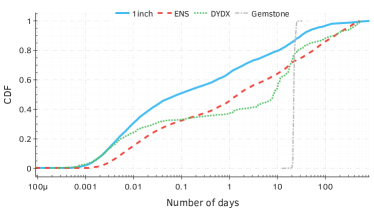
This paper analyzes the effectiveness of blockchain airdrops by examining on-chain data from four major airdrops—ENS, dYdX, 1inch, and Gemstone—revealing that up to 95% of distributed tokens are quickly sold on exchanges, indicating most benefits accrue to airdrop farmers rather than genuine users. The authors propose design guidelines to improve fairness and long-term platform engagement by targeting value-creating users and reducing speculative behavior.
Airdrops are a common strategy used by blockchain protocols to attract and grow an initial user base. Tokens are typically distributed to select users as a "reward" for engaging with the protocol, aiming to foster long-term community loyalty and sustained economic activity. Despite their prevalence, there is limited understanding of what makes an airdrop successful. This paper outlines the design space for airdrops and proposes key outcomes for an effective strategy. We analyze on-chain data from six large-scale airdrops to assess their success and find that a substantial portion of tokens is often sold off by "airdrop farmers." Based on this analysis, we highlight common pitfalls and offer guidelines for improving airdrop design.
Motivation & Objective
- To evaluate the real-world success of blockchain airdrops in achieving long-term user engagement and platform growth.
- To identify systemic flaws in airdrop design that lead to speculative behavior and reward farming.
- To propose evidence-based guidelines for designing airdrops that prioritize genuine users and sustainable economic activity.
- To quantify the extent to which airdrop proceeds are liquidated via exchanges, undermining intended community-building goals.
Proposed method
- Conducted a quantitative analysis of on-chain transaction data from four large-scale airdrops: ENS, dYdX, 1inch, and Gemstone.
- Measured token distribution patterns, transaction volume, and exchange activity pre- and post-airdrop to assess user behavior.
- Used a combination of statistical analysis and behavioral clustering to categorize airdrop recipients based on post-reward activity.
- Identified common design pitfalls such as overly permissive eligibility criteria and lack of long-term incentives.
- Proposed design principles including task-based claims, multi-round airdrops, and rewards tied to platform usage to reduce farming.
- Shared datasets and code to ensure scientific reproducibility of the empirical analysis.
Experimental results
Research questions
- RQ1To what extent do airdrops successfully attract and retain genuine, long-term users rather than speculative farmers?
- RQ2What proportion of airdropped tokens are liquidated on exchanges within a few transaction steps, and what does this imply about the airdrop's effectiveness?
- RQ3How do different airdrop design patterns (e.g., holder-based, activity-based) influence user behavior and platform sustainability?
- RQ4What are the most common design pitfalls in airdrops that lead to misallocation of tokens and reduced community value creation?
- RQ5What concrete design improvements can be made to ensure airdrops reward value-creating users and foster sustained platform engagement?
Key findings
- Up to 95% of airdropped tokens were sold on exchanges within just a couple of transfer steps, indicating rapid liquidation by recipients.
- The majority of airdrop proceeds primarily benefited airdrop farmers rather than regular or long-term users.
- There was no significant correlation between performing an airdrop and a platform’s long-term popularity relative to alternatives.
- Airdrop mechanisms that rely on simple eligibility criteria (e.g., holding specific tokens) are highly susceptible to farming and speculative behavior.
- Platforms using task-based or quest-based airdrop mechanisms, such as Linea’s, showed better engagement and longer retention of users.
- The study confirms that current detection mechanisms for airdrop farmers are insufficient, and unsupervised clustering can help identify speculative behavior patterns.
Better researchstarts right now
From reading papers to final review, dramatically reduce your research time.
No credit card · Free plan available
This review was created by AI and reviewed by human editors.