
[Paper Review] Boardwalk Empire: How Generative AI is Revolutionizing Economic Paradigms
This paper proposes that generative AI, particularly deep generative models like LLMs, is transforming economic paradigms by enabling automation, innovation, and real-time decision-making across industries—especially finance—through data generation, predictive analytics, and explainable AI. The key contribution is a framework for integrating generative AI into financial systems to enhance forecasting, compliance, and business model innovation while addressing ethical risks and policy needs.
The relentless pursuit of technological advancements has ushered in a new era where artificial intelligence (AI) is not only a powerful tool but also a critical economic driver. At the forefront of this transformation is Generative AI, which is catalyzing a paradigm shift across industries. Deep generative models, an integration of generative and deep learning techniques, excel in creating new data beyond analyzing existing ones, revolutionizing sectors from production and manufacturing to finance. By automating design, optimization, and innovation cycles, Generative AI is reshaping core industrial processes. In the financial sector, it is transforming risk assessment, trading strategies, and forecasting, demonstrating its profound impact. This paper explores the sweeping changes driven by deep learning models like Large Language Models (LLMs), highlighting their potential to foster innovative business models, disruptive technologies, and novel economic landscapes. As we stand at the threshold of an AI-driven economic era, Generative AI is emerging as a pivotal force, driving innovation, disruption, and economic evolution on a global scale.
Motivation & Objective
- To analyze the transformative impact of generative AI on economic systems, particularly in finance and industrial innovation.
- To identify key applications of deep generative models—such as LLMs, VAEs, and GANs—in automating design, risk assessment, and forecasting.
- To examine the challenges and risks associated with generative AI adoption, including bias, transparency, and regulatory gaps.
- To propose a policy framework for sovereign AI development, including national LLMs and regulatory oversight, to ensure ethical and equitable deployment.
- To explore future directions such as multimodal AI, quantum-AI integration, and the emergence of new roles like Prompt Engineers.
Proposed method
- Utilizes deep generative models including Variational Autoencoders (VAEs), Generative Adversarial Networks (GANs), and Large Language Models (LLMs) for data generation and pattern learning.
- Applies normalizing flows to model complex, multi-modal data distributions by transforming simple distributions into intricate ones.
- Integrates Explainable AI (XAI) principles to enhance transparency and interpretability in financial decision-making and regulatory compliance.
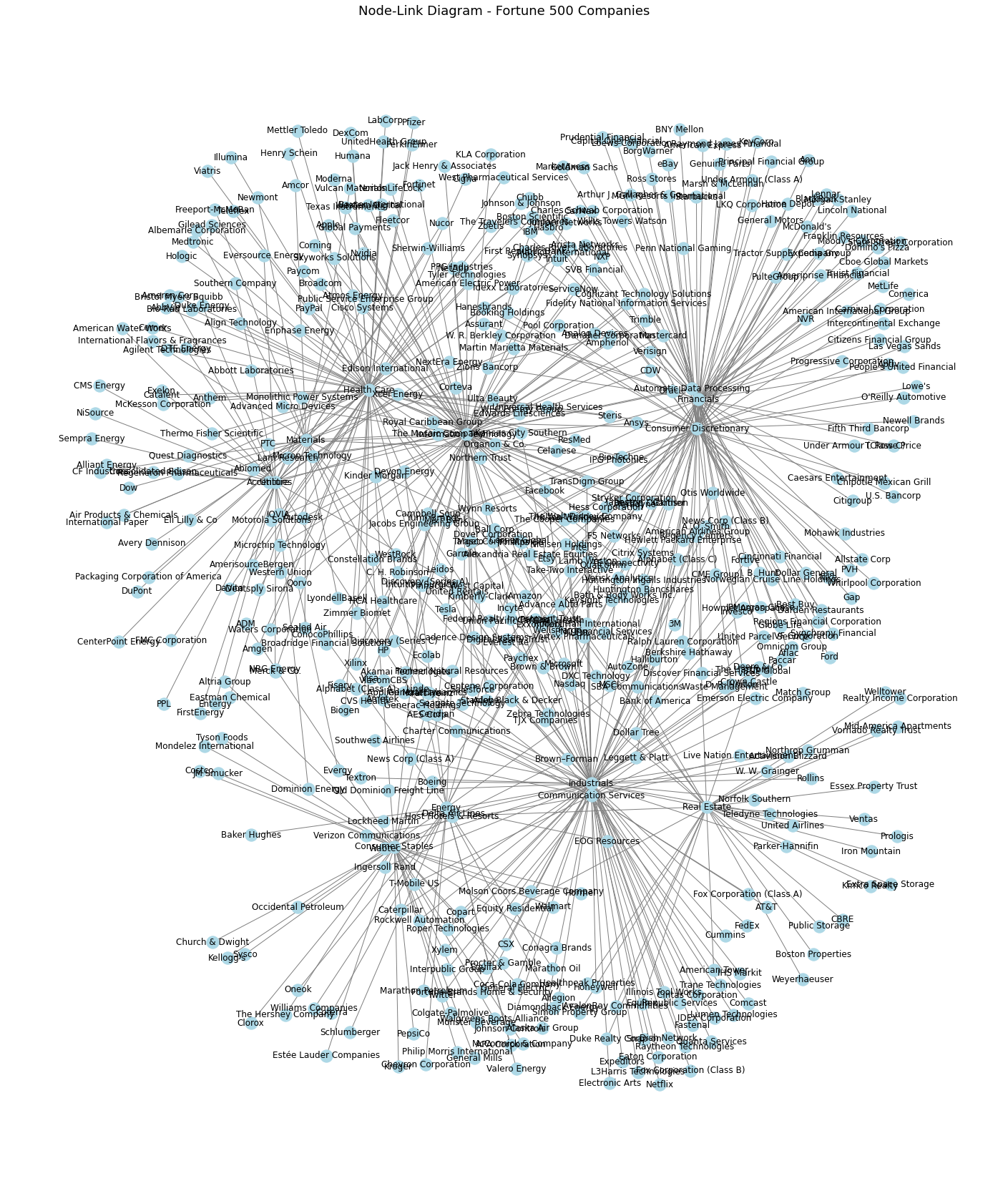
- Proposes a node-link graph visualization of Fortune 500 firms and startups to map generative AI adoption and ecosystem interdependence.
- Recommends the development of sovereign LLMs (e.g., Indian-GPT) and centralized regulatory bodies to govern foundational AI systems.
- Advocates for multimodal AI integration combining text, audio, and visual inputs for comprehensive financial analytics and simulation.

Experimental results
Research questions
- RQ1How do deep generative models like LLMs and GANs enable innovation and automation in financial and industrial processes?
- RQ2What are the key economic and operational benefits of deploying generative AI in real-time predictive analytics and risk modeling?
- RQ3How can explainable AI (XAI) frameworks improve transparency and regulatory compliance in AI-driven financial systems?
- RQ4What policy and infrastructure measures are necessary to ensure responsible, equitable, and sovereign development of generative AI at scale?
- RQ5What future roles and technologies—such as Prompt Engineers and quantum-AI integration—will shape the next generation of AI-driven economic systems?
Key findings
- Generative AI models, particularly LLMs, are enabling real-time financial forecasting and decision-making by processing and generating data at scale.
- The integration of XAI principles enhances transparency in AI-driven financial systems, supporting regulatory compliance and stakeholder trust.
- Multimodal AI systems combining text, audio, and visual inputs show strong potential for comprehensive financial analysis and simulation.
- The emergence of new roles such as Prompt Engineers indicates a structural shift in labor markets driven by generative AI's accessibility and usability.
- Sovereign LLM development—such as a proposed Indian-GPT—can enhance national control over AI infrastructure and data sovereignty.
- Quantum-AI convergence is identified as a promising frontier for solving complex financial optimization and simulation problems beyond classical computing limits.
Better researchstarts right now
From reading papers to final review, dramatically reduce your research time.
No credit card · Free plan available
This review was created by AI and reviewed by human editors.