
[Paper Review] Design optimisation of piezoelectric energy harvesters for bridge infrastructure
This paper proposes a shape optimization framework for piezoelectric energy harvesters (PEHs) on bridges using isogeometric analysis, modal order reduction, and particle swarm optimization to maximize energy output under real traffic-induced vibrations. The method identifies event-based optimal designs that outperform traditional frequency-tuning approaches, achieving up to 7.8 µJ per vehicle and 2.5 mJ/day in continuous power generation.
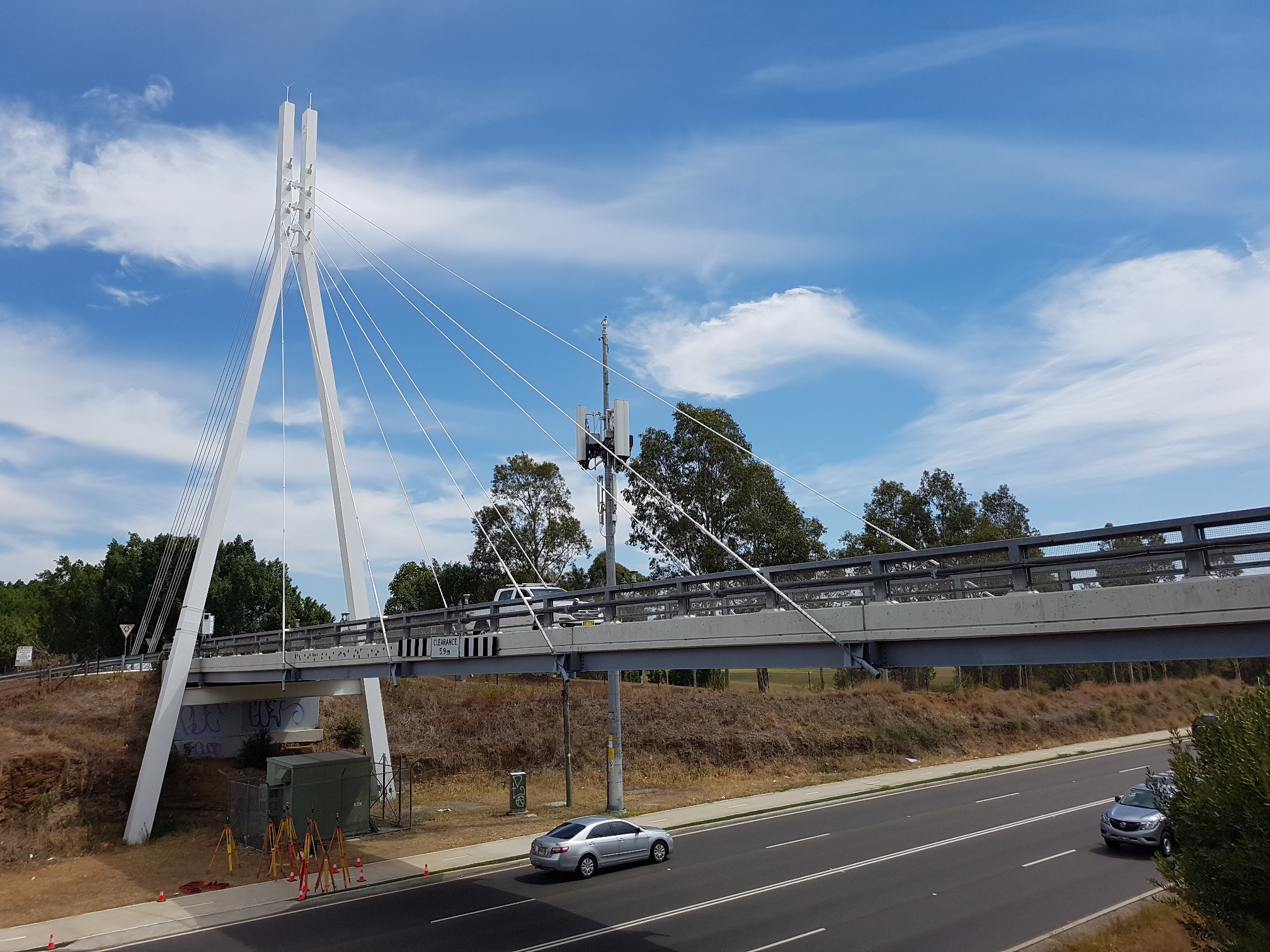
Vibrational energy harvested from the bridge excitation due to the traffic flow or the wind load can be supplied to sensors in a Structural Health Monitoring (SHM) system and help prolong its service life, reduce chemical battery waste and enable its use in remote locations. A common approach to designing a Piezoelectric Energy Harvester (PEH) consists in tuning its fundamental frequency to some target value (e.g., the fundamental frequency of a bridge). However, such approach does not answer the question if the chosen target frequency is optimal, and does not take into account the possibility to have multiple design configurations with the same fundamental frequency. In this work, we approach the problem of a PEH design optimisation in a rigorous way, using a PEH model based on the Kirchhoff-Love plate theory and Isogeometric Analysis (IGA), coupled with the Modal Order Reduction (MOR) approach and Runge-Kutta time integration method. The model is further equipped with the Particle Swarm Optimisation (PSO) algorithm that allows finding geometry which maximises energy output from a given base acceleration signal. A comprehensive study is conducted to infer the impact of a PEH geometry on its energy harvesting performance in a real-world setting by considering field health monitoring data of a large-scale cable-stayed bridge in NSW, Australia. A shape optimisation framework is developed based on acceleration events, i.e., where the level of response exceeds a certain threshold. Designs obtained in the event-based optimisation are then clustered to propose several best candidates for continuous energy generation. This work represents the first study on PEH design optimisation for real operational conditions.
Motivation & Objective
- Address the limitation of conventional PEH design that tunes resonance frequency to a bridge’s natural frequency without verifying optimality.
- Develop a rigorous, event-based optimization framework to identify PEH geometries that maximize continuous energy harvesting under real operational conditions.
- Overcome computational bottlenecks in full-order modeling by integrating modal order reduction and efficient time integration.
- Validate the framework using real field data from a large cable-stayed bridge in NSW, Australia.
- Propose multiple high-performing PEH designs through clustering of event-based optimization results for practical deployment.
Proposed method
- Formulates a PEH model based on Kirchhoff-Love plate theory and generalized Hamilton’s principle for electroelastic bodies.
- Discretizes the model using Isogeometric Analysis (IGA) for high-fidelity structural and electro-mechanical coupling.
- Applies Modal Order Reduction (MOR) to reduce computational cost while preserving dynamic response accuracy.
- Uses a Runge-Kutta time integration scheme to compute voltage output from arbitrary base acceleration signals.
- Integrates a Particle Swarm Optimization (PSO) algorithm to search for PEH geometry that maximizes harvested energy.
- Optimizes the load resistance value in parallel to further enhance energy output.
Experimental results
Research questions
- RQ1Does tuning a PEH’s fundamental frequency to a bridge’s natural frequency yield the optimal energy harvesting configuration under real traffic conditions?
- RQ2How does PEH geometry influence energy harvesting performance when subjected to diverse, real-world traffic-induced vibration events?
- RQ3Can an event-based optimization framework outperform traditional frequency-matching design strategies in terms of continuous energy generation?
- RQ4What are the most effective PEH geometries for sustained energy harvesting across different vibration modes and traffic intensities?
- RQ5How does the choice of device location on the bridge affect the optimal design and energy output?
Key findings
- The event-based optimization framework identified PEH designs that generate up to 7.8 µJ per passing vehicle, with a daily energy output of 2.5 mJ across 1000 traffic events.
- Optimal designs clustered around 2 Hz, indicating that the selected bridge location favors the first vibration mode, but this may not be the globally optimal position.
- The framework achieved higher energy output than conventional frequency-tuned designs by accounting for the full spectrum of real traffic-induced excitations.
- The PSO-optimized PEH geometries showed consistent performance across multiple event clusters, with the highest energy output recorded in cluster 6 (7.76 µJ) and the highest occurrence rate in cluster 7 (95% of the week).
- The model validation against experimental data confirmed the accuracy of the simulation framework in predicting real-world energy harvesting performance.
- The study revealed that energy harvesting performance is highly sensitive to device geometry and position, with no single design universally optimal across all vibration modes.

Better researchstarts right now
From reading papers to final review, dramatically reduce your research time.
No credit card · Free plan available
This review was created by AI and reviewed by human editors.