
[Paper Review] Evaluating LLM -- Generated Multimodal Diagnosis from Medical Images and Symptom Analysis
The paper proposes a two-step LLM evaluation paradigm combining multimodal interactions and domain-specific analysis to assess GPT-4-Vision-Preview on pathology MCQs with images, achieving about 84% accuracy and extracting insights via NER and knowledge graphs.
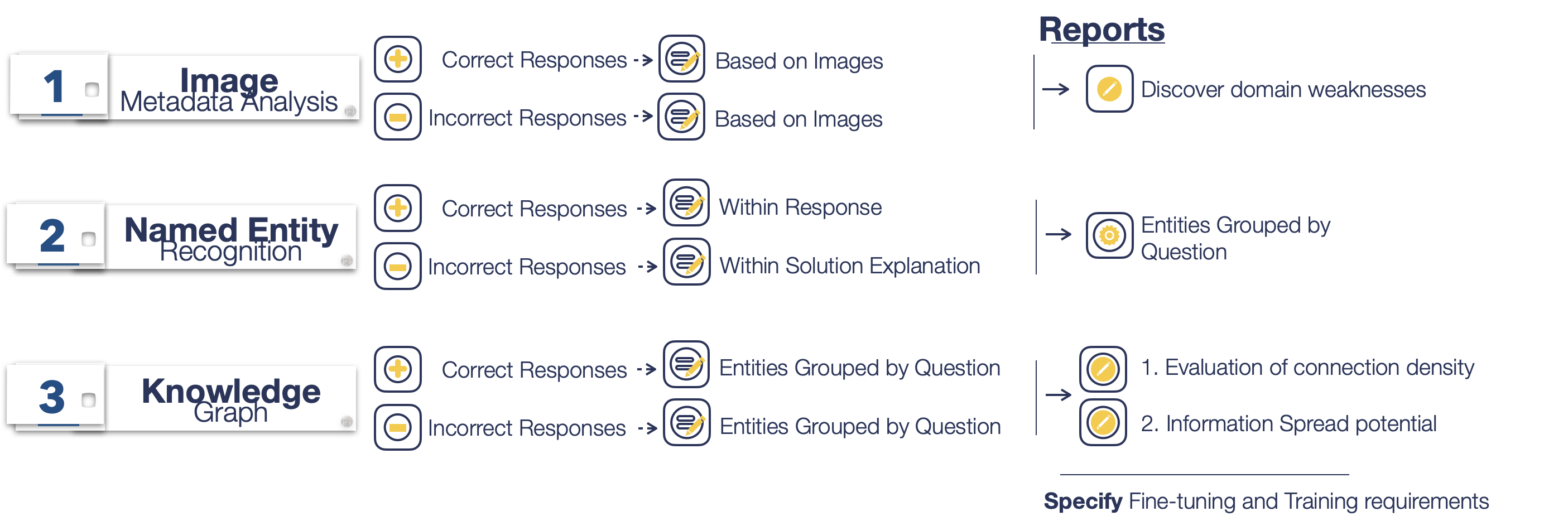
Large language models (LLMs) constitute a breakthrough state-of-the-art Artificial Intelligence technology which is rapidly evolving and promises to aid in medical diagnosis. However, the correctness and the accuracy of their returns has not yet been properly evaluated. In this work, we propose an LLM evaluation paradigm that incorporates two independent steps of a novel methodology, namely (1) multimodal LLM evaluation via structured interactions and (2) follow-up, domain-specific analysis based on data extracted via the previous interactions. Using this paradigm, (1) we evaluate the correctness and accuracy of LLM-generated medical diagnosis with publicly available multimodal multiple-choice questions(MCQs) in the domain of Pathology and (2) proceed to a systemic and comprehensive analysis of extracted results. We used GPT-4-Vision-Preview as the LLM to respond to complex, medical questions consisting of both images and text, and we explored a wide range of diseases, conditions, chemical compounds, and related entity types that are included in the vast knowledge domain of Pathology. GPT-4-Vision-Preview performed quite well, scoring approximately 84\% of correct diagnoses. Next, we further analyzed the findings of our work, following an analytical approach which included Image Metadata Analysis, Named Entity Recognition and Knowledge Graphs. Weaknesses of GPT-4-Vision-Preview were revealed on specific knowledge paths, leading to a further understanding of its shortcomings in specific areas. Our methodology and findings are not limited to the use of GPT-4-Vision-Preview, but a similar approach can be followed to evaluate the usefulness and accuracy of other LLMs and, thus, improve their use with further optimization.
Motivation & Objective
- Propose a two-step evaluation paradigm for multimodal LLMs in medicine (multimodal evaluation and domain-specific analysis).
- Assess the correctness and accuracy of LLM-generated pathology diagnoses using image-plus-text MCQs.
- Analyze results with IMA, NER, and knowledge graphs to identify weaknesses and guide fine-tuning.
- Demonstrate methodology using GPT-4-Vision-Preview on publicly available pathology MCQs.
Proposed method
- Structured multimodal interactions using image-plus-text MCQs with predefined rules of conduct.
- Prompt engineering to enforce a specific response format and concise answers.
- Data extraction including Image Metadata Analysis (IMA), Named Entity Recognition (NER), and Knowledge Graphs (KGs).
- Domain-specific analysis to derive fine-tuning requirements from correct vs incorrect responses and explanations.
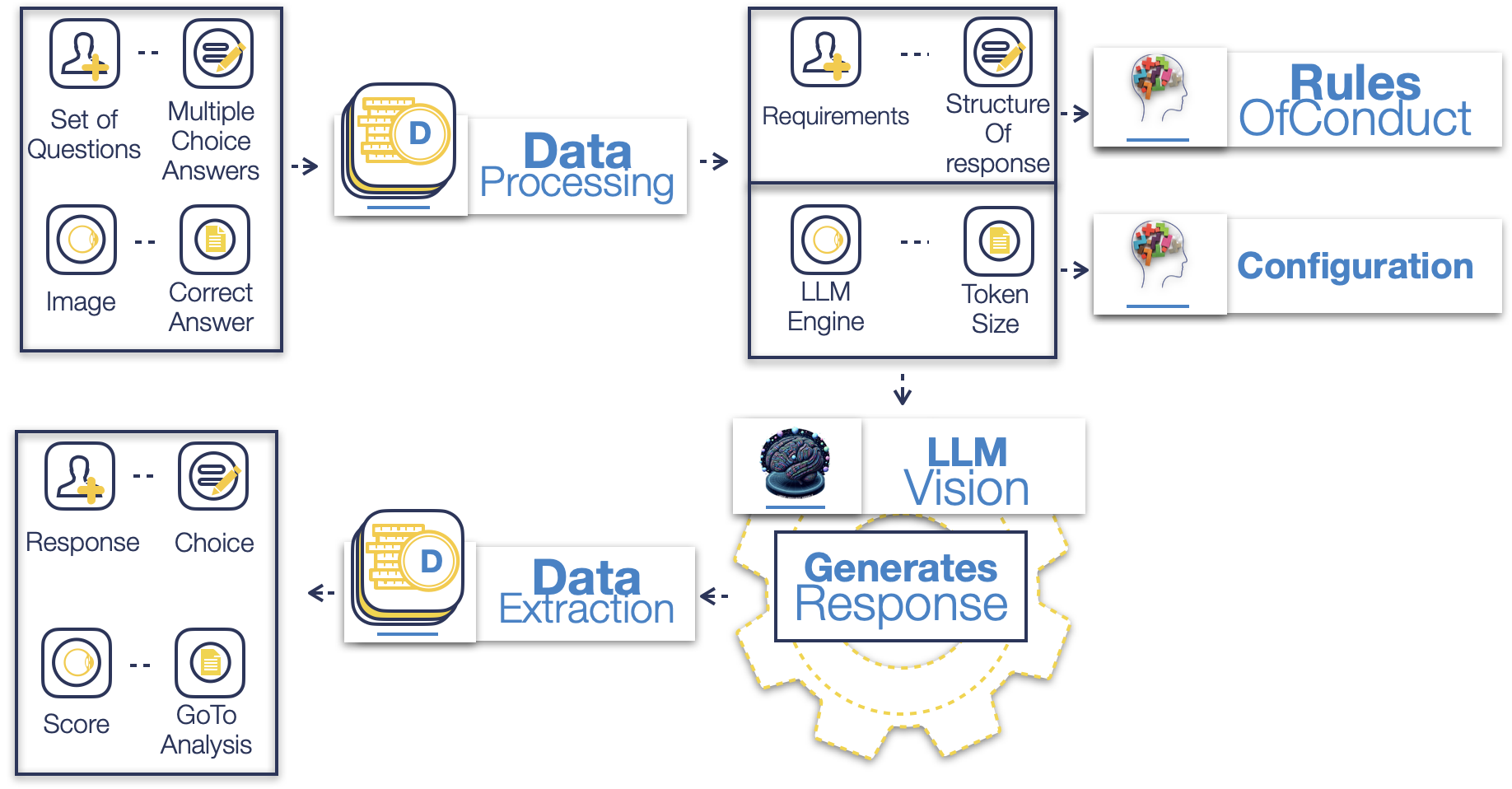
Experimental results
Research questions
- RQ1How accurate are LLMs when diagnosing from medical images combined with symptom-based text?
- RQ2What weaknesses or knowledge paths does the LLM reveal through IMA, NER, and KG analyses?
- RQ3Can the evaluation methodology guide targeted fine-tuning or retraining for domain-specific medical tasks?
- RQ4Is the approach generalizable to other LLMs beyond GPT-4-Vision-Preview?
Key findings
- GPT-4-Vision-Preview achieved ~84% correct diagnoses on multimodal pathology MCQs.
- Correct responses: 66/79; Incorrect responses: 13/79 across 79 image-question items.
- Pathology subdomains showed varying performance, e.g., General Pathology: Atherosclerosis & Thrombosis 8/10, Cell Injury 7/10, ImmunoPathology 9/10, Inflammation 6/10, Neoplasia 10/10; Organ System Pathology: Cardiovascular 9/9, DermatoPathology 9/10, Endocrine 8/10.
- IMA identified image-domain weaknesses mainly in Cardiovascular, Skin, and Endocrine images.
- NER and KG analyses revealed specific entities and knowledge-path weaknesses to target in fine-tuning.
Better researchstarts right now
From reading papers to final review, dramatically reduce your research time.
No credit card · Free plan available
This review was created by AI and reviewed by human editors.