
[Paper Review] Evaluation of ChatGPT Model for Vulnerability Detection
The paper empirically evaluates ChatGPT and GPT-3 on Java code vulnerability detection and finds they do not outperform a dummy baseline in binary or multi-label classification on a real-world CWE-focused dataset.
In this technical report, we evaluated the performance of the ChatGPT and GPT-3 models for the task of vulnerability detection in code. Our evaluation was conducted on our real-world dataset, using binary and multi-label classification tasks on CWE vulnerabilities. We decided to evaluate the model because it has shown good performance on other code-based tasks, such as solving programming challenges and understanding code at a high level. However, we found that the ChatGPT model performed no better than a dummy classifier for both binary and multi-label classification tasks for code vulnerability detection.
Motivation & Objective
- Assess whether large language models (ChatGPT and GPT-3) can detect vulnerabilities in Java code.
- Create a real-world dataset of vulnerable and patched Java functions focusing on CWE types.
- Compare model performance against a baseline and analyze prompts and prompts variants.
Proposed method
- Construct a dataset of Java functions from open GitHub repositories with known vulnerabilities and patches.
- Prepare subsets for binary (vulnerable vs. patched) and multi-label (top CWE types) classification.
- Query GPT-3 and ChatGPT via OpenAI API with prompts designed to elicit Yes/No vulnerability assessments and CWE-type labels.
- Evaluate using accuracy, precision, recall, F1, and AUC for binary, plus per-CWE metrics for multi-label tasks.
- Compare against a baseline dummy classifier and analyze prompt variations and temperature settings (set to 0).
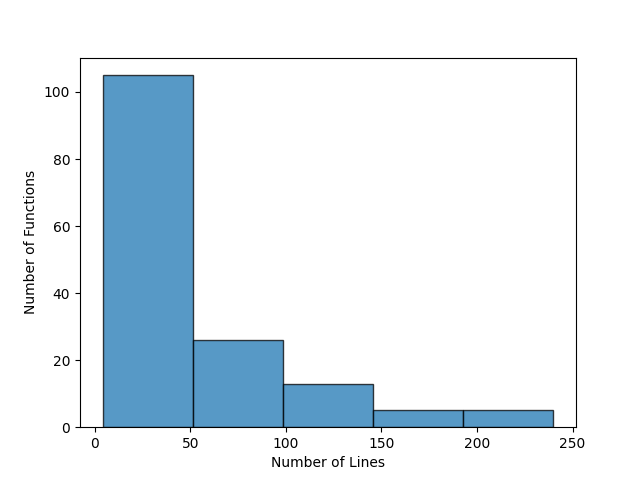
Experimental results
Research questions
- RQ1Can ChatGPT and GPT-3 reliably detect vulnerabilities in Java code?
- RQ2Do these models outperform a baseline dummy classifier on binary vulnerability detection?
- RQ3How do the models perform on multi-label CWE-type classification for the top frequent vulnerabilities?
- RQ4What is the impact of prompt design on vulnerability detection performance?
- RQ5Do chain-of-thought prompting or larger models improve results in this task?],
- RQ6key_findings':['Binary classification results show limited performance; text-davinci-003 achieves precision 0.50, recall 0.99, F1 0.67, AUC 0.51; gpt-3.5-turbo achieves precision 0.51, recall 0.80, F1 0.62, AUC 0.51; baseline remains at 0.50 across metrics.
- RQ7Overall multi-label classification on the top five CWE types yields around 38% accuracy for GPT-3 / ChatGPT variants, with macro and weighted averages typically below 0.3 for many CWE types.
- RQ8The negative (non-vulnerable) class dominates the samples, and models tend to over-predict positives, inflating false positives.
- RQ9When excluding negative examples, accuracy decreases, indicating the models struggle to correctly identify vulnerable functions without the context of non-vulnerable ones.
- RQ10Prompts exploring multiple phrasings do not yield substantial performance gains, suggesting prompt variation did not meaningfully improve results.
- RQ11An anomaly observed: ChatGPT predicted vulnerability types more accurately for fixed functions, suggesting dataset or training biases may influence labeling.
Better researchstarts right now
From reading papers to final review, dramatically reduce your research time.
No credit card · Free plan available
This review was created by AI and reviewed by human editors.