
[Paper Review] Ground-breaking Exoplanet Science with the ANDES spectrograph at the ELT
The paper outlines how ANDES on the ELT will enable transformative exoplanet studies through high-resolution transmission/emission spectroscopy and reflected-light observations, including feasibility simulations for rocky planets and disk physics.
In the past decade the study of exoplanet atmospheres at high-spectral resolution, via transmission/emission spectroscopy and cross-correlation techniques for atomic/molecular mapping, has become a powerful and consolidated methodology. The current limitation is the signal-to-noise ratio during a planetary transit. This limitation will be overcome by ANDES, an optical and near-infrared high-resolution spectrograph for the ELT. ANDES will be a powerful transformational instrument for exoplanet science. It will enable the study of giant planet atmospheres, allowing not only an exquisite determination of atmospheric composition, but also the study of isotopic compositions, dynamics and weather patterns, mapping the planetary atmospheres and probing atmospheric formation and evolution models. The unprecedented angular resolution of ANDES, will also allow us to explore the initial conditions in which planets form in proto-planetary disks. The main science case of ANDES, however, is the study of small, rocky exoplanet atmospheres, including the potential for biomarker detections, and the ability to reach this science case is driving its instrumental design. Here we discuss our simulations and the observing strategies to achieve this specific science goal. Since ANDES will be operational at the same time as NASA's JWST and ESA's ARIEL missions, it will provide enormous synergies in the characterization of planetary atmospheres at high and low spectral resolution. Moreover, ANDES will be able to probe for the first time the atmospheres of several giant and small planets in reflected light. In particular, we show how ANDES will be able to unlock the reflected light atmospheric signal of a golden sample of nearby non-transiting habitable zone earth-sized planets within a few tenths of nights, a scientific objective that no other currently approved astronomical facility will be able to reach.
Motivation & Objective
- Motivate and describe how ANDES will dramatically advance exoplanet atmosphere studies across a range of planet types.
- Define the two main observing modes and the top-level requirements driving exoplanet science with ANDES.
- Assess feasibility, observing strategies, and simulations for rocky, habitable-zone planets and proto-planetary disks.
- Highlight synergies with JWST/ARIEL and address key challenges such as stellar contamination and long-period planet signals.
Proposed method
- Describe ANDES’ two observing modes: seeing-limited high-resolution spectroscopy (R≥100,000, 0.5–1.8 μm) and AO-assisted IFU mode (R≥100,000, YJH bands).
- Explain high-dispersion transmission/emission spectroscopy and high-contrast reflected-light techniques with cross-correlation to detect atmospheric signals.
- Present simulations of key targets (e.g., TRAPPIST-1b/d, K2-18b) using petitRADTRANS models and cross-correlation analysis to assess detectability.
- Discuss the impact of telluric/stellar contamination and stellar convection on signal extraction, including 3D RHD stellar models.
- Outline how PCA/SYSREM techniques affect signal recovery for long-period planets and the need for improved data analysis approaches.
Experimental results
Research questions
- RQ1Can ANDES achieve the atmospheric characterization of rocky, temperate exoplanets via transmission spectroscopy?
- RQ2What observing strategies and exposure regimes maximize SNR for detecting atmospheric signals with ANDES in both transmission and reflected-light modes?
- RQ3How will high-contrast, high-resolution observations enable detection of reflected light from nearby non-transiting habitable-zone Earth-sized planets?
- RQ4What are the principal challenges (stellar contamination, telluric lines, and data-driven signal removal like PCA) that limit detection of long-period planets, and how can they be mitigated?
- RQ5How will ANDES synergize with JWST, ARIEL, and other facilities to advance multi-resolution exoplanet atmosphere studies?
Key findings
- ANDES’ high spectral resolution and AO-assisted IFU mode enable potential discovery of atmospheric and surface properties of a broad range of exoplanets, including rocky targets and reflected-light detection.
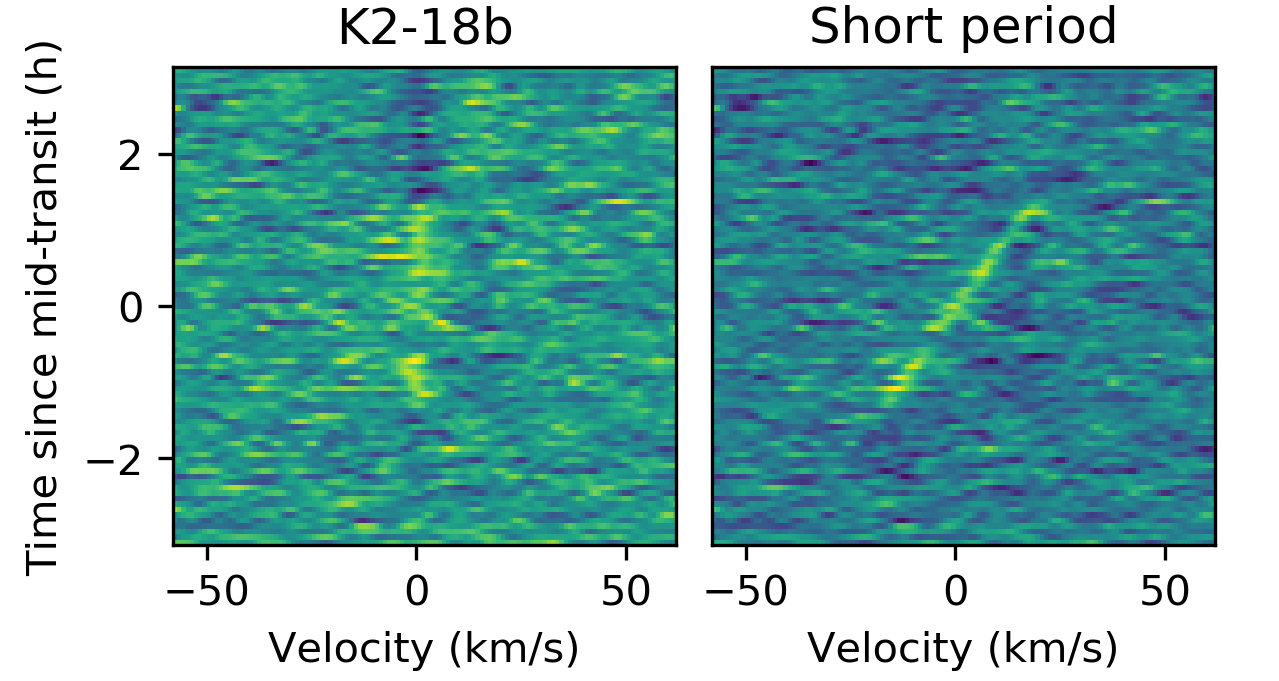
- Simulations for TRAPPIST-1b/d and K2-18b illustrate the feasibility of transmission spectroscopy with multiple transits and cross-correlation templates.
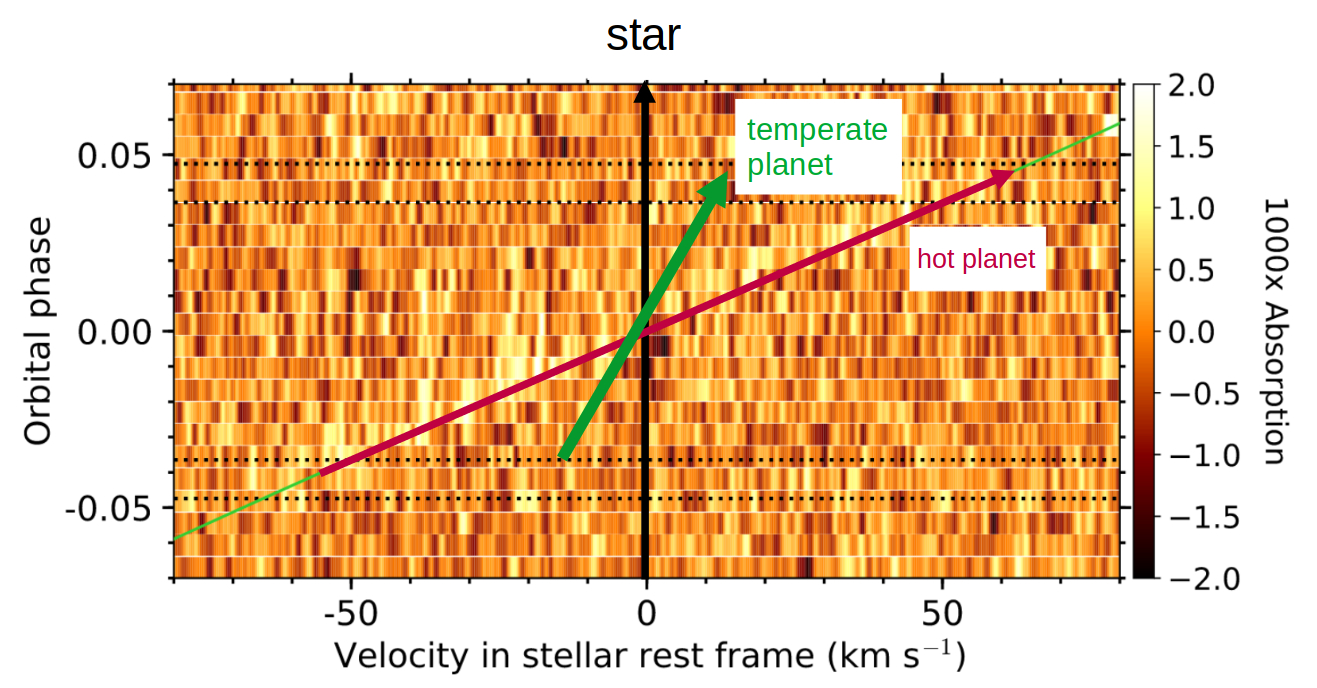
- Long-period planets pose significant challenges for current data-reduction methods (e.g., PCA/SYSREM) due to slow RV changes and quasi-static signals during transits or emissions, reducing recovered signal.
- Stellar convection and 3D radiative hydrodynamical (RHD) effects introduce time-variable stellar line features that can contaminate planetary signals, necessitating advanced stellar modeling.
- The paper anticipates strong synergies with JWST/ARIEL and asserts ANDES’ unique capability to probe reflected-light atmospheres, including potentially habitable-zone, non-transiting planets.
- FORTechnical challenges include achieving 1 m/s radial-velocity calibration (goal: 20 cm/s) and maintaining PSF stability and flat-field accuracy over observing timescales.
Better researchstarts right now
From reading papers to final review, dramatically reduce your research time.
No credit card · Free plan available
This review was created by AI and reviewed by human editors.