
[Paper Review] Introduction to Generalized Global Symmetries in QFT and Particle Physics
A pedagogical review introducing generalized (categorical) global symmetries, focusing on higher-form, higher-group, and non-invertible symmetries and their applications to QFT and particle phenomenology.
Generalized symmetries (also known as categorical symmetries) is a newly developing technique for studying quantum field theories. It has given us new insights into the structure of QFT and many new powerful tools that can be applied to the study of particle phenomenology. In these notes we give an exposition to the topic of generalized/categorical symmetries for high energy phenomenologists although the topics covered may be useful to the broader physics community. Here we describe generalized symmetries without the use of category theory and pay particular attention to the introduction of discrete symmetries and their gauging.
Motivation & Objective
- Motivate and explain generalized global (categorical) symmetries beyond ordinary 0-form symmetries.
- Develop an accessible, non-category-theory-focused pathway to higher-form, higher-group, and non-invertible symmetries.
- Show how to couple symmetries to background fields and compute ’t Hooft anomalies in this framework.
- Illustrate the action of symmetry defect operators on charged operators and on Wilson/t Hooft lines.
- Highlight implications for RG flows and phenomenological model constraints.
Proposed method
- Derive symmetry actions using conserved currents and their dual forms.
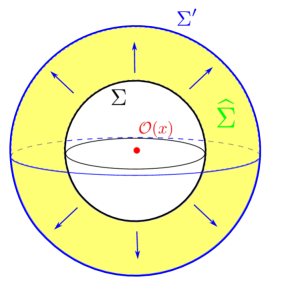
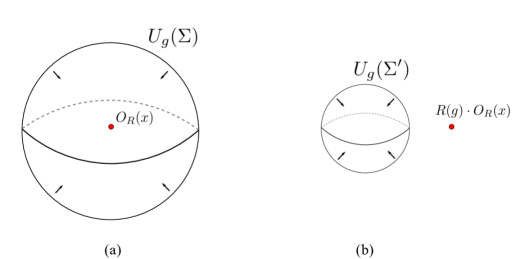
- Introduce symmetry defect operators U_g defined on (d-1)-, (d-2)-dimensional manifolds and prove their topological nature.
- Compute their action on charged operators via Ward identities and linking arguments.
- Couple currents to background gauge fields to study gauging and anomalies.
- Exemplify with 1-form U(1) Maxwell theory to illustrate electric/magnetic symmetry and Wilson/t Hooft lines.
- Discuss discrete symmetries and background fields with applications to center symmetry.
Experimental results
Research questions
- RQ1How do 1-form and higher-form symmetries generalize conventional global symmetries in QFT?
- RQ2What are the construction, properties, and physical implications of symmetry defect operators for higher-form and non-invertible symmetries?
- RQ3How do background gauge fields and ’t Hooft anomalies constrain gauging of generalized global symmetries?
- RQ4What is the role of higher groups and non-invertible symmetries in RG flows and phenomenological models?
- RQ5How do discrete symmetries and center symmetries manifest in non-abelian gauge theories within this framework?
Key findings
- Generalized global symmetries can be realized as higher-form symmetries with conserved higher-form currents.
- Symmetry defect operators implement symmetry actions and are topological, encoding group structure via OPEs and linking arguments.
- 1-form electric and magnetic symmetries in Maxwell theory exhibit a mixed ’t Hooft anomaly that obstructs gauging both simultaneously.
- Coupling to background 2-form gauge fields provides a practical method to analyze gauging and anomalies of higher-form symmetries.
- The framework extends to higher-group symmetries and non-invertible symmetries, with applications to RG flow constraints in phenomenological models.
Better researchstarts right now
From reading papers to final review, dramatically reduce your research time.
No credit card · Free plan available
This review was created by AI and reviewed by human editors.