
[Paper Review] Investigating Mutual Coupling in the Hydrogen Epoch of Reionization Array and Mitigating its Effects on the 21-cm Power Spectrum
This paper investigates mutual coupling in the Hydrogen Epoch of Reionization Array (HERA) using semi-analytic simulations and fringe-rate filtering to mitigate its effects on the 21-cm power spectrum. It finds that simulated coupling features qualitatively match data but are about an order of magnitude fainter, indicating unmodeled coupling mechanisms; fringe-rate filtering reduces coupling by ~100×, yet significant contamination remains, necessitating advanced mitigation strategies for EoR detection.
Interferometric experiments designed to detect the highly redshifted 21-cm signal from neutral hydrogen are producing increasingly stringent constraints on the 21-cm power spectrum, but some k-modes remain systematics-dominated. Mutual coupling is a major systematic that must be overcome in order to detect the 21-cm signal, and simulations that reproduce effects seen in the data can guide strategies for mitigating mutual coupling. In this paper, we analyse 12 nights of data from the Hydrogen Epoch of Reionization Array and compare the data against simulations that include a computationally efficient and physically motivated semi-analytic treatment of mutual coupling. We find that simulated coupling features qualitatively agree with coupling features in the data; however, coupling features in the data are brighter than the simulated features, indicating the presence of additional coupling mechanisms not captured by our model. We explore the use of fringe-rate filters as mutual coupling mitigation tools and use our simulations to investigate the effects of mutual coupling on a simulated cosmological 21-cm power spectrum in a "worst case" scenario where the foregrounds are particularly bright. We find that mutual coupling contaminates a large portion of the "EoR Window", and the contamination is several orders-of-magnitude larger than our simulated cosmic signal across a wide range of cosmological Fourier modes. While our fiducial fringe-rate filtering strategy reduces mutual coupling by roughly a factor of 100 in power, a non-negligible amount of coupling cannot be excised with fringe-rate filters, so more sophisticated mitigation strategies are required.
Motivation & Objective
- To understand the impact of mutual coupling on 21-cm power spectrum measurements in the HERA experiment.
- To evaluate the effectiveness of fringe-rate filtering in mitigating mutual coupling effects.
- To identify discrepancies between simulated and observed coupling features to reveal missing physical mechanisms.
- To assess the robustness of current mitigation techniques under worst-case foreground conditions.
- To guide future hardware and software solutions for improved EoR signal detection.
Proposed method
- Employed a computationally efficient, first-order semi-analytic model of mutual coupling based on element response functions and array geometry.
- Used visibility simulations via matvis and hera_sim to generate synthetic data with modeled coupling effects.
- Applied fringe-rate filtering to visibility data to suppress time-varying coupling features.
- Compared simulated coupling features with real HERA data from 12 observation nights to validate model fidelity.
- Conducted power spectrum estimation using hera_pspec tools on filtered and unfiltered data to quantify contamination levels.
- Used LST-binned calibration and inpainting techniques to handle data gaps and improve dynamic range.
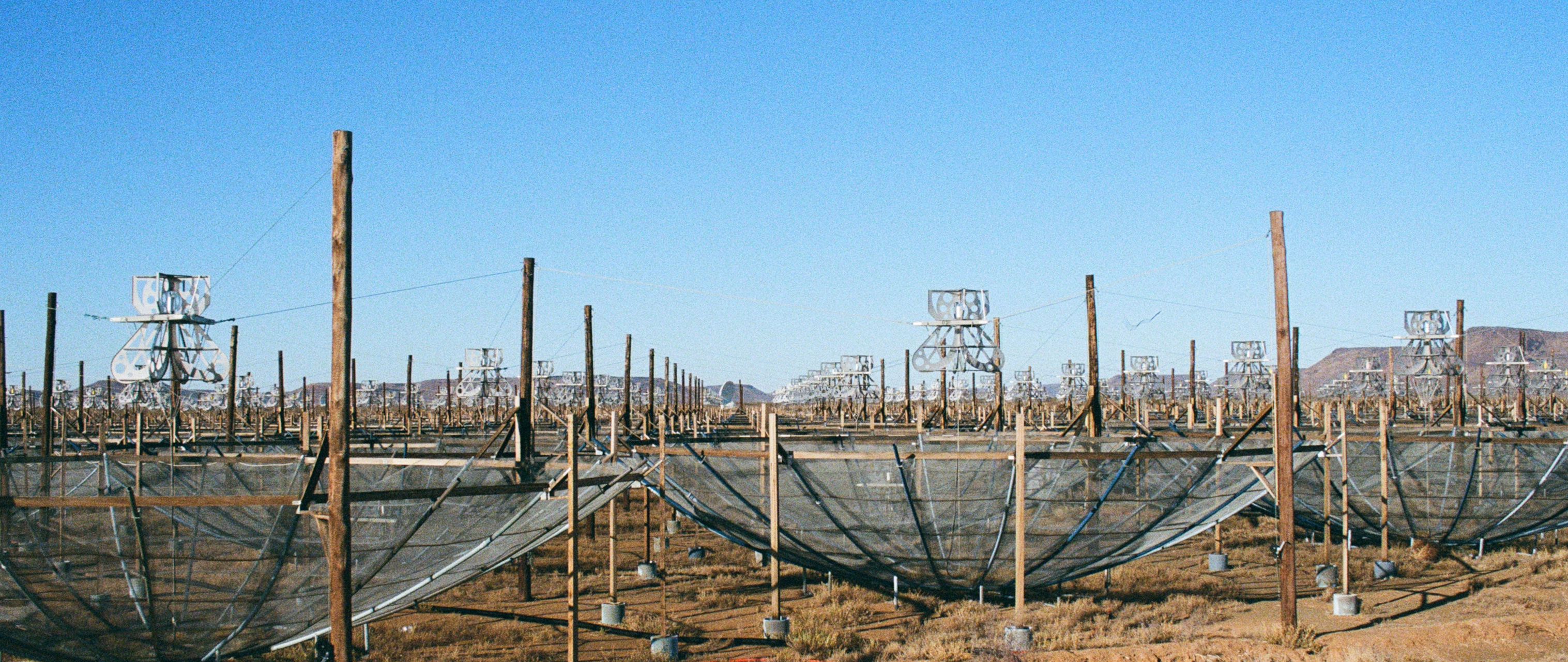
Experimental results
Research questions
- RQ1How well do first-order semi-analytic simulations reproduce observed mutual coupling features in HERA data?
- RQ2To what extent can fringe-rate filtering suppress mutual coupling in the 21-cm power spectrum?
- RQ3What fraction of coupling contamination remains after fringe-rate filtering, and where is it most severe?
- RQ4Why are observed coupling features significantly brighter than simulated ones, and what mechanisms might explain the discrepancy?
- RQ5How does mutual coupling affect the EoR window under extreme foreground conditions?
Key findings
- Simulated mutual coupling features qualitatively match observed features in HERA data but are approximately an order of magnitude fainter, indicating missing physical coupling mechanisms in the model.
- Fringe-rate filtering reduces mutual coupling power by roughly a factor of 100, significantly improving dynamic range but leaving substantial residual contamination.
- Mutual coupling contaminates a large portion of the EoR window, with power levels several orders of magnitude above the expected cosmological 21-cm signal across a wide range of k-modes.
- In a worst-case scenario with bright foregrounds, mutual coupling dominates the power spectrum across most of the EoR window, severely limiting sensitivity.
- The discrepancy between simulated and observed coupling suggests that higher-order or non-local coupling effects are not captured by the first-order model.
- First-order coupling simulations provide a reliable baseline for testing mitigation techniques without requiring full electromagnetic simulations.
Better researchstarts right now
From reading papers to final review, dramatically reduce your research time.
No credit card · Free plan available
This review was created by AI and reviewed by human editors.