
[Paper Review] Mack's estimator motivated by large exposure asymptotics in a compound Poisson setting
This paper demonstrates that Mack's chain ladder predictor and its estimator of conditional mean squared error of prediction emerge naturally from a compound Poisson model in the large exposure limit, even though the model is incompatible with Mack's original distribution-free assumptions. The key contribution is that large exposure asymptotics justify the use of Mack’s widely adopted estimators in classical insurance loss models without relying on the restrictive distribution-free framework.
The distribution-free chain ladder of Mack justified the use of the chain ladder predictor and enabled Mack to derive an estimator of conditional mean squared error of prediction for the chain ladder predictor. Classical insurance loss models, i.e. of compound Poisson type, are not consistent with Mack's distribution-free chain ladder. However, for a sequence of compound Poisson loss models indexed by exposure (e.g. number of contracts), we show that the chain ladder predictor and Mack's estimator of conditional mean squared error of prediction can be derived by considering large exposure asymptotics. Hence, quantifying chain ladder prediction uncertainty can be done with Mack's estimator without relying on the validity of the model assumptions of the distribution-free chain ladder.
Motivation & Objective
- To reconcile Mack’s distribution-free chain ladder estimator with classical compound Poisson loss models, which are incompatible under standard assumptions.
- To show that the chain ladder predictor and its mean squared error estimator arise as asymptotic limits when exposure (e.g. number of contracts) tends to infinity.
- To provide a theoretical foundation for the robustness of Mack’s estimator by deriving it from a more realistic, parametric model.
- To resolve long-standing debates about the statistical validity of Mack’s estimator by grounding it in a well-defined asymptotic regime.
Proposed method
- The authors analyze a compound Poisson model where incremental claims in each cell of a run-off triangle are modeled as independent compound Poisson processes with common claim size distribution and finite variance.
- They consider a sequence of models indexed by exposure α, representing the number of contracts, and study the asymptotic behavior as α → ∞.
- Using weak convergence and Slutsky’s theorem, they derive the limiting distribution of the chain ladder predictor and its prediction error estimator.
- The analysis relies on martingale central limit theorems and renewal process approximations to handle the counting process structure of claim arrivals.
- Key components include the use of conditional expectations, asymptotic normality of scaled deviations, and the decomposition of prediction error into process and parameter estimation components.
- The derivation leverages the convergence of empirical moments and the asymptotic independence of key stochastic components under large exposure.
Experimental results
Research questions
- RQ1Can Mack’s chain ladder predictor and its mean squared error estimator be derived from a classical compound Poisson loss model under large exposure asymptotics?
- RQ2Does the asymptotic behavior of a compound Poisson model with increasing exposure yield the same estimators as Mack’s distribution-free framework?
- RQ3Is the conditional mean squared error estimator of Mack justified in parametric models that violate the distribution-free assumptions of his original model?
- RQ4What is the limiting distribution of the chain ladder predictor and its prediction error under large exposure in a compound Poisson setting?
- RQ5Can the robustness of Mack’s estimator be explained through asymptotic theory rather than model-specific assumptions?
Key findings
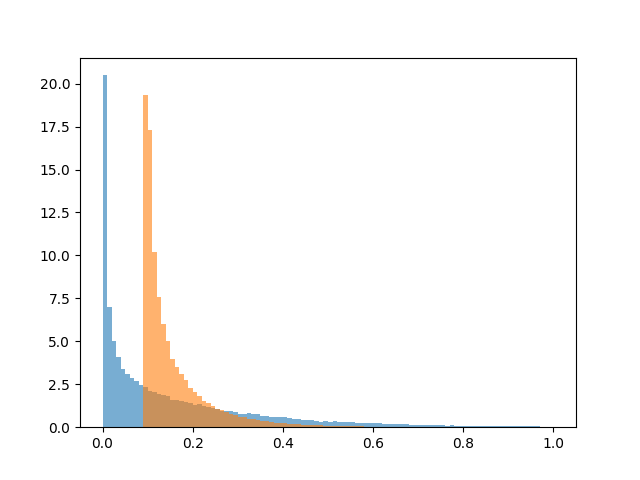
- The chain ladder predictor and Mack’s estimator of conditional mean squared error of prediction emerge as the large exposure limit of a compound Poisson model, even though the model violates Mack’s distribution-free assumptions.
- As exposure α → ∞, the scaled prediction error converges in distribution to a normal random variable with mean zero and variance determined by claim size and development pattern parameters.
- The estimator of the parameter estimation error component in Mack’s mean squared error formula is asymptotically valid under the compound Poisson model, justifying its use in classical loss reserving.
- The limiting distribution of the prediction error involves a chi-squared component due to the asymptotic normality of the parameter estimator, confirming the structure of Mack’s estimator.
- The results hold even when the claim count process is not Poisson, as long as the renewal process approximation holds and claim sizes have finite second moments.
- The theoretical justification provided by large exposure asymptotics supports the continued use of Mack’s estimator in practice, independent of the validity of the distribution-free model assumptions.
Better researchstarts right now
From reading papers to final review, dramatically reduce your research time.
No credit card · Free plan available
This review was created by AI and reviewed by human editors.