
[Paper Review] NFT Bubbles
This paper uses blockchain-tracked NFT transaction data to study retail investor behavior during speculative bubbles, finding that agent-level characteristics—especially investor sophistication—significantly predict bubble formation and crashes. It demonstrates that sophisticated investors outperform others and that their presence reduces crash risk, while wash trading and low liquidity increase it, offering strong evidence for the role of informed retail traders in market stability.
By investigating nonfungible tokens (NFTs), we provide the first systematic study of retail investor behavior through asset bubbles. Given that NFTs are recorded in public blockchains, we are able to track investor behavior over time, leading to the identification of numerous price run-ups and crashes. Our study reveals that agent-level variables, such as investor sophistication, heterogeneity, and wash trading, in addition to aggregate variables, such as volatility, price acceleration, and turnover, significantly predict bubble formation and price crashes. We find that sophisticated investors consistently outperform others and exhibit characteristics consistent with superior information and skills, supporting the narrative surrounding asset pricing bubbles.
Motivation & Objective
- To investigate how individual retail investor behavior influences the formation and bursting of asset price bubbles in the NFT market.
- To determine whether agent-level variables such as investor sophistication and wash trading can predict bubble dynamics more effectively than aggregate market variables.
- To assess the economic value of incorporating individual investor behavior into bubble prediction models.
- To examine whether the presence of sophisticated investors mitigates crash risk and enhances post-run-up returns.
Proposed method
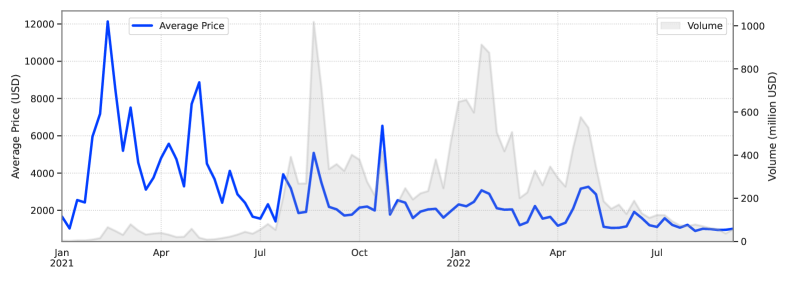
- The study constructs a representative dataset of 1,000 most traded NFT collections on OpenSea from January 2021 to September 2022, covering 15 million transactions and $18B+ in volume.
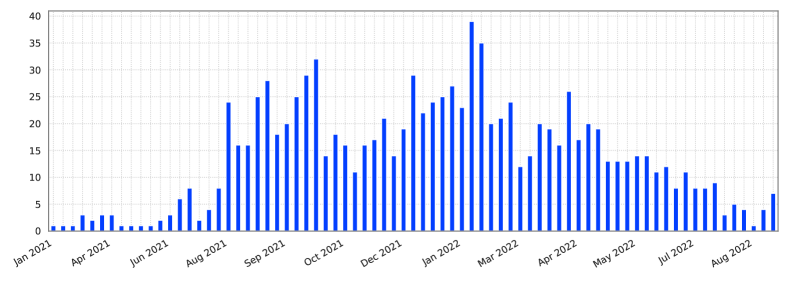
- It identifies price run-up and crash events using a high-frequency methodology adapted from Greenwood et al. (2019), detecting around 1,000 run-ups, half of which result in crashes.
- The authors estimate regression models combining market-level variables (volatility, price acceleration, turnover) with agent-level variables (investor sophistication, wash trading, heterogeneity) to predict crash likelihood.
- An out-of-sample trading strategy is implemented using predictions from models trained on 2021 data and tested on 2022 data, with portfolio returns computed based on average hourly prices.
- The study conducts robustness checks by excluding wash trades and re-estimating models, confirming that wash trading adds minimal noise and does not distort results.
- The economic value of predictions is evaluated via cumulative returns of long/short portfolios based on predicted crash probabilities, comparing models with and without agent-level predictors.
Experimental results
Research questions
- RQ1Can agent-level investor characteristics such as sophistication and wash trading predict the formation and bursting of NFT price bubbles?
- RQ2To what extent do sophisticated investors outperform others during bubble run-ups and crashes?
- RQ3Does the presence of sophisticated investors reduce the likelihood of a crash and improve post-run-up returns?
- RQ4How does the inclusion of agent-level variables improve the predictive power of bubble models compared to market-level variables alone?
Key findings
- High volatility, price acceleration, and low turnover are strong predictors of NFT price crashes, with volatility and acceleration increasing crash likelihood and turnover decreasing it.
- Sophisticated investors consistently outperform others, exhibiting characteristics of superior information and skills, supporting the narrative of informed retail participation in bubbles.
- A greater presence of sophisticated agents during run-ups significantly reduces crash risk and increases ex-post positive returns, while low investor count and wash trading increase crash risk and illiquidity.
- Out-of-sample trading strategies using agent-level variables generate economically significant profits: 50 ETH in predicted non-crashes and 164 ETH in predicted crashes, compared to 19 ETH and 133 ETH when using only market-level variables.
- Robustness checks confirm that wash trading contributes only minimal noise to the dataset and does not distort the main findings.
- The integration of agent-level variables into prediction models significantly enhances the economic value of crash forecasts, demonstrating their practical relevance for risk management and trading.
Better researchstarts right now
From reading papers to final review, dramatically reduce your research time.
No credit card · Free plan available
This review was created by AI and reviewed by human editors.