
[Paper Review] Observational signature of Lorentz violation in Kalb-Ramond field model and Bumblebee model: A comprehensive comparative study
This study compares Lorentz-violating black holes in the Kalb-Ramond (KR) and Bumblebee (BM) models through observational signatures: accretion, quasinormal modes (QNMs), Hawking radiation, and weak gravitational lensing. It finds that KR black holes exhibit higher-frequency, faster-decaying gravitational waves, brighter photon rings, enhanced Hawking radiation, and reduced lensing deflection compared to BM and Schwarzschild black holes, enabling clear observational differentiation between the two models via astrophysical data.
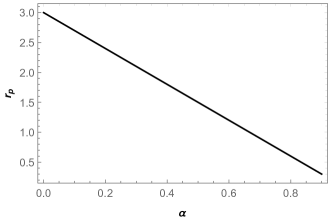
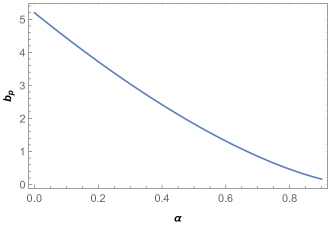
This article is devoted to the comparative study of the effects of the Lorentz symmetry violation (LV) arising in Kalb-Ramond (KR) and Bumblebee (BM) field models. We study optical appearance with accretion, Quasinormal modes, ringdown waveforms, Hawking radiation, and weak gravitational lensing. The horizon radius, photon radius, and the critical impact parameter for KR BHs decrease with the LV parameter $\a$. In contrast, they remain independent of the BM parameter $\b$ and have values the same as those for \s BH. We find that a KR BH is brighter than a \s or BM BH for static and infalling accretion. The BM BH, on the other hand, is brighter than a \s BH when the accretion is static but becomes darker for an infalling accretion. Our investigation into quasinormal modes (QNMs) and ringdown waveforms provides deeper insight into the difference in observational imprints of LV parameters. It reveals that GWs emitted by KR BHs have larger frequencies and decay faster than those emitted by \s or BM BHs for scalar and electromagnetic perturbations. We then study the greybody factor (GF) and power emitted for both BHs. The Hawking temperature is higher for a KR BM and lower for a BM BH than a \s BH. It also reveals that the transmission probability decreases with $\a$ and $\b$. A comparison of GFs for KR and BM BHs reveals that the transmission probability is higher for BM BH. We also study the effect of LV on the power emitted in the form of Hawking radiation. Power received by an asymptotic observer is larger for a KR BH. We obtain higher-order corrections in the deflection angle and graphically illustrate the impact of $\a$ and $\b$. We observe that a light ray gets deflected most from its path when passing by a \s BH, and the deflection is least when it passes by a KR BH. Our study conclusively shows that we can differentiate between KR and BM BHs based on astrophysical observations.
Motivation & Objective
- To investigate and compare the observational imprints of Lorentz symmetry violation (LV) in Kalb-Ramond (KR) and Bumblebee (BM) black hole models.
- To determine how LV parameters α (KR) and β (BM) affect key astrophysical observables such as shadow size, accretion brightness, quasinormal modes, Hawking radiation, and weak gravitational lensing.
- To establish whether astrophysical observations can distinguish between KR and BM black holes based on measurable signatures.
- To analyze the impact of LV on gravitational wave emission, greybody factors, and energy flux in Hawking radiation.
Proposed method
- Employed the 6th-order Padé averaged WKB method to compute quasinormal modes (QNMs) for scalar and electromagnetic perturbations of KR and BM black holes.
- Reduced the Klein-Gordon and Maxwell equations to Schrödinger-like form with effective potentials to extract QNM frequencies and decay rates.
- Calculated greybody factors (GFs) and power spectra of Hawking radiation using transmission probabilities, accounting for redshift and potential barriers.
- Applied the Gauss-Bonnet theorem to compute higher-order corrections to the weak gravitational lensing deflection angle for KR and BM black holes.
- Simulated optical appearance with both static and infalling accretion flows, analyzing intensity profiles and photon ring brightness as functions of impact parameter.
- Used analytical and numerical techniques to compare shadow radii, critical impact parameters, and deflection angles across KR, BM, and Schwarzschild black holes.
Experimental results
Research questions
- RQ1How does the Lorentz-violating parameter α in the Kalb-Ramond model affect the shadow size, photon ring intensity, and critical impact parameter of a black hole?
- RQ2How does the Lorentz-violating parameter β in the Bumblebee model influence accretion luminosity, quasinormal mode frequencies, and gravitational lensing deflection compared to Schwarzschild and KR black holes?
- RQ3What are the differences in gravitational wave emission—specifically frequency and decay rate—between KR, BM, and Schwarzschild black holes under scalar and electromagnetic perturbations?
- RQ4How does Lorentz violation affect the Hawking temperature, greybody factor, and total power emitted in Hawking radiation for KR and BM black holes?
- RQ5Can weak gravitational lensing observations distinguish between KR and BM black holes based on deflection angle corrections?
Key findings
- The horizon radius, photon sphere radius, and critical impact parameter for Kalb-Ramond black holes decrease with increasing Lorentz-violating parameter α, while they remain unchanged for Bumblebee black holes compared to Schwarzschild.
- For both static and infalling accretion, the observed intensity peaks at the critical impact parameter; KR black holes are brighter than both Schwarzschild and BM black holes under these conditions.
- Gravitational waves from KR black holes have higher frequencies and decay faster than those from Schwarzschild or BM black holes for both scalar and electromagnetic perturbations.
- For Bumblebee black holes, gravitational waves have lower frequency and slower decay than Schwarzschild for scalar perturbations, but higher frequency for electromagnetic perturbations.
- The Hawking temperature increases with α (KR) but decreases with β (BM), and the power emitted in Hawking radiation is higher for KR black holes than for BM or Schwarzschild black holes.
- The deflection angle in weak gravitational lensing is smallest for KR black holes and largest for Schwarzschild black holes, with BM black holes showing intermediate deflection, enabling observational distinction between the models.
Better researchstarts right now
From reading papers to final review, dramatically reduce your research time.
No credit card · Free plan available
This review was created by AI and reviewed by human editors.