
[Paper Review] Predicting Individualized Effects of Internet-Based Treatment for Genito-Pelvic Pain/Penetration Disorder: Development and Internal Validation of a Multivariable Decision Tree Model
This study developed and internally validated a multivariable decision tree model to predict individualized treatment effects of an internet-based intervention for Genito-Pelvic Pain/Penetration Disorder (GPPPD). The model identifies joint dyadic coping as the key predictor: patients with high baseline dyadic coping showed large treatment effects (Cohen’s d = 1.00), while those with low coping showed no significant benefit (d = 0.12), highlighting a critical subgroup for targeted treatment allocation.
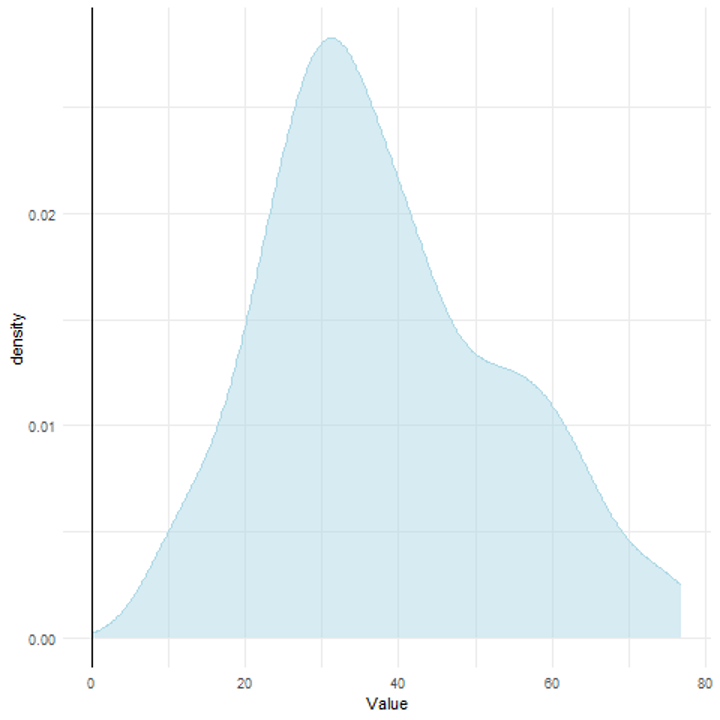
Genito-Pelvic Pain/Penetration-Disorder (GPPPD) is a common disorder but rarely treated in routine care. Previous research documents that GPPPD symptoms can be treated effectively using internet-based psychological interventions. However, non-response remains common for all state-of-the-art treatments and it is unclear which patient groups are expected to benefit most from an internet-based intervention. Multivariable prediction models are increasingly used to identify predictors of heterogeneous treatment effects, and to allocate treatments with the greatest expected benefits. In this study, we developed and internally validated a multivariable decision tree model that predicts effects of an internet-based treatment on a multidimensional composite score of GPPPD symptoms. Data of a randomized controlled trial comparing the internet-based intervention to a waitlist control group (N =200) was used to develop a decision tree model using model-based recursive partitioning. Model performance was assessed by examining the apparent and bootstrap bias-corrected performance. The final pruned decision tree consisted of one splitting variable, joint dyadic coping, based on which two response clusters emerged. No effect was found for patients with low dyadic coping ($n$=33; $d$=0.12; 95% CI: -0.57-0.80), while large effects ($d$=1.00; 95%CI: 0.68-1.32; $n$=167) are predicted for those with high dyadic coping at baseline. The bootstrap-bias-corrected performance of the model was $R^2$=27.74% (RMSE=13.22).
Motivation & Objective
- To address the high rate of non-response in internet-based treatments for GPPPD by identifying patient subgroups most likely to benefit.
- To develop a multivariable prediction model that accounts for heterogeneous treatment effects in GPPPD using baseline patient characteristics.
- To improve clinical decision-making by enabling personalized treatment assignment based on individual predictors.
- To internally validate the model’s predictive performance using resampling techniques to correct for overfitting.
- To inform future external validation in independent trials for clinical implementation.
Proposed method
- Model-based recursive partitioning (model-based tree) was used to build a decision tree from a randomized controlled trial (RCT) dataset (N=200) comparing internet-based treatment to waitlist control.
- The outcome was a multidimensional composite score of GPPPD symptoms assessed at baseline and post-treatment.
- Variable importance was assessed using permutation-based random forest analysis to identify the most influential predictors among potential moderators.
- The final model was pruned to improve generalizability and reduce overfitting, with performance evaluated using R² and root mean squared error (RMSE).
- Bootstrap bias correction was applied to estimate the model’s true predictive performance on unseen data.
- The model was validated internally using resampling to assess stability and accuracy of treatment effect predictions across subgroups.
Experimental results
Research questions
- RQ1Which baseline patient characteristics predict significant individualized benefits from an internet-based treatment for GPPPD?
- RQ2Does joint dyadic coping significantly moderate treatment outcomes in GPPPD patients receiving internet-based therapy?
- RQ3How does the predictive performance of the decision tree model hold after bias correction using bootstrap resampling?
- RQ4Are there distinct subgroups of GPPPD patients with markedly different treatment response patterns based on baseline characteristics?
- RQ5Can a multivariable decision tree model effectively identify patients who are unlikely to benefit from internet-based treatment?
Key findings
- Patients with high joint dyadic coping at baseline showed a large treatment effect (Cohen’s d = 1.00; 95% CI: 0.68–1.32), indicating substantial symptom reduction.
- Patients with low joint dyadic coping showed no significant treatment effect (Cohen’s d = 0.12; 95% CI: -0.57 to 0.80), suggesting minimal benefit from the intervention.
- The decision tree model identified joint dyadic coping as the sole significant splitting variable, with a threshold of 13 on the 18-item index.
- The model explained 27.74% of the variance in treatment outcomes after bootstrap bias correction (R² = 27.74%), with a root mean squared error (RMSE) of 13.22.
- The model’s performance was robust, with high predictive accuracy in the high-coping subgroup (R² = 30.36% in terminal node 3) and low performance in the low-coping subgroup (R² = 1.83% in node 2).
- Variable importance analysis confirmed joint dyadic coping as the most influential predictor, with a score above 1.0, while other variables like self-esteem and pain interference were excluded due to low importance.
Better researchstarts right now
From reading papers to final review, dramatically reduce your research time.
No credit card · Free plan available
This review was created by AI and reviewed by human editors.