
[Paper Review] Pricing Cryptocurrency Options
The paper evaluates affine stochastic volatility with jumps (SVCJ), SVJ, and Burstein–Ricci (BR) style models for Bitcoin and a cryptocurrency index to price European options, using Bayesian estimation and Monte Carlo simulations, with revisions focusing on SV-based models and robustness.
Cryptocurrencies, especially Bitcoin (BTC), which comprise a new digital asset class, have drawn extraordinary worldwide attention. The characteristics of the cryptocurrency/BTC include a high level of speculation, extreme volatility and price discontinuity. We propose a pricing mechanism based on a stochastic volatility with a correlated jump (SVCJ) model and compare it to a flexible co-jump model by Bandi and Renò (2016). The estimation results of both models confirm the impact of jumps and co-jumps on options obtained via simulation and an analysis of the implied volatility curve. We show that a sizeable proportion of price jumps are significantly and contemporaneously anti-correlated with jumps in volatility. Our study comprises pioneering research on pricing BTC options. We show how the proposed pricing mechanism underlines the importance of jumps in cryptocurrency markets.
Motivation & Objective
- Motivate pricing of cryptocurrency options amid jumps and stochastic volatility.
- Compare affine jump-diffusion models (SVCJ, SVJ, BR) for BTC and CRIX dynamics.
- Assess model fit and implications for option pricing via simulation-based methods.
- Provide data sources, robustness checks, and guidance for institutional interpretation of results.
Proposed method
- Estimate BTC and CRIX dynamics under SVCJ, SVJ, and BR models within a Bayesian framework.
- Calibrate models to price paths and compute European option values via Monte Carlo simulations.
- Compare models using goodness-of-fit metrics and diagnostic plots (e.g., MSE, QQ plots).
- Assess the sensitivity of option prices to model choice and parameter values.
- Document data sources and provide code availability references (Quantlets).
Experimental results
Research questions
- RQ1Do affine jump-diffusion models (SVCJ, SVJ, BR) capture Bitcoin and CRIX price dynamics better than alternatives?
- RQ2How do the different models influence the pricing of European cryptocurrency options?
- RQ3What is the robustness of results to data sources and estimation choices, such as initial values and priors?
- RQ4Can the empirical implied volatility surfaces under these models exhibit market-like skews for Bitcoin and CRIX?
Key findings
- The SVCJ model often yields a better fit (lower MSE) than SVJ in the reported diagnostics.
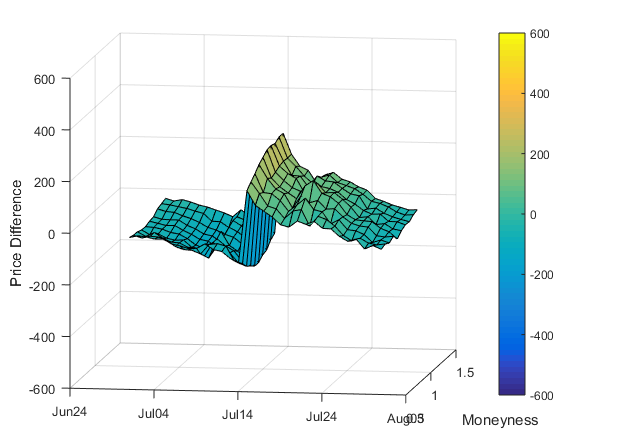
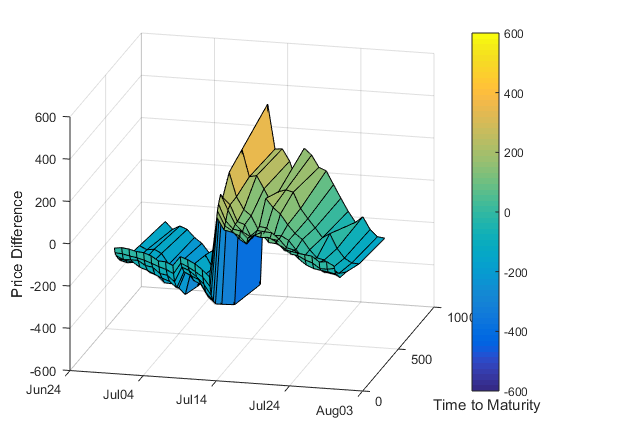
- Option prices generated under the SVCJ and BR models show specific behaviors across moneyness and maturity, informing curvature of the implied volatility surface.
- The authors provide a detailed replication-friendly data and code ecosystem (Quantlets) and emphasize Bayesian estimation with parameter uncertainty considerations.
- Robustness steps include moving ARIMA and GARCH components to Appendix and focusing on SV-based dynamics relevant for option pricing.
- Across revisions, the correlation between Bitcoin dynamics and broader crypto indices is discussed and contextualized for institutional use (e.g., CRIX vs BTC).
Better researchstarts right now
From reading papers to final review, dramatically reduce your research time.
No credit card · Free plan available
This review was created by AI and reviewed by human editors.