
[Paper Review] Taking limits in topological recursion
This paper establishes sufficient conditions for the commutation of topological recursion with limits in families of spectral curves, especially when ramification structures change. It introduces global topological recursion and proves analyticity under these conditions, resolving a long-standing gap in the literature by providing a rigorous framework for limits in topological recursion, with applications to $(r,s)$-curves and weighted Hurwitz numbers.
When does topological recursion applied to a family of spectral curves commute with taking limits? This problem is subtle, especially when the ramification structure of the spectral curve changes at the limit point. We provide sufficient (straightforward-to-use) conditions for checking when the commutation with limits holds, thereby closing a gap in the literature where this compatibility has been used several times without justification. This takes the form of a stronger result of analyticity of the topological recursion along suitable families. To tackle this question, we formalise the notion of global topological recursion and provide sufficient conditions for its equivalence with local topological recursion. The global version facilitates the study of analyticity and limits. For nondegenerate algebraic curves, we reformulate these conditions purely in terms of the structure of its underlying singularities. Finally, we apply this to study deformations of $ (r,s) $-spectral curves, spectral curves for weighted Hurwitz numbers, and provide several other examples and non-examples (where the commutation with limits fails).
Motivation & Objective
- To resolve the longstanding issue of whether topological recursion commutes with taking limits in families of spectral curves, particularly when ramification structures change at the limit.
- To formalize global topological recursion and establish its equivalence with local topological recursion under suitable conditions.
- To provide a criterion for analyticity of topological recursion in families of spectral curves, especially for nondegenerate algebraic curves.
- To apply the results to $(r,s)$-spectral curves, weighted Hurwitz numbers, and other examples, distinguishing cases where the commutation fails.
- To clarify the geometric origin of the mysterious congruence condition $ r \equiv \pm 1 \mod s $ in local admissibility via symplectic transformations.
Proposed method
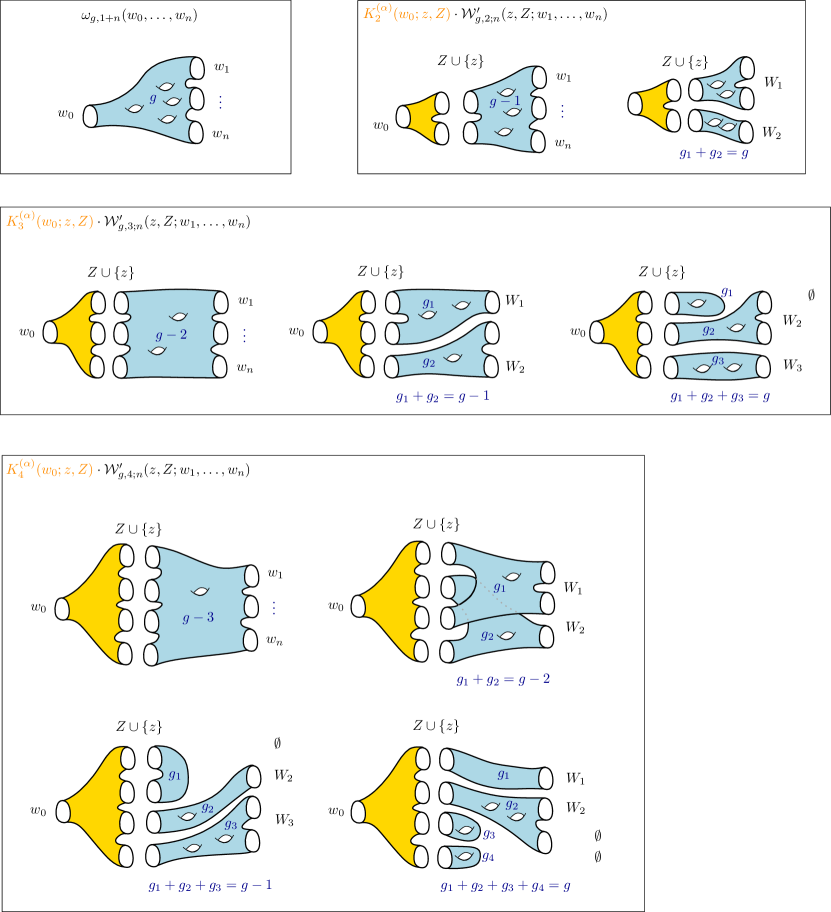
- Introduce the concept of global topological recursion and define vertical globalisation using correlators and spectral curve data.
- Develop a criterion for vertical globalisation based on the existence of a primitive form and its transformation properties.
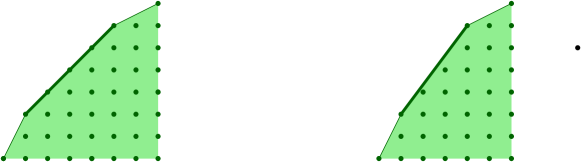
- Reformulate global admissibility in terms of Newton polygons and slopes, particularly for nondegenerate algebraic curves.
- Use deformation theory of Newton polygons and Farey sequences to analyze how global admissibility behaves under curve deformations.
- Apply the theory to specific families, including $(r,s)$-curves and weighted Hurwitz spectral curves, to test the conditions.
- Use symplectic transformations to show that the congruence condition $ r \equiv \pm 1 \mod s $ arises naturally from geometric constraints under $ \omega_{0,1} $-preserving maps.
Experimental results
Research questions
- RQ1Under what conditions does topological recursion commute with taking limits in families of spectral curves, especially when ramification types change?
- RQ2When is global topological recursion equivalent to local topological recursion, and what conditions ensure this equivalence?
- RQ3How can analyticity of topological recursion be guaranteed in one-parameter families of spectral curves?
- RQ4What is the geometric origin of the congruence condition $ r \equiv \pm 1 \mod s $ in local admissibility, and how does it relate to symplectic transformations?
- RQ5In which cases does the commutation of topological recursion with limits fail, and what are the structural obstructions?
Key findings
- The paper provides a sufficient and practically checkable condition for topological recursion to commute with limits in families of spectral curves.
- Global topological recursion is equivalent to local topological recursion when a global primitive form exists and satisfies certain analyticity and transformation properties.
- For nondegenerate algebraic curves, global admissibility is characterized by the slopes of the Newton polygon and the structure of Puiseux series at singularities.
- The commutation with limits fails for singular deformations of $(r,s)$-curves where the Newton polygon deforms in a way that breaks global admissibility.
- The congruence condition $ r \equiv \pm 1 \mod s $ in local admissibility is shown to arise naturally from $ \omega_{0,1} $-preserving symplectic transformations acting on $(r,s)$-curves.
- The theory successfully applies to the Chebyshev family and weighted Hurwitz numbers, where topological recursion remains analytic and well-defined under deformation.
Better researchstarts right now
From reading papers to final review, dramatically reduce your research time.
No credit card · Free plan available
This review was created by AI and reviewed by human editors.