
[Paper Review] The wave operator representation of quantum and classical dynamics
This paper introduces the waveoperator formalism as a unified representation for quantum and classical dynamics, using the square root of the density matrix to enable a natural bridge between Hilbert space, phase space (Wigner function), and Koopman-von Neumann classical dynamics. It demonstrates that this formalism enables novel semiclassical approximations for real and imaginary time dynamics and provides a transparent classical limit, while preserving positivity and enabling unitary-like evolution even in non-linear density matrix dynamics.
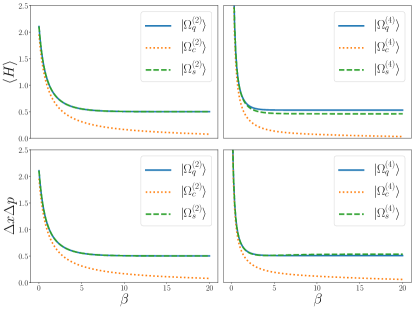
The choice of mathematical representation when describing physical systems is of great consequence, and this choice is usually determined by the properties of the problem at hand. Here we examine the little-known wave operator representation of quantum dynamics, and explore its connection to standard methods of quantum dynamics. This method takes as its central object the square root of the density matrix, and consequently enjoys several unusual advantages over standard representations. By combining this with purification techniques imported from quantum information, we are able to obtain a number of results. Not only is this formalism able to provide a natural bridge between phase and Hilbert space representations of both quantum and classical dynamics, we also find the waveoperator representation leads to novel semiclassical approximations of both real and imaginary time dynamics, as well as a transparent correspondence to the classical limit. This is demonstrated via the example of quadratic and quartic Hamiltonians, while the potential extensions of the waveoperator and its application to quantum-classical hybrids is discussed. We argue that the wave operator provides a new perspective that links previously unrelated representations, and is a natural candidate model for scenarios (such as hybrids) in which positivity cannot be otherwise guaranteed.
Motivation & Objective
- To address the interpretational challenges of mixed-state Wigner functions, which can be negative and thus not probabilistic.
- To provide a unified framework linking Hilbert space, phase space, and classical dynamics via a square root of the density matrix.
- To establish a transparent correspondence between quantum and classical dynamics using the waveoperator formalism.
- To develop a positivity-preserving representation suitable for hybrid quantum-classical systems where standard density matrix approaches may fail.
- To enable novel semiclassical approximations for both real and imaginary time dynamics, particularly in thermalization and ground state calculations.
Proposed method
- Utilizes the waveoperator as the square root of the density matrix, enabling a purified representation via quantum information techniques.
- Introduces Bopp operators into the waveoperator formalism to map it to phase space, linking it directly to the Wigner quasiprobability distribution.
- Applies the formalism to derive the classical limit, showing exact correspondence to Koopman-von Neumann dynamics for quadratic Hamiltonians even before the ħ → 0 limit.
- Applies the waveoperator to imaginary time evolution (e.g., Bloch equation), deriving a semi-classical correction to equilibrium states with O(ħ²) terms.
- Demonstrates that imaginary time dynamics can be mapped to unitary real-time dynamics, even when the density matrix evolution is non-linear.
- Uses the formalism to show that linear waveoperator dynamics can generate non-linear density matrix dynamics, and vice versa, revealing dual representations of the same physical evolution.
Experimental results
Research questions
- RQ1Can the waveoperator formalism provide a consistent, positivity-preserving interpretation of mixed-state Wigner functions?
- RQ2How does the waveoperator formalism enable a transparent correspondence to the classical limit, particularly in the context of Koopman-von Neumann mechanics?
- RQ3What are the implications of the waveoperator formalism for semiclassical approximations in both real and imaginary time quantum dynamics?
- RQ4Can imaginary time dynamics in open systems be mapped to unitary real-time dynamics via the waveoperator, and what does this imply for thermalization?
- RQ5How does the waveoperator formalism facilitate the construction of hybrid quantum-classical models where positivity of the density matrix is not guaranteed in standard approaches?
Key findings
- The waveoperator formalism provides a natural bridge between Hilbert space, phase space (Wigner function), and Koopman-von Neumann classical dynamics, unifying previously disconnected representations.
- For quadratic Hamiltonians, the classical limit of the waveoperator formalism reduces exactly to the Koopman-von Neumann representation, even without taking ħ → 0.
- The formalism yields a novel semiclassical expansion for imaginary time dynamics with an O(ħ²) correction to the classical Hamiltonian, analogous to the 'Hamiltonian of mean force' in open quantum systems.
- Imaginary time evolution can be mapped to unitary real-time dynamics, even when the density matrix evolution is non-linear, revealing a hidden unitary structure in thermalization processes.
- The waveoperator formalism preserves positivity inherently, making it a promising candidate for hybrid quantum-classical modeling where standard approaches may violate physicality.
- The method enables new semiclassical approximations for tunnelling rates and equilibrium states, with explicit corrections derived for harmonic and quartic oscillators.
Better researchstarts right now
From reading papers to final review, dramatically reduce your research time.
No credit card · Free plan available
This review was created by AI and reviewed by human editors.