
[Paper Review] Tip of the Red Giant Branch Bounds on the Neutrino Magnetic Dipole Moment Revisited
This study revisits constraints on the neutrino magnetic dipole moment (MDM) using the tip of the red giant branch (TRGB) I-band magnitude, employing a machine learning emulator to accelerate stellar evolution simulations and enable full Bayesian inference. The key result is that the region μν ≤ 6×10⁻¹²μB—previously thought to be excluded—is unconstrained when degeneracies with stellar physics (mass, metallicity, helium abundance) are fully accounted for.
We use a novel method to constrain the neutrino magnetic dipole moment ($μ_ν$) using the empirically-calibrated tip of the red giant branch I-band magnitude that fully accounts for uncertainties in stellar physics. Our method uses machine learning to emulate the results of stellar evolution codes. This reduces the I-Band magnitude computation time to milliseconds, which enables a Bayesian statistical analysis where $μ_ν$ is varied simultaneously with the stellar physics, allowing for a complete exploration of parameter space. We find the region $μ_ν \leq 6 imes10^{-12}μ_{ extrm{B}}$ (with $μ_{ extrm{B}}$ the Bohr magneton), previously believed to be excluded, is unconstrained after accounting for degeneracies with stellar physics. It is likely that larger values are similarly unconstrained. We discuss the implications of our results for future neutrino magnetic dipole moment searches and for other astrophysical probes.
Motivation & Objective
- To re-evaluate the neutrino magnetic dipole moment (MDM) using empirical TRGB I-band magnitude calibrations with full uncertainty propagation.
- To address the limitation of prior studies that fixed stellar physics parameters or used slow stellar evolution codes incompatible with Bayesian methods.
- To explore whether previously excluded regions of neutrino MDM parameter space remain viable when degeneracies with stellar input physics are properly accounted for.
- To demonstrate the viability of machine learning emulators for accelerating high-fidelity stellar evolution models in astrophysical parameter inference.
- To assess the implications for future neutrino MDM searches and other astrophysical probes of new physics.
Proposed method
- Simulated 146,250 stellar evolution models using MESA, varying mass (M), helium abundance (Y), metallicity (Z), and reduced neutrino MDM (μ₁₂ = μν × 10¹² μB).
- Applied bolometric corrections from Worthey & Lee (1994) to convert model outputs to I-band magnitude (M_I^TRGB).
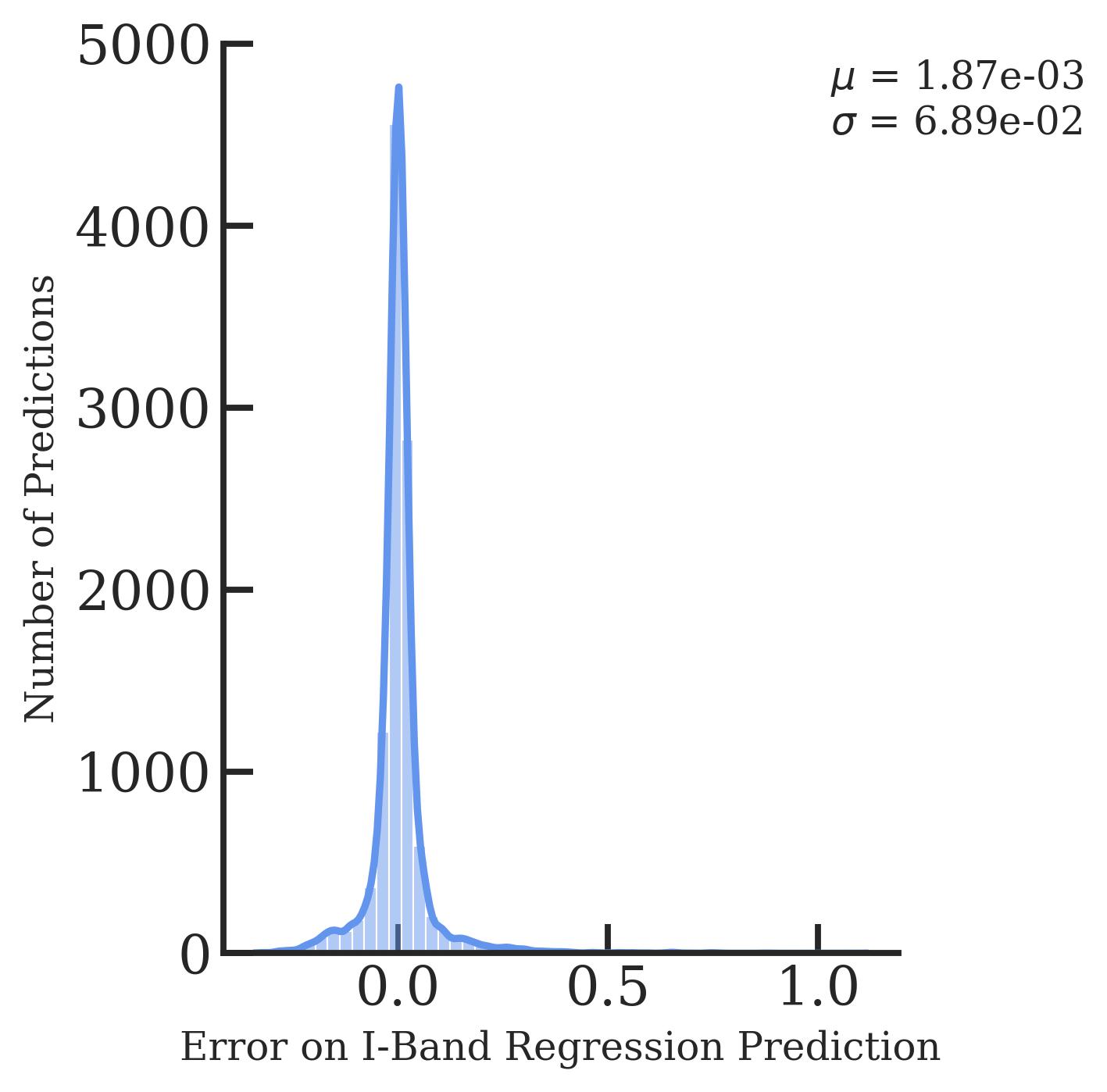
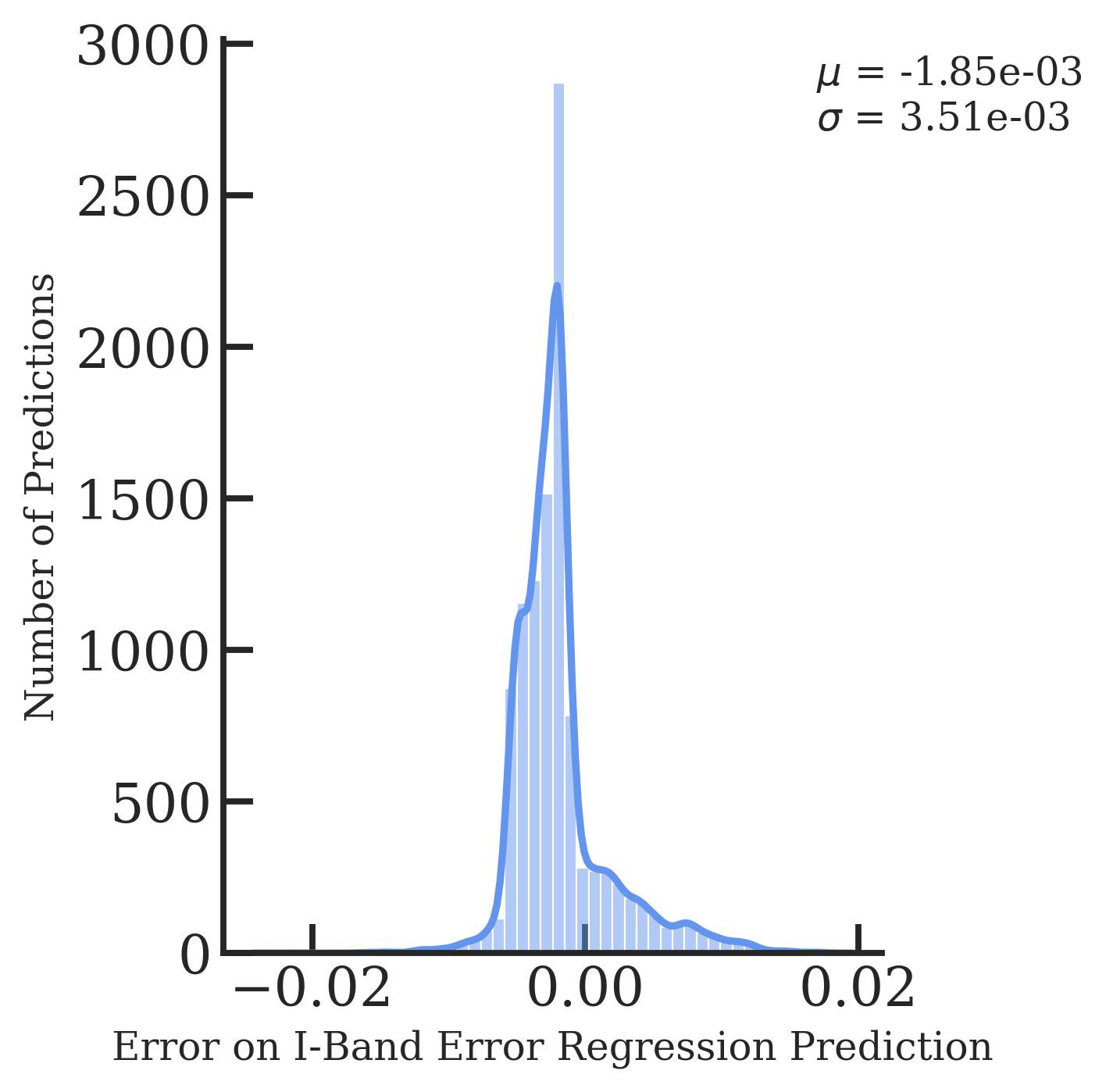
- Trained a machine learning emulator (using TensorFlow) to predict M_I^TRGB and its uncertainty as a function of the four input parameters.
- Integrated the trained emulator into an MCMC sampler to perform full Bayesian inference, varying the neutrino MDM alongside stellar physics parameters.
- Used empirical TRGB calibrations (e.g., from ω Centauri) as observational constraints in the MCMC analysis.
- Validated the emulator’s accuracy by comparing predictions against full MESA runs and assessed uncertainty propagation through synthetic population simulations.
Experimental results
Research questions
- RQ1What is the true constraint on the neutrino magnetic dipole moment when degeneracies with stellar physics are fully accounted for?
- RQ2Can machine learning-accelerated stellar evolution models enable rigorous Bayesian inference for astrophysical parameter constraints?
- RQ3Is the previously excluded region μν ≤ 6×10⁻¹²μB still viable when uncertainties in mass, metallicity, and helium abundance are properly marginalized?
- RQ4How do degeneracies between neutrino MDM and stellar input physics affect the interpretation of TRGB observations?
- RQ5To what extent do systematic uncertainties (e.g., bolometric corrections, stellar code choices) affect the final MDM bounds?
Key findings
- The region μν ≤ 6×10⁻¹²μB—previously considered excluded by TRGB observations—is unconstrained when degeneracies with stellar mass, metallicity, and helium abundance are fully accounted for.
- The posterior distribution for the neutrino MDM is broad and flat for μ₁₂ ≤ 6, indicating no significant constraint from TRGB data under the current model.
- Larger values of the neutrino MDM (μ₁₂ > 6) are likely similarly unconstrained, though the parameter grid does not extend to confirm this.
- The machine learning emulator reduces computation time from hours per model to milliseconds, enabling efficient MCMC sampling across high-dimensional parameter space.
- The study demonstrates that previous TRGB-based bounds on the neutrino MDM are overly optimistic due to incomplete uncertainty propagation and fixed stellar physics.
- Future constraints from stellar probes are expected to be similarly weakened once degeneracies are fully considered, necessitating more sophisticated statistical treatments.
Better researchstarts right now
From reading papers to final review, dramatically reduce your research time.
No credit card · Free plan available
This review was created by AI and reviewed by human editors.