
[Paper Review] YOLO-LITE: A Real-Time Object Detection Algorithm Optimized for Non-GPU Computers
YOLO-LITE is a lightweight real-time object detector inspired by YOLOv2 designed to run on non-GPU devices, achieving 21 FPS on non-GPU hardware with VOC mAP of 33.77% and COCO mAP of 12.26%.
This paper focuses on YOLO-LITE, a real-time object detection model developed to run on portable devices such as a laptop or cellphone lacking a Graphics Processing Unit (GPU). The model was first trained on the PASCAL VOC dataset then on the COCO dataset, achieving a mAP of 33.81% and 12.26% respectively. YOLO-LITE runs at about 21 FPS on a non-GPU computer and 10 FPS after implemented onto a website with only 7 layers and 482 million FLOPS. This speed is 3.8x faster than the fastest state of art model, SSD MobilenetvI. Based on the original object detection algorithm YOLOV2, YOLO- LITE was designed to create a smaller, faster, and more efficient model increasing the accessibility of real-time object detection to a variety of devices.
Motivation & Objective
- Demonstrate that shallow networks can support real-time object detection on non-GPU devices.
- Investigate the necessity of batch normalization in a shallow detection network.
- Develop a smaller, faster variant based on YOLOv2 that preserves usable accuracy for VOC/COCO datasets.
- Assess trade-offs between input resolution, network depth, and speed (FPS) for lightweight detectors.
- Provide a web-deployable model version for mobile access.
Proposed method
- Starting from Tiny-YOLOv2, iteratively removing/adding layers while keeping the final prediction layer from Tiny-YOLOv2.
- Training on PASCAL VOC 2007+2012 (20 classes) and then fine-tuning on COCO 2014 (80 classes).
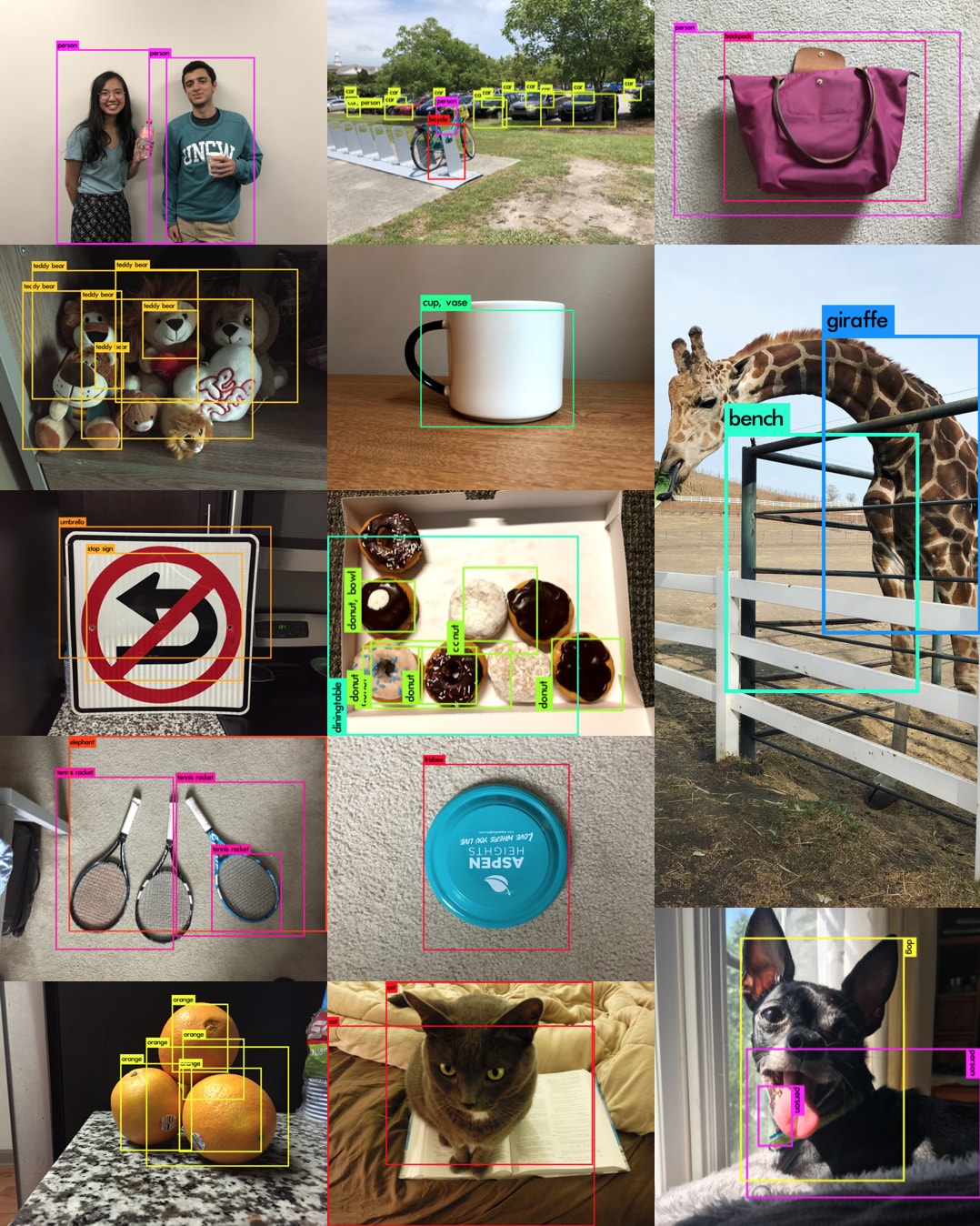
- Evaluating speed (FPS) and accuracy (mAP) on non-GPU hardware and comparing to Tiny-YOLOv2 and SSD Mobilenet V1.
- Exploring the impact of input image size and batch normalization on performance.
- Documenting architecture differences and FLOPS to highlight efficiency gains (e.g., 482M FLOPS for best YOLO-LITE trial).
- Web deployment of trained models to demonstrate accessibility on mobile devices.
Experimental results
Research questions
- RQ1Can a YOLO-based detector be made small and fast enough to run in real-time on non-GPU devices (≈10–21 FPS)?
- RQ2What is the impact of reducing network depth/width and removing batch normalization on mAP and FPS?
- RQ3How does YOLO-LITE compare to existing fast detectors (Tiny-YOLOv2, SSD Mobilenet V1) in terms of speed and accuracy on VOC/COCO?
- RQ4Is batch normalization necessary for a shallow network aimed at speed, and what is its effect on training stability and inference time?
- RQ5What are the trade-offs between input resolution, FLOPS, and mAP for lightweight detectors?
Key findings
- Best VOC result: mAP 33.77% at 21 FPS (no batch normalization) on VOC.
- COCO result for the best VOC-trained model: mAP 12.26% at 21 FPS.
- YOLO-LITE best trial (trial 3-no batch) uses 7 layers with 482M FLOPS, yielding 21 FPS on non-GPU hardware.
- Compared to Tiny-YOLOv2 on VOC, YOLO-LITE achieved substantially higher FPS with comparable multi-class scope, while maintaining lower FLOPS (482M vs 6.97B).
- On non-GPU hardware, YOLO-LITE runs at about 21 FPS locally and ~10 FPS on a web deployment, showing strong real-time potential for lightweight devices.
- YOLO-LITE is about 3.8x faster than the fastest state-of-the-art model at the time (SSD Mobilenetv1) with higher FPS for non-GPU contexts.
Better researchstarts right now
From reading papers to final review, dramatically reduce your research time.
No credit card · Free plan available
This review was created by AI and reviewed by human editors.