
[论文解读] A Comprehensive Survey for Hyperspectral Image Classification: The Evolution from Conventional to Transformers and Mamba Models
本综述全面回顾了从传统方法到现代基于Transformer的模型在高光谱图像分类(HSC)中的发展,分析了深度学习技术的演进。在三个基准数据集上评估了12种最先进模型,结果表明空间-光谱Transformer(SSTs)实现了卓越的准确率——最高达99.97%的总体准确率(OA),同时指出了可解释性、数据稀缺性和计算效率方面的挑战。
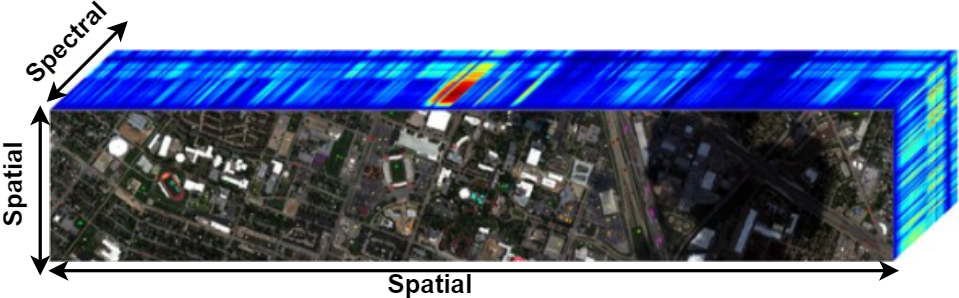
Hyperspectral Image Classification (HSC) presents significant challenges owing to the high dimensionality and intricate nature of Hyperspectral (HS) data. While traditional Machine Learning (TML) approaches have demonstrated effectiveness, they often encounter substantial obstacles in real-world applications, including the variability of optimal feature sets, subjectivity in human-driven design, inherent biases, and methodological limitations. Specifically, TML suffers from the curse of dimensionality, difficulties in feature selection and extraction, insufficient consideration of spatial information, limited robustness against noise, scalability issues, and inadequate adaptability to complex data distributions. In recent years, Deep Learning (DL) techniques have emerged as robust solutions to address these challenges. This survey offers a comprehensive overview of current trends and future prospects in HSC, emphasizing advancements from DL models to the increasing adoption of Transformer and Mamba Model architectures. We systematically review key concepts, methodologies, and state-of-the-art approaches in DL for HSC. Furthermore, we investigate the potential of Transformer-based models and the Mamba Model in HSC, detailing their advantages and challenges. Emerging trends in HSC are explored, including in-depth discussions on Explainable AI and Interoperability concepts, alongside Diffusion Models for image denoising, feature extraction, and image fusion. Comprehensive experimental results were conducted on three HS datasets to substantiate the efficacy of various conventional DL models and Transformers. Additionally, we identify several open challenges and pertinent research questions in the field of HSC. Finally, we outline future research directions and potential applications aimed at enhancing the accuracy and efficiency of HSC.
研究动机与目标
- 提供高光谱图像分类(HSC)中深度学习技术演进的全面概述,涵盖从传统方法到现代基于Transformer的模型。
- 分析传统机器学习与深度学习模型在处理高光谱数据的高维性与复杂光谱-空间特征方面的优缺点。
- 将最先进的基于Transformer的模型(包括空间-光谱Transformer,SSTs)与传统深度学习架构进行比较,评估其性能表现。
- 识别HSC中的关键挑战,如标注数据有限、模型可解释性差以及计算效率低,并提出未来研究方向。
- 通过整合多个基准数据集上的最新进展与实验结果,为研究人员提供统一的参考。
提出的方法
- 系统性回顾与分类120余篇关于HSC的研究工作,涵盖传统方法、深度学习方法以及基于Transformer的方法。
- 在三个标准高光谱数据集(Indian Pines、Salinas和University of Houston)上评估12种最先进模型,包括2D/3D卷积神经网络(CNNs)、混合网络、Inception网络(IN)、Exception Net、SCSNet以及空间-光谱Transformer(SSTs)。
- 在空间-光谱Transformer(SSTs)中应用自注意力机制与多头注意力,以建模光谱与空间维度之间的长距离依赖关系。
- 在基于Transformer的模型中引入位置编码,以保持空间结构,从而实现对光谱-空间特征的有效建模。
- 采用早停法、数据增强与交叉验证,确保所有模型的性能评估具有鲁棒性。
- 使用标准指标进行全面比较:总体准确率(OA)、平均准确率(AA)、Kappa系数以及推理时间(Time)。
实验结果
研究问题
- RQ1过去十年中,深度学习模型在高光谱图像分类中的性能与架构如何演变?
- RQ2与传统CNNs及混合架构相比,基于Transformer的模型在HSC中具有哪些关键优势与局限性?
- RQ3空间-光谱Transformer(SSTs)在分类准确率与泛化能力方面,相较于传统与深度学习模型,优势有多大?
- RQ4HSC中的主要挑战(如数据稀缺性、模型可解释性、计算效率)是什么,应如何应对?
- RQ5未来哪些研究方向最有可能推动HSC模型在准确率、效率与可解释性方面的进一步发展?
主要发现
- 空间-光谱Transformer(SSTs)在University of Houston数据集上实现了99.97%的最高总体准确率(OA),显著优于传统模型。
- 3D Inception网络(3D IN)在Indian Pines数据集上实现了99.96%的OA,展现出在捕捉光谱-空间特征方面的强大性能。
- SCSNet模型在Salinas数据集上实现了99.97%的OA,凸显了基于注意力机制的特征学习在光谱-空间表征中的有效性。
- 基于Transformer的模型,尤其是SSTs,在复杂场景中表现出色,三组数据集的Kappa系数均超过99.19。
- 尽管准确率极高,部分Transformer模型表现出较长的推理时间——最高达2932.98秒,表明性能与效率之间存在权衡。
- 本研究发现,Transformer中的注意力机制能有效捕捉光谱波段与空间区域之间的长距离依赖关系,从而提升分类的鲁棒性。
阅读本论文
在 Nubint 阅读器中打开原文,边读边就任意段落提问。
在 Nubint 中阅读本论文本解读由 AI 根据论文原文生成,引用前请核对原文。