
[论文解读] A Comprehensive Survey of Deep Transfer Learning for Anomaly Detection in Industrial Time Series: Methods, Applications, and Directions
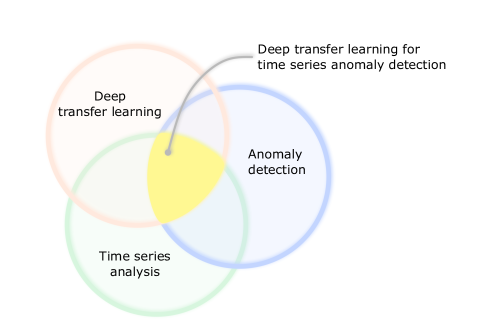
一个面向应用的综合性深度迁移学习在工业时间序列异常检测中的综述,详细讨论问题设定、方法、挑战与未来方向。
Automating the monitoring of industrial processes has the potential to enhance efficiency and optimize quality by promptly detecting abnormal events and thus facilitating timely interventions. Deep learning, with its capacity to discern non-trivial patterns within large datasets, plays a pivotal role in this process. Standard deep learning methods are suitable to solve a specific task given a specific type of data. During training, deep learning demands large volumes of labeled data. However, due to the dynamic nature of the industrial processes and environment, it is impractical to acquire large-scale labeled data for standard deep learning training for every slightly different case anew. Deep transfer learning offers a solution to this problem. By leveraging knowledge from related tasks and accounting for variations in data distributions, the transfer learning framework solves new tasks with little or even no additional labeled data. The approach bypasses the need to retrain a model from scratch for every new setup and dramatically reduces the labeled data requirement. This survey first provides an in-depth review of deep transfer learning, examining the problem settings of transfer learning and classifying the prevailing deep transfer learning methods. Moreover, we delve into applications of deep transfer learning in the context of a broad spectrum of time series anomaly detection tasks prevalent in primary industrial domains, e.g., manufacturing process monitoring, predictive maintenance, energy management, and infrastructure facility monitoring. We discuss the challenges and limitations of deep transfer learning in industrial contexts and conclude the survey with practical directions and actionable suggestions to address the need to leverage diverse time series data for anomaly detection in an increasingly dynamic production environment.
研究动机与目标
- 对工业时间序列异常检测中的深度迁移学习进行深入综述。
- 对迁移学习问题设定和深度迁移学习方法进行分类。
- 总结在制造、预测性维护、能源与基础设施等领域的应用。
- 讨论挑战、局限性及面向从业者的实际方向。
提出的方法
- 将迁移学习问题设定分为归纳式和传导式。
- 将深度迁移学习分为四类:实例迁移、参数迁移、映射迁移、域对抗迁移。
- 给出异常检测中领域、任务和学习目标的形式化定义。
- 对文献进行综述与综合,纳入标准(2013年后、深度迁移学习、工业时间序列异常检测)。
- 提供分类体系和可操作的对AI从业者的建议。
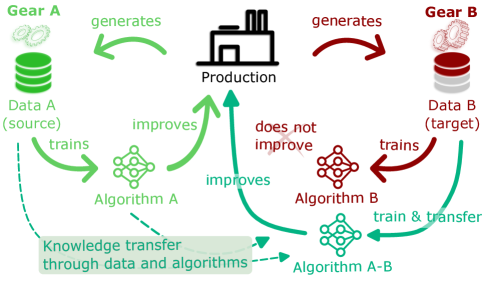
实验结果
研究问题
- RQ1在工业时间序列异常检测中应用的主流深度迁移学习方法有哪些?
- RQ2在此背景下,迁移学习问题设定(归纳式与传导式)及任务/领域关系如何表征?
- RQ3哪些工业应用(制造、预测性维护、能源、基础设施)已利用深度迁移学习进行异常检测?
- RQ4在动态工业环境中部署深度迁移学习面临的主要挑战与未来方向是什么?
主要发现
- 本调查涵盖了关于深度迁移学习的一般论文45篇,专门针对工业时间序列异常检测的深度迁移学习论文37篇被纳入综述。
- 深度迁移学习方法大致可分为四种主要途径:实例迁移、参数迁移、映射迁移、域对抗迁移。
- 调查讨论了在工业场景中的数据分布漂移、非平稳性以及标注数据需求等实际挑战。
- 它提供了可操作的方向与建议,利用多样的时间序列数据在动态生产环境中进行异常检测。
- 方法学包括对Google Scholar、Scopus、Elsevier和IEEE的文献检索,纳入标准聚焦于2013年后使用深度迁移学习进行工业时间序列异常检测的研究。
阅读本论文
在 Nubint 阅读器中打开原文,边读边就任意段落提问。
在 Nubint 中阅读本论文本解读由 AI 根据论文原文生成,引用前请核对原文。