
[论文解读] A Large-Scale Pad-Sensor Based Prototype of the Silicon Tungsten Electromagnetic Calorimeter for the Forward Direction in ALICE at LHC
本论文介绍了在CERN LHC的ALICE实验中,为大型硅-钨电磁量能器原型(Mini FoCal)所进行的设计、建造及性能验证。该原型采用20层n型硅条纹传感器与钨吸收体板,对150和250 GeV电子束实现了4.3%的能量分辨率,且在√s = 13 TeV的pp碰撞中,中性π介子候选事例的纵向簇射剖面与不变质量分布与模拟结果和真实数据高度一致,证明了未来FoCal升级的可行性。
We constructed a large-scale electromagnetic calorimeter prototype as a part of the Forward Calorimeter upgrade project (FoCal) for the ALICE experiment at the Large Hadron Collider (LHC). The prototype, also known as ``Mini FoCal'', consists of 20 layers of silicon pad sensors and tungsten alloy plates with printed circuit boards and readout electronics. The constructed detector was tested at the test beam facility of the Super Proton Synchrotron (SPS) at CERN. We obtain an energy resolution of about 4.3% for electron beams at both 150 and 250 GeV/$c$, which is consistent with realistic detector response simulations. Longitudinal profiles of electromagnetic shower were also measured and found to agree with the simulations. The same prototype detector was installed in the ALICE experimental area about 7.5m away from the interaction point. It was used to measure inclusive electromagnetic cluster energy distributions and neutral-pion candidate invariant mass distributions for pseudo-rapidity of $η$=3.7-4.5 in proton-proton collisions at $\sqrt{s}$ = 13 TeV at LHC. The measured distributions in different $η$ regions are similar to those obtained from PYTHIA simulations.
研究动机与目标
- 为LHC的ALICE实验前向量能器(FoCal)升级,开发并测试一种大规模硅-钨电磁量能器原型。
- 验证n型硅条纹传感器在改进辐射耐受性与光屏蔽性能方面的表现,适用于高能前向物理研究。
- 证明在距离LHC对撞点7.5米处的高背景环境下,精确测量电磁簇射能量与中性π介子重建的可行性。
- 将SPS束流实验数据与pp碰撞数据同真实的Geant4模拟进行比较,以评估探测器响应与能量分辨率。
提出的方法
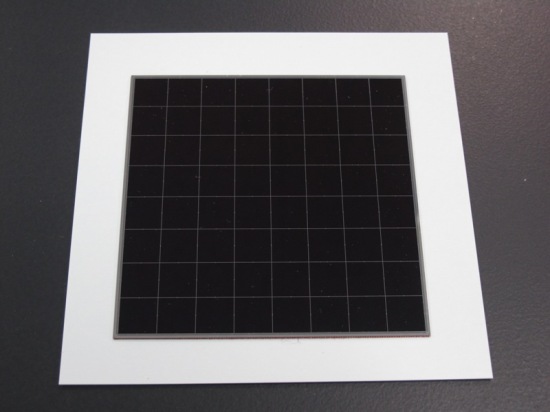
- 使用60个厚度为320 µm、表面镀有Al/Au的n型硅条纹传感器,构建了20层的硅-钨电磁量能器原型(Mini FoCal),以增强辐射硬度与噪声抑制能力。
- 为每个感测层配备独立读出系统,采用APV25混合-SRS读出电子学,以实现精确校准并提升能量分辨率。
- 在CERN SPS设施中利用150和250 GeV/c的电子束进行束流测试,以测量能量分辨率与纵向簇射剖面。
- 将原型安装在ALICE对撞点下游7.5米处,并在√s = 13 TeV的pp碰撞期间采集数据,以测量包含电磁簇射的能量与双簇射不变质量。
- 对实验数据与Geant4模拟进行详细比较,包括真实噪声模型与部分读出(12层)以模拟真实探测器条件。
- 采用混合事件技术估算并减去中性π介子重建中双簇射不变质量分布的组合背景。
实验结果
研究问题
- RQ1在150和250 GeV电子束下,采用独立读出条纹传感器的大规模硅-钨电磁量能器原型的能量分辨率是多少?
- RQ2Mini FoCal原型中测量的纵向簇射剖面与Geant4模拟的探测器响应模型有多吻合?
- RQ3在√s = 13 TeV的pp碰撞中,重建的电磁簇射对的不变质量分布在多大程度上与PYTHIA8模拟和真实探测器模拟一致?
- RQ4现场背景与材料效应在前向区域对中性π介子峰结构与质量分辨率有何影响?
- RQ5仅使用条纹传感器读出的性能与未来增加像素层以实现双簇射分离的设计相比如何?
主要发现
- Mini FoCal原型对150 GeV/c与250 GeV/c电子束实现了4.3%的能量分辨率,与真实Geant4模拟结果一致。
- SPS束流测试中测量的纵向簇射剖面与模拟剖面高度一致,证实了对电磁簇射发展的准确建模。
- 在√s = 13 TeV的pp碰撞中,包含电磁簇射的能量分布与PYTHIA8模拟在不同伪快度窗口(η = 3.7–4.5)下一致。
- 数据中经混合事件背景减除后的双簇射不变质量分布与真实模拟结果高度一致,π介子峰被模拟良好描述。
- 在高能区,数据中约0.25 GeV/c²处出现一个未解释的结构,可能源于探测器前方的材料或喷注内相关性影响簇射形成。
- 在125 GeV以上,中性π介子对的重建效率迅速下降,限制了高能区π介子峰的可观测性,凸显了未来集成像素层以提升质量分辨率的必要性。
阅读本论文
在 Nubint 阅读器中打开原文,边读边就任意段落提问。
在 Nubint 中阅读本论文本解读由 AI 根据论文原文生成,引用前请核对原文。