
[论文解读] A Novel Approach to the Behavioral Aspects of Cybersecurity
本文提出了一种新颖的行为网络安全框架,强调情境支持、自我效能感、响应效能感以及行为全面性,以提升信息安全合规性。通过结构方程建模与自举法分析,结果表明情境支持通过自我效能感和行为全面性的链式中介作用显著促进网络安全习惯,为组织培训及高风险情境下的基于人工智能的疲劳检测提供了可操作的见解。
The Internet and cyberspace are inseparable aspects of everyone's life. Cyberspace is a concept that describes widespread, interconnected, and online digital technology. Cyberspace refers to the online world that is separate from everyday reality. Since the internet is a recent advance in human lives, there are many unknown and unpredictable aspects to it that sometimes can be catastrophic to users in financial aspects, high-tech industry, and healthcare. Cybersecurity failures are usually caused by human errors or their lack of knowledge. According to the International Business Machines Corporation (IBM) X-Force Threat Intelligence Index in 2020, around 8.5 billion records were compromised in 2019 due to failures of insiders, which is an increase of more than 200 percent compared to the compromised records in 2018. In another survey performed by the Ernst and Young Global Information Security during 2018-2019, it is reported that 34% of the organizations stated that employees who are inattentive or do not have the necessary knowledge are the principal vulnerabilities of cybersecurity, and 22% of the organizations indicated that phishing is the main threat to them. Inattentive users are one of the reasons for data breaches and cyberattacks. The National Cyber Security Centre (NCSC) in the United Kingdom observed that 23.2 million users who were victims of cybersecurity attacks used a carelessly selected password, which is 123456, as their account password. The Annual Cybersecurity Report published by Cisco in 2018 announced that phishing and spear phishing emails are the root causes of many cybersecurity attacks in recent years. Hence, enhancing the cybersecurity behaviors of both personal users and organizations can protect vulnerable users from cyber threats. Both human factors and technological aspects of cybersecurity should be addressed in organizations for a safer environment.
研究动机与目标
- 为解决人为错误在网络安全事件中持续存在的问题,特别是内部威胁和网络钓鱼攻击。
- 探究心理与环境因素(如情境支持、自我效能感和行为全面性)如何影响信息安全合规性。
- 开发一个经过验证的行为模型,将人为因素整合进组织的网络安全策略中。
- 提出实用干预措施——如对外部邮件进行标注和基于人工智能的疲劳检测——以应对高峰攻击时段的认知脆弱性。
提出的方法
- 采用应用结构方程模型(SEM)检验一个理论框架,该框架将情境支持、自我效能感、响应效能感、行为全面性和网络安全习惯联系起来。
- 使用26个经验证的量表测量组织文化构念:协作性、创新性、一致性和有效性。
- 使用成熟量表测量自我效能感(SE)、响应效能感(RE)、习惯(HA)和行为全面性(BC),Cronbach’s alpha值均高于0.91。
- 进行自举法分析(5,000次重采样),检验自我效能感与行为全面性在情境支持与网络安全习惯关系中的链式多重中介效应。
- 在多元回归分析中纳入性别、专业、年级及人口统计学因素等控制变量,以隔离行为效应。
- 提出两项实用干预措施:对外部邮件进行标注,以及利用图像/视频处理技术的基于人工智能的疲劳检测,适用于高风险工作时段。
实验结果
研究问题
- RQ1情境支持如何通过自我效能感与行为全面性影响网络安全行为?
- RQ2自我效能感与响应效能感在情境支持与网络安全习惯关系中的中介程度如何?
- RQ3组织文化特征——协作性、创新性、一致性和有效性——如何影响信息安全合规意愿?
- RQ4心理契约与员工特定因素(如年龄、任职年限、社会地位)在信息安全政策合规中的作用是什么?
- RQ5基于人工智能的疲劳检测工具是否能通过识别高峰网络钓鱼攻击时段的认知疲劳,减少人为错误?
主要发现
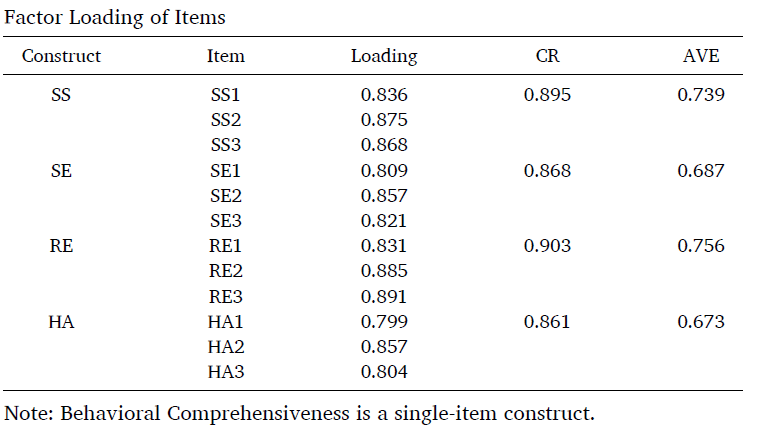
- 情境支持对自我效能感与响应效能感均有显著正向影响,组合信度(CR)高于0.7,平均方差提取量(AVE)高于0.5,表明收敛效度良好。
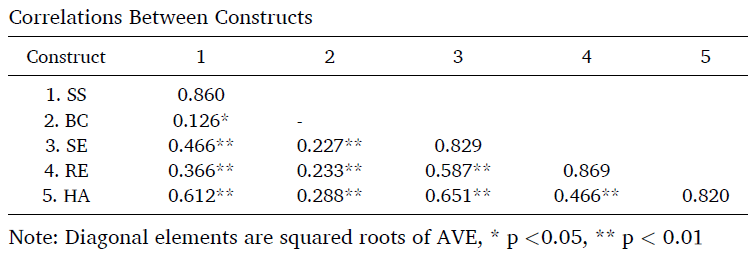
- 自我效能感与响应效能感共同中介情境支持与行为全面性之间的关系,其间接效应的自举95%置信区间不包含零,具有统计显著性。
- 自我效能感与行为全面性的链式多重中介效应完全解释了情境支持对网络安全习惯的积极影响。
- 习惯因素(HA)的Cronbach’s alpha值为0.925,表明其在测量长期网络安全行为方面具有高度内部一致性与可靠性。
- 研究发现,心理契约的履行对管理者的信息安全合规意愿影响强于对下属的影响,凸显了角色特异性行为动态。
- 所提出的基于人工智能的疲劳检测方法,利用机器学习进行视频与图像处理,显示出在高峰网络钓鱼攻击时段识别认知疲劳的潜力,但同时也引发隐私方面的担忧。
阅读本论文
在 Nubint 阅读器中打开原文,边读边就任意段落提问。
在 Nubint 中阅读本论文本解读由 AI 根据论文原文生成,引用前请核对原文。