
[论文解读] A Paradigm Shift: The Future of Machine Translation Lies with Large Language Models
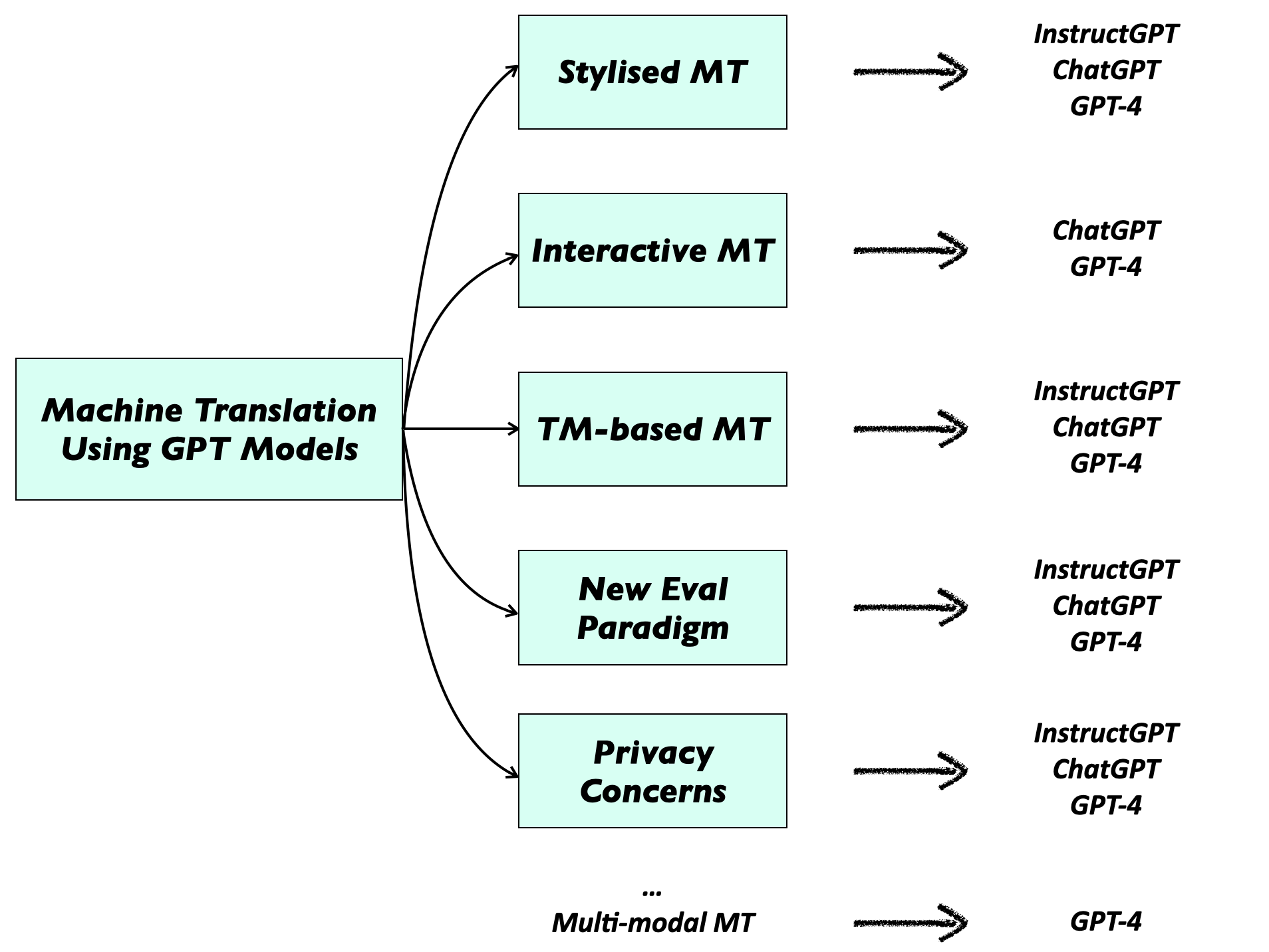
本文概述使用大型语言模型(LLMs)的新机器翻译方向,包括风格化、交互式和基于翻译记忆的 MT、一个新的评估范式,以及隐私方面的考量,并以 ChatGPT 的示例进行说明。
Machine Translation (MT) has greatly advanced over the years due to the developments in deep neural networks. However, the emergence of Large Language Models (LLMs) like GPT-4 and ChatGPT is introducing a new phase in the MT domain. In this context, we believe that the future of MT is intricately tied to the capabilities of LLMs. These models not only offer vast linguistic understandings but also bring innovative methodologies, such as prompt-based techniques, that have the potential to further elevate MT. In this paper, we provide an overview of the significant enhancements in MT that are influenced by LLMs and advocate for their pivotal role in upcoming MT research and implementations. We highlight several new MT directions, emphasizing the benefits of LLMs in scenarios such as Long-Document Translation, Stylized Translation, and Interactive Translation. Additionally, we address the important concern of privacy in LLM-driven MT and suggest essential privacy-preserving strategies. By showcasing practical instances, we aim to demonstrate the advantages that LLMs offer, particularly in tasks like translating extended documents. We conclude by emphasizing the critical role of LLMs in guiding the future evolution of MT and offer a roadmap for future exploration in the sector.
研究动机与目标
- Motivate the use of large language models (LLMs) for advancing machine translation (MT).
- Explore new MT directions enabled by LLMs, including stylized MT, interactive MT, and Translation Memory-based MT.
- Propose a new evaluation paradigm for MT leveraging LLMs beyond reference-based metrics.
- Address privacy concerns in MT with LLMs and discuss basic privacy-preserving strategies.
提出的方法
- Brainstorm and articulate several MT directions enabled by LLMs, such as stylized MT, interactive MT, and TM-based MT.
- Present illustrative examples using ChatGPT to demonstrate feasibility of the proposed directions.
- Discuss a potential new evaluation paradigm for MT that leverages LLMs and includes human and extrinsic evaluation perspectives.
- Examine privacy risks in LLM-based MT and propose basic anonymization-based privacy-preserving approaches.
实验结果
研究问题
- RQ1What new MT directions become feasible with LLMs (e.g., stylized, interactive, TM-based MT)?
- RQ2How can Translation Memory and in-context learning be integrated with LLMs to improve MT?
- RQ3What evaluation paradigms are suitable for assessing MT when using LLMs beyond traditional reference-based metrics?
- RQ4What privacy-preserving methods can mitigate risks in MT with LLMs?
主要发现
- The paper demonstrates feasibility of stylized, interactive, and TM-based MT via ChatGPT examples.
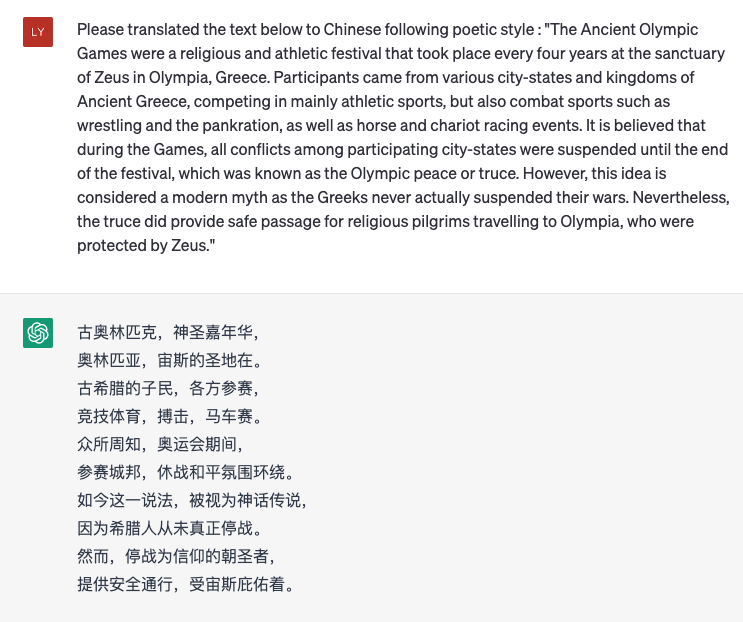
- Stylized MT can preserve stylistic features like tone and formality in translations, including poetic styles.
- TM-based MT shows potential for providing domain- and style-relevant translations by leveraging retrieved similar translations.
- A new evaluation paradigm for MT with LLMs is discussed, including human, extrinsic, and LLM-assisted evaluation approaches.
- Privacy concerns in LLM-based MT are highlighted, with basic anonymization strategies proposed to mitigate risks.
阅读本论文
在 Nubint 阅读器中打开原文,边读边就任意段落提问。
在 Nubint 中阅读本论文本解读由 AI 根据论文原文生成,引用前请核对原文。