
[论文解读] A Practical Review of Mechanistic Interpretability for Transformer-Based Language Models
关于变压器语言模型的机制可解释性(MI)的综合综述,概述基本对象、技术、评估、发现和初学者路线图。它强调特征、回路、普遍性以及未来方向。
Mechanistic interpretability (MI) is an emerging sub-field of interpretability that seeks to understand a neural network model by reverse-engineering its internal computations. Recently, MI has garnered significant attention for interpreting transformer-based language models (LMs), resulting in many novel insights yet introducing new challenges. However, there has not been work that comprehensively reviews these insights and challenges, particularly as a guide for newcomers to this field. To fill this gap, we provide a comprehensive survey from a task-centric perspective, organizing the taxonomy of MI research around specific research questions or tasks. We outline the fundamental objects of study in MI, along with the techniques, evaluation methods, and key findings for each task in the taxonomy. In particular, we present a task-centric taxonomy as a roadmap for beginners to navigate the field by helping them quickly identify impactful problems in which they are most interested and leverage MI for their benefit. Finally, we discuss the current gaps in the field and suggest potential future directions for MI research.
研究动机与目标
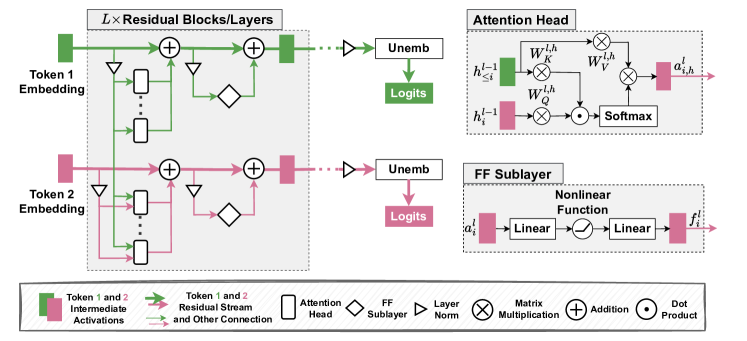
- 调查MI(机制可解释性)的基本对象(特征、回路、普遍性)以及它们与变换器语言模型之间的关系。
- 总结MI的技术(logit lens、probing、SAE、可视化、自动特征解释、敲除/消融、因果中介分析(CMA))。
- 讨论评估标准(可信度、完整性、最小性、合理性)及其应用方式。
- 提供一个面向初学者的路线图,帮助开展MI中的特征和回路研究。
- 强调关键发现和应用,并指出LMs的MI领域中的空白与未来方向。
提出的方法
- 提出包含特征、回路和普遍性的MI研究分类。
- 描述核心MI技术:logit lens、probing、稀疏自编码器(SAE)、可视化、自动特征解释、敲除/消融、因果中介分析(CMA)。
- 解释评估指标:可信度、完整性、最小性、合理性。
- 提供一个面向初学者的路线图,详细说明特征和回路研究的步骤。
- 综合各项研究在特征、回路、普遍性、模型能力、学习动态及应用方面的发现。
实验结果
研究问题
- RQ1哪些基本对象(特征、回路、普遍性)界定了变换器LMs的机制可解释性?
- RQ2用于研究这些对象的技术有哪些,以及结果如何被评估?
- RQ3MI研究在特征、回路、普遍性以及LM能力方面取得了哪些发现?
- RQ4新来者如何系统地开展MI研究,以及当前的空白与未来方向是什么?
主要发现
- 语言模型中的特征通常具有多义性,可能呈现叠加性,挑战单义映射。
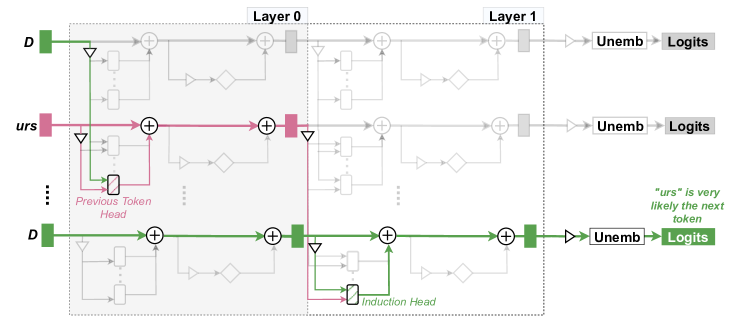
- 回路揭示了LM行为(如上下文学习、IOI、算术)如何通过专用组件实现并在任务间重复使用。
- 特征与回路的普遍性是混合的,取决于模型规模、初始化和训练;有些组件是共享的,其他在模型之间存在差异。
- Transformer组件(残差流、MHA、FF)具有不同的角色,注意力头显示出专门的功能,如复制抑制、归纳和知识存储。
- MI研究在理解能力与动态方面取得了明确进展,但可扩展性、泛化性和安全相关问题仍未解决。
- 提供了一个面向初学者的工作流程与路线图,帮助新研究者将MI技术应用于LMs。
阅读本论文
在 Nubint 阅读器中打开原文,边读边就任意段落提问。
在 Nubint 中阅读本论文本解读由 AI 根据论文原文生成,引用前请核对原文。