
[论文解读] A Rapid Review of Clustering Algorithms
本论文综述聚类算法,按五个维度对它们进行分类,讨论评估指标,并指出聚类研究中的趋势与未解决的挑战。
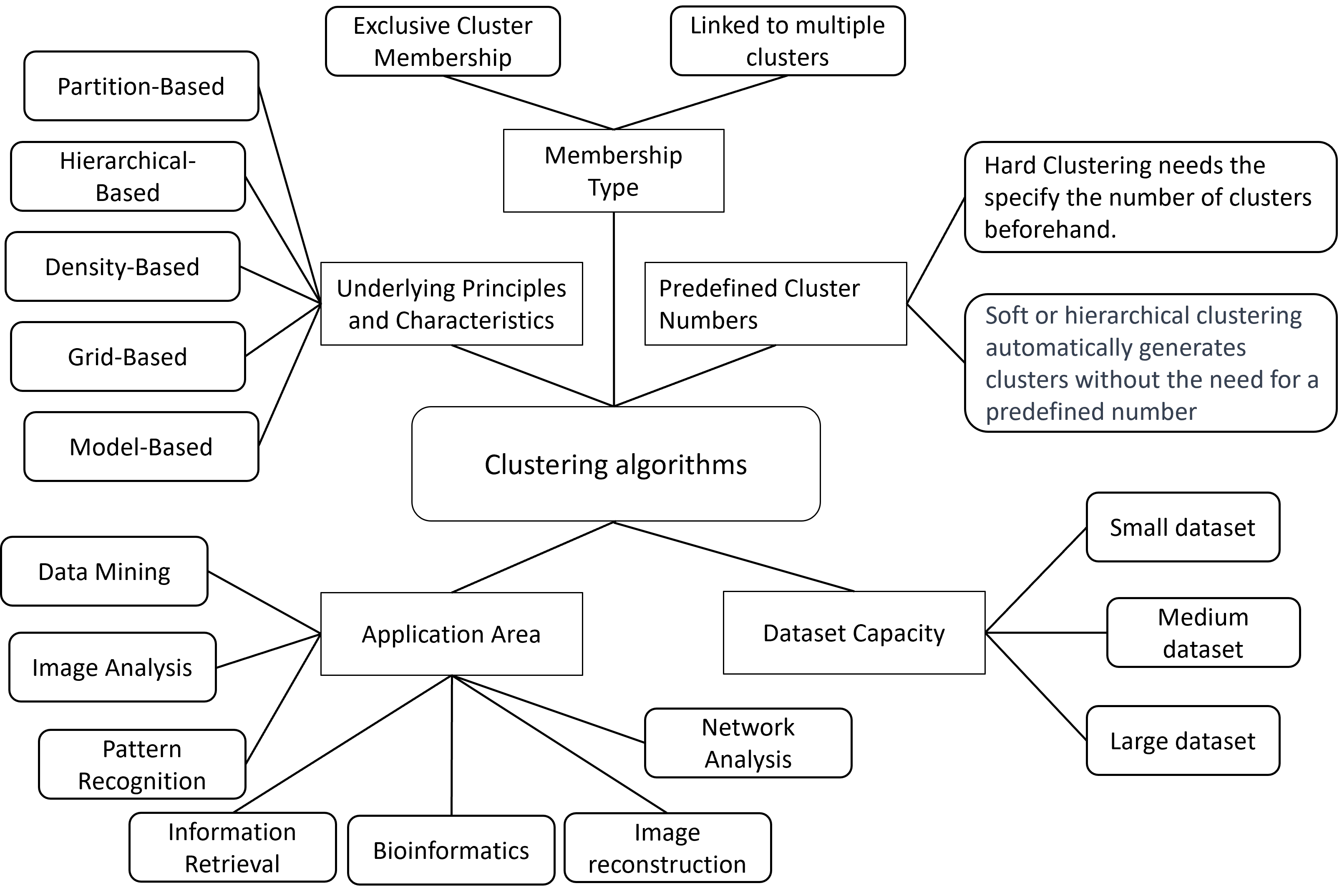
Clustering algorithms aim to organize data into groups or clusters based on the inherent patterns and similarities within the data. They play an important role in today's life, such as in marketing and e-commerce, healthcare, data organization and analysis, and social media. Numerous clustering algorithms exist, with ongoing developments introducing new ones. Each algorithm possesses its own set of strengths and weaknesses, and as of now, there is no universally applicable algorithm for all tasks. In this work, we analyzed existing clustering algorithms and classify mainstream algorithms across five different dimensions: underlying principles and characteristics, data point assignment to clusters, dataset capacity, predefined cluster numbers and application area. This classification facilitates researchers in understanding clustering algorithms from various perspectives and helps them identify algorithms suitable for solving specific tasks. Finally, we discussed the current trends and potential future directions in clustering algorithms. We also identified and discussed open challenges and unresolved issues in the field.
研究动机与目标
- 总结现有聚类算法及其基本原理。
- 按原理、数据点分配、数据集容量、预设簇数量和应用领域来对算法进行分类。
- 讨论评估指标及其在不同数据条件下的适用性。
- 强调聚类研究的当前趋势、未解决的挑战和未来方向。
提出的方法
- 使用与聚类相关的关键词在 Google Scholar、arXiv 和 Scopus 上进行文献调查。
- 基于语言(英语)、时效性(最近五年)以及聚焦新颖聚类技术来筛选论文。
- 分析基本原理、数据点分配、数据集容量、预定义簇数量和应用领域以对算法进行分类。
- 回顾内部和外部评估指标及其局限性。
- 讨论聚类的趋势、应用以及未解决的挑战,包括与深度学习和混合方法的整合。
实验结果
研究问题
- RQ1用于对聚类算法进行分类的主要基本原理和特征是什么?
- RQ2聚类算法在数据点分配、数据集容量以及对预定义簇数量的需求方面有何不同?
- RQ3用于聚类的评估指标有哪些?在无监督设置中的局限性是什么?
- RQ4聚类研究的当前趋势、应用和尚存的挑战是什么?
- RQ5未来方向,如深度学习集成或混合方法,如何影响聚类方法?
主要发现
- 聚类算法分为五个基于原理的家族:基于划分、层次、基于密度、网格以及基于模型。
- 算法在将数据点分配到簇的方式(硬分配与软分配)以及对簇数量的要求方面各不相同。
- 数据集容量影响方法选择,对小型、中型和大型数据集有不同的支持及相应的可扩展性考量。
- 内部和外部评估指标用于评估聚类质量,每种指标都有特定的优点和局限性。
- 趋势是将聚类应用于特定领域、结合深度学习以及开发混合方法,同时在确定最佳簇数方面存在持续挑战。
阅读本论文
在 Nubint 阅读器中打开原文,边读边就任意段落提问。
在 Nubint 中阅读本论文本解读由 AI 根据论文原文生成,引用前请核对原文。