
[论文解读] A Review of Deep Learning Techniques for Speech Processing
对深度学习架构(RNNs、CNNs、transformers、conformers、diffusion models、GNNs)及其在语音任务、数据集和未来方向中的应用进行全面综述。
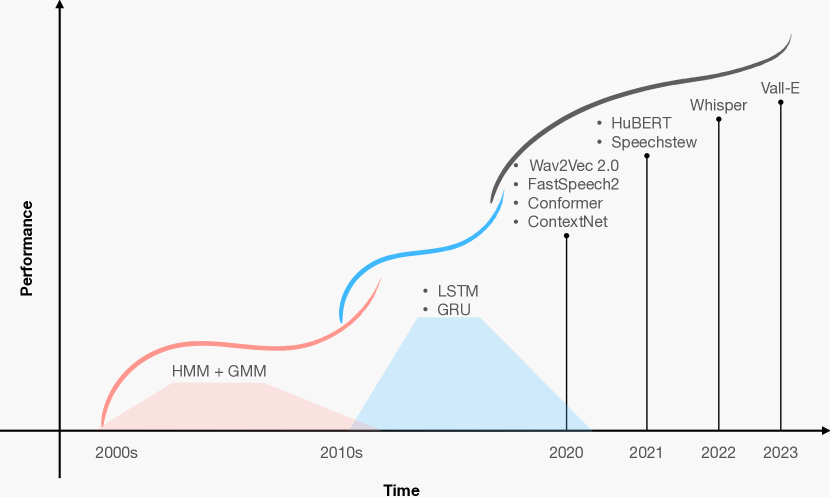
The field of speech processing has undergone a transformative shift with the advent of deep learning. The use of multiple processing layers has enabled the creation of models capable of extracting intricate features from speech data. This development has paved the way for unparalleled advancements in speech recognition, text-to-speech synthesis, automatic speech recognition, and emotion recognition, propelling the performance of these tasks to unprecedented heights. The power of deep learning techniques has opened up new avenues for research and innovation in the field of speech processing, with far-reaching implications for a range of industries and applications. This review paper provides a comprehensive overview of the key deep learning models and their applications in speech-processing tasks. We begin by tracing the evolution of speech processing research, from early approaches, such as MFCC and HMM, to more recent advances in deep learning architectures, such as CNNs, RNNs, transformers, conformers, and diffusion models. We categorize the approaches and compare their strengths and weaknesses for solving speech-processing tasks. Furthermore, we extensively cover various speech-processing tasks, datasets, and benchmarks used in the literature and describe how different deep-learning networks have been utilized to tackle these tasks. Additionally, we discuss the challenges and future directions of deep learning in speech processing, including the need for more parameter-efficient, interpretable models and the potential of deep learning for multimodal speech processing. By examining the field's evolution, comparing and contrasting different approaches, and highlighting future directions and challenges, we hope to inspire further research in this exciting and rapidly advancing field.
研究动机与目标
- 追踪语音处理从传统方法(MFCC、HMM)到现代深度学习模型的演变。
- 对语音任务中的深度学习架构(RNNs、CNNs、Transformers、Conformers、diffusion models、GNNs)进行分类与比较。
- 调查表示学习(有监督、无监督、半监督、自监督)及其在语音处理中的作用。
- 回顾广泛的语音处理任务(ASR、合成、说话人识别、说话人分离、翻译、增强、多模态处理)及相关数据集/基准。
- 讨论迁移学习技术(领域自适应、元学习、参数高效方法)并勾画未来研究方向。
提出的方法
- 提供用于语音处理的深度学习架构的广泛分类(RNNs、CNNs、Transformers、Conformers、序列到序列模型、强化学习、图神经网络、扩散模型)。
- 描述语音表示学习范式(有监督、无监督、半监督、自监督)及其对性能的影响。
- 综述关键语音处理任务及解决它们的深度学习方法(ASR、合成、说话人识别、说话人分离、翻译、增强、VAD、质量评估、分离、SLU、视听处理)。
- 讨论与语音处理相关的先进迁移学习技术(领域自适应、元学习、参数高效迁移学习)。
- 突出挑战(数据效率、可解释性、鲁棒性)及潜在未来方向(多模态语音处理、效率与泛化)。
实验结果
研究问题
- RQ1主要深度学习架构在核心语音任务中的相对优势与局限性是什么?
- RQ2数据集与基准在各语音处理任务的进展中有何影响?
- RQ3表示学习(有监督 vs 自监督)在提升语音任务性能方面的作用是什么?
- RQ4哪些挑战限制部署(数据效率、可解释性、鲁棒性),哪些未来方向最具潜力?
- RQ5迁移学习技术如何推动跨领域和跨模态的语音处理?
主要发现
- 深度学习在识别、合成和说话人分析等语音任务上相较传统方法带来了显著进展。
- 端到端的 RNN、CNN 和 transformer 基础模型已成为现代语音系统的核心,通常优于基于 HMM 的流水线。
- 自监督与半监督表示越来越多地用于降低标注数据需求并提升鲁棒性。
- 多模态方法(音视频)在具有挑战性的环境中展现出潜力,特别是在语音活动检测与识别方面。
- 迁移学习,包括领域自适应和参数高效方法,在跨领域语音处理任务中具有价值。
- 该领域持续探索在性能、计算效率与可解释性之间取得平衡的架构。
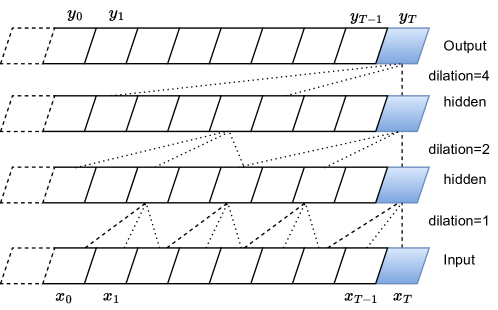
阅读本论文
在 Nubint 阅读器中打开原文,边读边就任意段落提问。
在 Nubint 中阅读本论文本解读由 AI 根据论文原文生成,引用前请核对原文。