
[论文解读] A Safe Harbor for AI Evaluation and Red Teaming
本文提出法律与技术上的安全港,以保护对生成式AI系统的独立、公共利益导向评估与红队测试,免于承担法律责任和账户被暂停的风险。
Independent evaluation and red teaming are critical for identifying the risks posed by generative AI systems. However, the terms of service and enforcement strategies used by prominent AI companies to deter model misuse have disincentives on good faith safety evaluations. This causes some researchers to fear that conducting such research or releasing their findings will result in account suspensions or legal reprisal. Although some companies offer researcher access programs, they are an inadequate substitute for independent research access, as they have limited community representation, receive inadequate funding, and lack independence from corporate incentives. We propose that major AI developers commit to providing a legal and technical safe harbor, indemnifying public interest safety research and protecting it from the threat of account suspensions or legal reprisal. These proposals emerged from our collective experience conducting safety, privacy, and trustworthiness research on generative AI systems, where norms and incentives could be better aligned with public interests, without exacerbating model misuse. We believe these commitments are a necessary step towards more inclusive and unimpeded community efforts to tackle the risks of generative AI.
研究动机与目标
- 激励对生成式AI系统进行独立评估和红队测试,以识别风险。
- 突出法律、政策和实际障碍,阻碍研究人员开展善意的安全研究。
- 提出两项自愿承诺——法律安全港和技术安全港——以保护研究人员。
- 概述利用漏洞披露规范和可信第三方来实现的路径。
- 倡导更广泛的独立参与,以提高AI安全性和问责性。
提出的方法
- 界定并给出关键术语的背景(安全港、善意研究、漏洞披露),以支持更具监管友好性的框架。
- 分析全球主要AI开发商的现行服务条款、执法实践与研究人员准入计划。
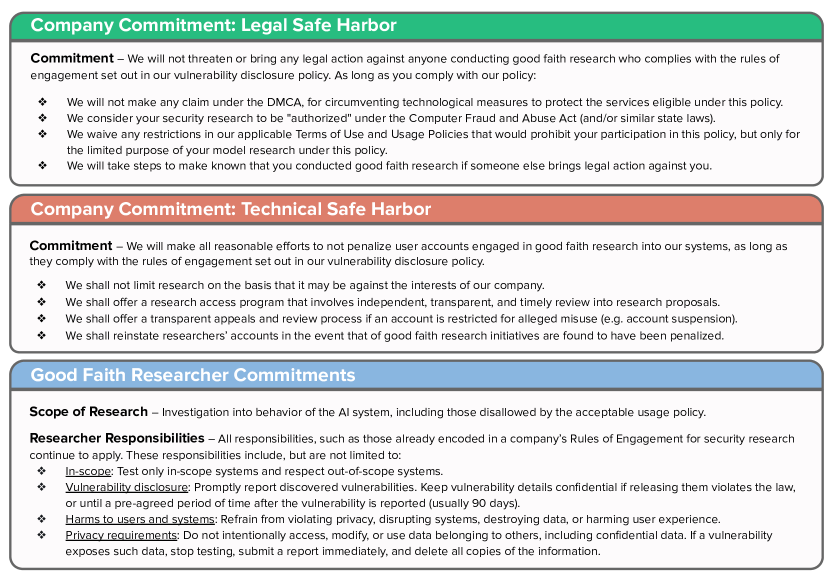
- 主张两项协调承诺:法律安全港和技术安全港,以支持独立安全研究。
- 提出将账户授权委托给受信任的第三方(如大学、非营利组织),以扩大规模并去政治化准入。
- 概述独立评审、申诉机制以及透明化流程,以在保护研究人员的同时防止滥用。
- 将这些提案置于现有的安全研究与治理文献中(例如漏洞赏金、NAIRR、政策指南)。
实验结果
研究问题
- RQ1当前的服务条款与执法实践如何阻碍独立的AI评估与红队测试?
- RQ2需要哪些法律与技术保护措施来保护从事善意安全研究的研究人员?
- RQ3如何在实践中实施安全港,以扩大独立评估规模同时防止滥用?
- RQ4大学、非营利机构或公共利益机构在授权研究准入方面应扮演何种角色?
- RQ5维持独立安全研究需要哪些治理机制(申诉、透明度)?
主要发现
- 独立AI评估受到不一致、透明度低的政策以及账户被暂停威胁的阻碍。
- 当前的研究人员准入计划代表性不足、资金薄弱,且缺乏与企业激励分离的独立性。
- 一对自愿承诺——法律安全港和技术安全港——可能显著提高参与度并保护研究人员。
- 将准入授权委托给受信任的第三方并建立透明的申诉机制,可以减少企业偏袒和寒蝉效应。
- 法律安全港将保护在既定漏洞披露政策下进行的善意研究,而技术安全港将保护研究人员免受账户终止。
- 这些保护措施使安全研究符合公共利益,而不削弱对模型滥用的防护。
阅读本论文
在 Nubint 阅读器中打开原文,边读边就任意段落提问。
在 Nubint 中阅读本论文本解读由 AI 根据论文原文生成,引用前请核对原文。