
[论文解读] A Survey for Foundation Models in Autonomous Driving
本综述评估基础模型——尤其是大型语言模型、视觉基础模型和多模态模型——在自动驾驶中的应用,勾勒分类法、方法、局限性和未来方向。
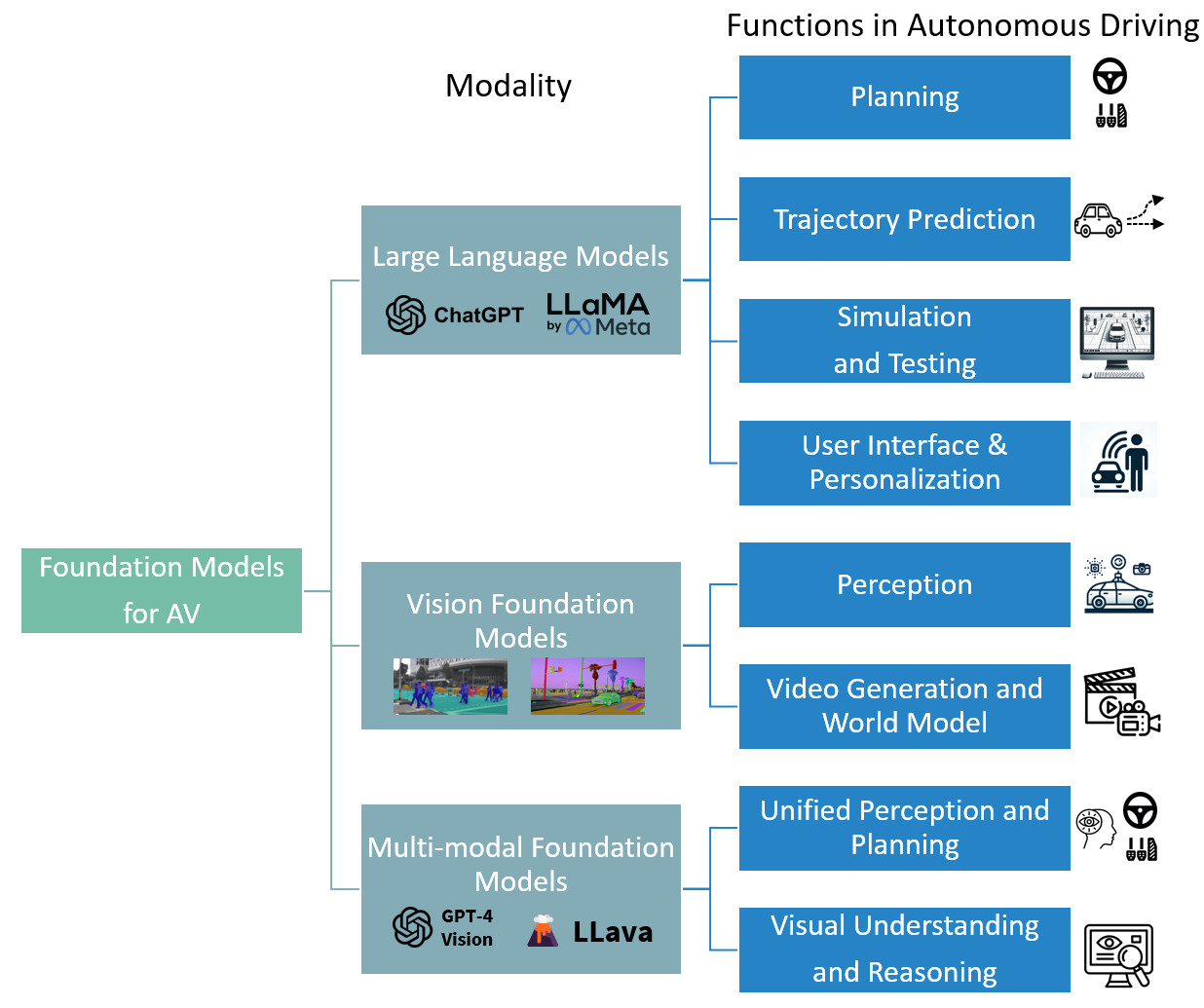
The advent of foundation models has revolutionized the fields of natural language processing and computer vision, paving the way for their application in autonomous driving (AD). This survey presents a comprehensive review of more than 40 research papers, demonstrating the role of foundation models in enhancing AD. Large language models contribute to planning and simulation in AD, particularly through their proficiency in reasoning, code generation and translation. In parallel, vision foundation models are increasingly adapted for critical tasks such as 3D object detection and tracking, as well as creating realistic driving scenarios for simulation and testing. Multi-modal foundation models, integrating diverse inputs, exhibit exceptional visual understanding and spatial reasoning, crucial for end-to-end AD. This survey not only provides a structured taxonomy, categorizing foundation models based on their modalities and functionalities within the AD domain but also delves into the methods employed in current research. It identifies the gaps between existing foundation models and cutting-edge AD approaches, thereby charting future research directions and proposing a roadmap for bridging these gaps.
研究动机与目标
- 在感知、预测和规划的全流程中,调研基础模型在自动驾驶(AD)中的作用。
- 分析大型语言模型、视觉基础模型和多模态模型如何被改编用于 AD 任务。
- 识别基础模型与现有 AD 方法之间的差距并提出未来研究方向。
- 提出基于模态和功能角色的 AD 基础模型分类法。
提出的方法
- 按模态(LLM、vision、multi-modal)和在 AD 中的功能对基础模型进行分类。
- 总结关键技术:提示工程、上下文学习、微调、带人类反馈的强化学习,以及视觉指令调优。
- 讨论在规划、预测、感知、仿真与测试中的应用。
- 回顾如幻觉、延迟和感知依赖等局限性,并勾勒未来研究方向。
实验结果
研究问题
- RQ1大型语言模型如何用于推理、规划和交互在自动驾驶中?
- RQ2视觉和多模态基础模型在 AD 的感知、预测和决策制定中扮演何种角色?
- RQ3阻碍基础模型在自动驾驶实际部署的主要局限性与差距有哪些?
- RQ4哪些路线图和研究方向可以将基础模型与当前的 AD 系统衔接起来?
主要发现
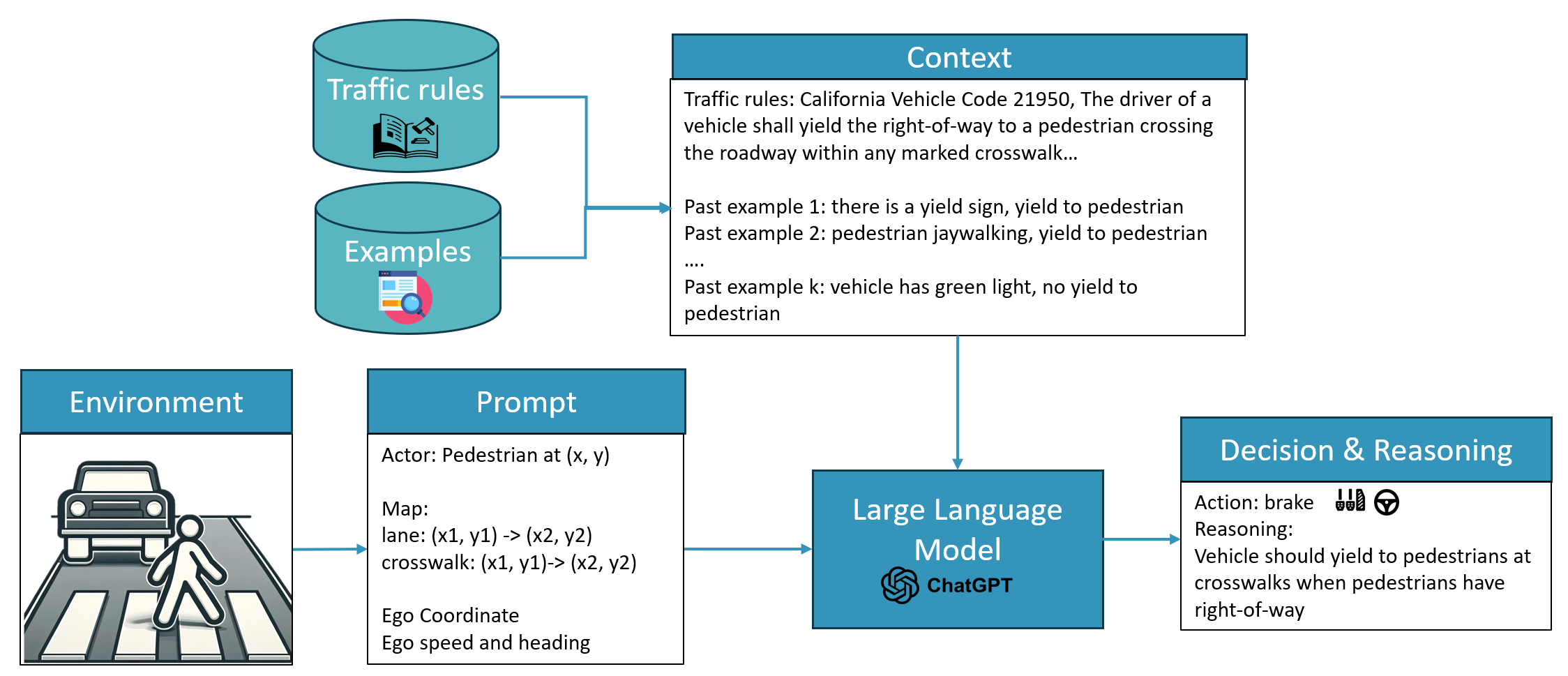
- LLMs 通过描述性环境提示和结构化提示,在 AD 中实现推理、规划和用户互动。
- 视觉基础模型被应用于 3D 感知、视频生成和领域自适应以实现 AD 场景理解。
- 多模态基础模型支持视觉理解、空间推理和统一感知-规划,并使用指令调优将模型适配到 AD 任务。
- 存在显著局限性,包括幻觉、延迟、对上游感知的依赖,以及 AD 应用中的仿真到现实之间的差距。
- 本文提出了一个分阶段的路线图:逐步收集领域特定数据、结合 3D 数据和 lidar,并进行人类在环对齐以确保安全。
阅读本论文
在 Nubint 阅读器中打开原文,边读边就任意段落提问。
在 Nubint 中阅读本论文本解读由 AI 根据论文原文生成,引用前请核对原文。