
[论文解读] A Survey of Deep Learning and Foundation Models for Time Series Forecasting
对时间序列预测领域的深度学习、 transformers、基础模型和知识驱动方法的全面综述,重点关注疫情预测以及知识图谱、LLMs 和预训练的整合。
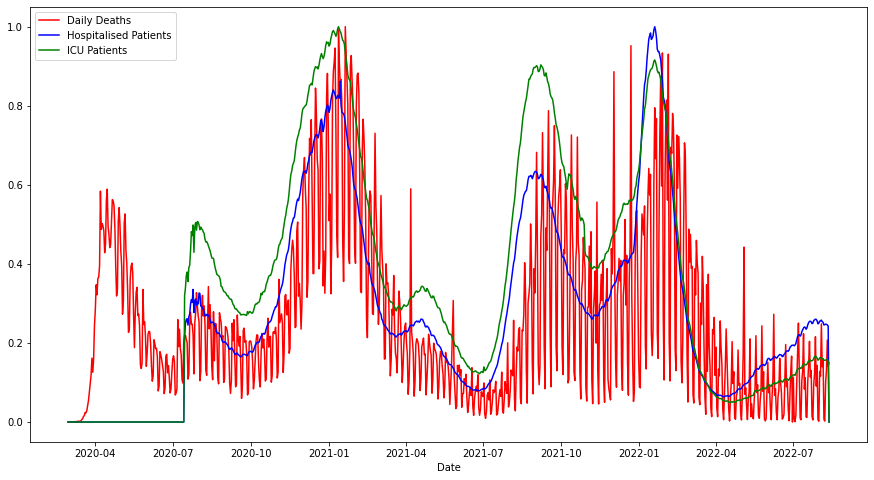
Deep Learning has been successfully applied to many application domains, yet its advantages have been slow to emerge for time series forecasting. For example, in the well-known Makridakis (M) Competitions, hybrids of traditional statistical or machine learning techniques have only recently become the top performers. With the recent architectural advances in deep learning being applied to time series forecasting (e.g., encoder-decoders with attention, transformers, and graph neural networks), deep learning has begun to show significant advantages. Still, in the area of pandemic prediction, there remain challenges for deep learning models: the time series is not long enough for effective training, unawareness of accumulated scientific knowledge, and interpretability of the model. To this end, the development of foundation models (large deep learning models with extensive pre-training) allows models to understand patterns and acquire knowledge that can be applied to new related problems before extensive training data becomes available. Furthermore, there is a vast amount of knowledge available that deep learning models can tap into, including Knowledge Graphs and Large Language Models fine-tuned with scientific domain knowledge. There is ongoing research examining how to utilize or inject such knowledge into deep learning models. In this survey, several state-of-the-art modeling techniques are reviewed, and suggestions for further work are provided.
研究动机与目标
- 评估从经典统计方法到深度学习和基础模型的时间序列预测方法的演进。
- 检查编码器-解码器、Transformer 和图神经网络架构如何在时间序列中捕捉时序与时空依赖。
- 探索知识图谱和大型语言模型等知识来源如何增强预测模型。
- 识别疫情预测中的挑战,以及理论引导的数据科学和物理信息方法的机会。
- 为未来研究提供方向,并对模型开发与评估提出实际建议。
提出的方法
- 综述历史与当代时间序列预测模型,包括 SARIMAX、VAR、LSTM/GRU、编码器-解码器,以及基于 Transformer 的方法。
- 讨论稀疏注意力、基于补丁的 Transformer 以及多变量时间序列的预训练/MAE 技术的进展。
- 回顾表示学习方法(如 TS2Vec、CoST、FEAT、SimTS)及其对预测性能和可解释性的影响。
- 总结图神经网络在时空预测中的作用,特别是在国家和州层面的疫情数据。
- 突出使用知识源(知识图谱、LLMs)以提升预测质量、可解释性和科学依据。
- 提供对当前文献中各种建模技术有效性的元研究视角。
实验结果
研究问题
- RQ1哪些建模技术正在推动时间序列预测的改进,它们与传统基线相比如何?
- RQ2基于 Transformer 和基于图的架构在时序和时空预测任务(包括疫情数据)中的表现如何?
- RQ3预训练、补丁化以及表示学习在提升预测准确性和效率方面的作用是什么?
- RQ4如何将知识图谱和大型语言模型整合以提升预测质量和可解释性?
- RQ5时间序列预测中基础模型的主要挑战和未来方向是什么?
主要发现
- Transformer及相关基于注意力的架构已成为时间序列预测的顶尖模型,尤其在捕捉时序动态方面。
- 稀疏注意力、基于补丁的输入以及自相关技术可以降低计算量并提升 Transformer 的长时程预测性能。
- 表示学习方法(如 TS2Vec、CoST、FEAT、SimTS)提供有效的潜在表示,支撑预测并可提升可解释性。
- 图神经网络非常适合捕捉时空依赖,尤其是在州级和国家级疫情数据中。
- 基础模型的理念,包括预训练以及使用知识图谱和 LLMs,有望提升疫情应对能力和可解释性,尽管仍存在挑战(短时间序列、分布偏移等)。
- 元研究角度表明,当前文献中各种方法的效果存在差异,机器学习方法在最近的迭代中日益与经典统计方法竞争甚至超过它们。
阅读本论文
在 Nubint 阅读器中打开原文,边读边就任意段落提问。
在 Nubint 中阅读本论文本解读由 AI 根据论文原文生成,引用前请核对原文。