
[论文解读] A Survey of Optimization-based Task and Motion Planning: From Classical To Learning Approaches
本综述系统性地回顾了基于优化的运动与任务规划(TAMP),统一了经典混合优化方法与现代学习方法。它强调了用于解决复杂、高接触性运动与操作任务的分层与分布式算法结构,同时突出了与大型语言模型及轨迹优化的协同作用,以实现长时序、动态的机器人行为。
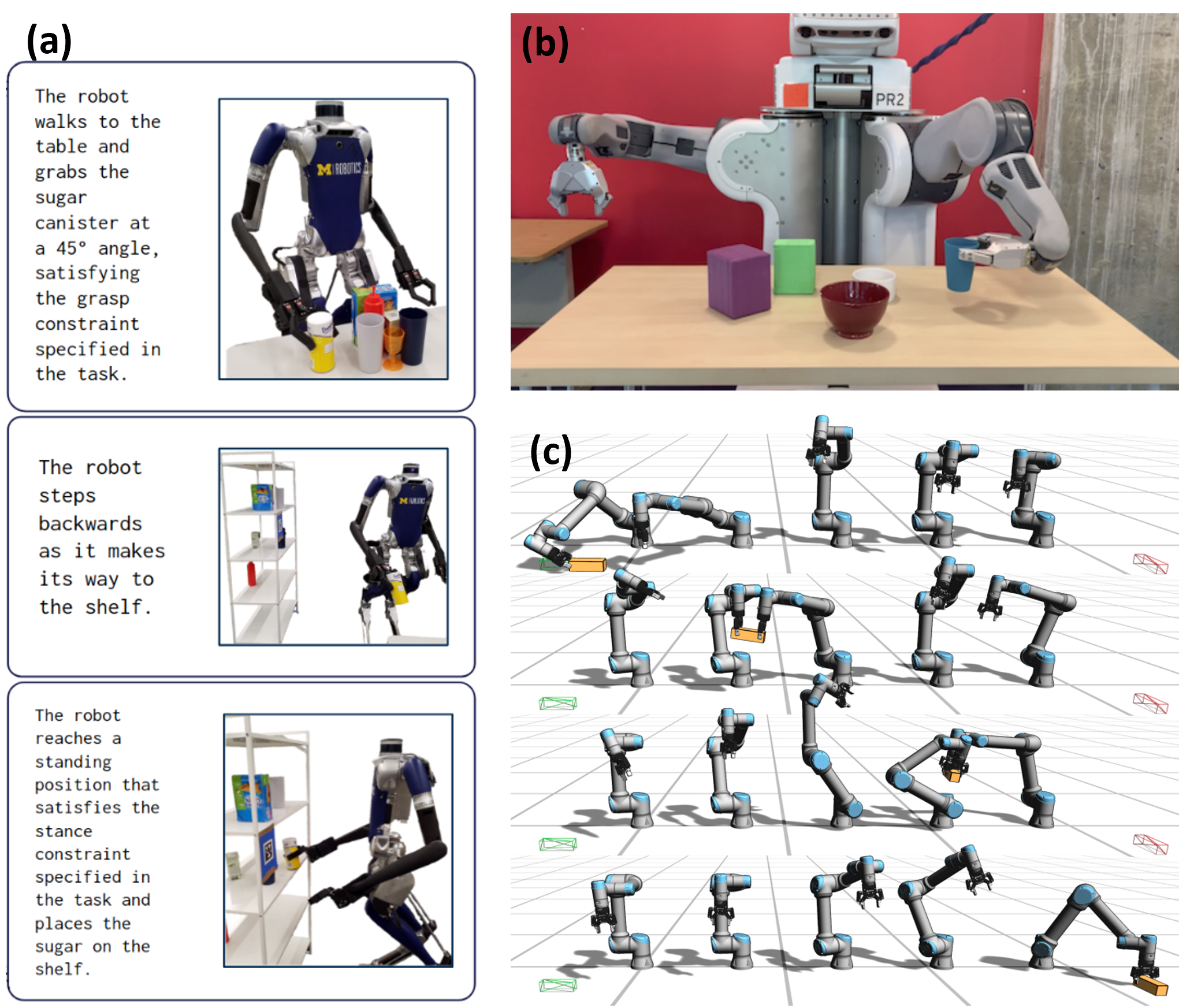
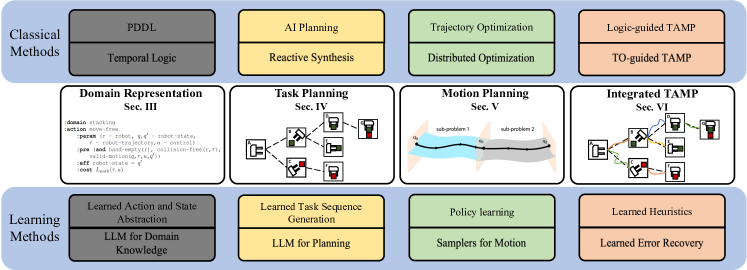
Task and Motion Planning (TAMP) integrates high-level task planning and low-level motion planning to equip robots with the autonomy to effectively reason over long-horizon, dynamic tasks. Optimization-based TAMP focuses on hybrid optimization approaches that define goal conditions via objective functions and are capable of handling open-ended goals, robotic dynamics, and physical interaction between the robot and the environment. Therefore, optimization-based TAMP is particularly suited to solve highly complex, contact-rich locomotion and manipulation problems. This survey provides a comprehensive review on optimization-based TAMP, covering (i) planning domain representations, including action description languages and temporal logic, (ii) individual solution strategies for components of TAMP, including AI planning and trajectory optimization (TO), and (iii) the dynamic interplay between logic-based task planning and model-based TO. A particular focus of this survey is to highlight the algorithm structures to efficiently solve TAMP, especially hierarchical and distributed approaches. Additionally, the survey emphasizes the synergy between the classical methods and contemporary learning-based innovations such as large language models. Furthermore, the future research directions for TAMP is discussed in this survey, highlighting both algorithmic and application-specific challenges.
研究动机与目标
- 系统性回顾将符号化任务规划与连续轨迹优化相结合的基于优化的TAMP框架。
- 分析基于逻辑的任务规划与基于模型的轨迹优化在处理复杂、动态机器人任务时的相互作用。
- 识别算法进步,特别是分层与分布式方法,以提升长时序规划中的可扩展性与效率。
- 探索学习方法(包括大型语言模型与强化学习)与经典基于优化的TAMP的集成。
- 识别在实际部署中,特别是在运动、操作与人机协作方面,TAMP面临的开放挑战与未来研究方向。
提出的方法
- 将TAMP建模为结合离散符号规划与连续轨迹优化的混合优化问题,利用目标函数编码计划质量。
- 采用动作描述语言与时序逻辑表示高层任务,实现对复杂目标与约束的正式规范。
- 集成基于模型的轨迹优化(TO),以编码机器人动力学,实现在高接触环境中的自然、高效与动态运动。
- 应用分层与分布式优化策略,将任务级组合复杂性与运动级数值复杂性解耦。
- 探索将大型语言模型(LLMs)与视觉-语言模型(VLMs)与TAMP融合,以提升任务理解与指令对齐能力。
- 研究基于强化学习的策略学习,以实现端到端技能获取,重点在于观测与动作表示的设计以实现泛化。
实验结果
研究问题
- RQ1在长时序、动态任务中,基于优化的TAMP如何有效平衡计算效率与规划全面性?
- RQ2哪些关键算法结构(如分层或分布式方法)能够实现复杂机器人系统的可扩展、高效TAMP?
- RQ3大型语言模型在TAMP中如何增强任务规划与指令对齐?其在空间与时间推理方面的当前局限性是什么?
- RQ4如何将强化学习与基于优化的TAMP结合,以提升策略泛化能力与现实世界迁移性能?
- RQ5在人形机器人具备灵巧手与动态接触交互的背景下,统一运动与操作规划面临哪些挑战?
主要发现
- 在处理开放式目标与复杂目标函数方面,基于优化的TAMP优于基于约束与采样的方法,尤其在高接触性操作与动态运动中表现更优。
- 分层与分布式优化框架通过解耦任务规划与运动规划,显著降低了计算复杂度,实现了长时序任务的可扩展解决方案。
- 大型语言模型的集成提升了高层任务理解与指令解析能力,但其在空间推理与短期记忆方面的局限性,制约了在序列性、多阶段任务中的鲁棒性。
- 通过精心设计的观测与动作表示,强化学习可增强策略泛化能力,但样本效率低下与仿真到现实的迁移仍是主要挑战。
- 由于机器人中心化运动与物体中心化操作在接触频率与表示方式上的差异,实现运动-操作一体化TAMP仍具挑战。
- 在TAMP中,人机协作正通过意图预测、运动建模与多模态交互(如语言与物理交互)不断推进,但高效且鲁棒的集成仍是开放问题。
阅读本论文
在 Nubint 阅读器中打开原文,边读边就任意段落提问。
在 Nubint 中阅读本论文本解读由 AI 根据论文原文生成,引用前请核对原文。