
[论文解读] A Survey on Causal Discovery Methods for I.I.D. and Time Series Data
本综述全面评估因果发现方法在独立同分布(I.I.D.)和时间序列数据上的应用,详细介绍算法、假设、基准、工具与应用,并讨论挑战与未来方向。
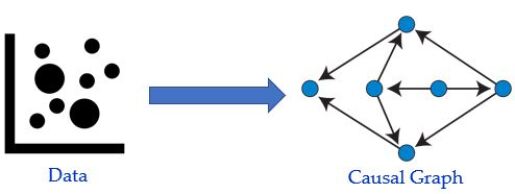
The ability to understand causality from data is one of the major milestones of human-level intelligence. Causal Discovery (CD) algorithms can identify the cause-effect relationships among the variables of a system from related observational data with certain assumptions. Over the years, several methods have been developed primarily based on the statistical properties of data to uncover the underlying causal mechanism. In this study, we present an extensive discussion on the methods designed to perform causal discovery from both independent and identically distributed (I.I.D.) data and time series data. For this purpose, we first introduce the common terminologies used in causal discovery literature and then provide a comprehensive discussion of the algorithms designed to identify causal relations in different settings. We further discuss some of the benchmark datasets available for evaluating the algorithmic performance, off-the-shelf tools or software packages to perform causal discovery readily, and the common metrics used to evaluate these methods. We also evaluate some widely used causal discovery algorithms on multiple benchmark datasets and compare their performances. Finally, we conclude by discussing the research challenges and the applications of causal discovery algorithms in multiple areas of interest.
研究动机与目标
- 总结 I.I.D. 数据和时间序列数据因果发现方法的谱系。
- 澄清因果发现中使用的术语、模型和基本假设。
- 讨论基准数据集、评估指标和可用的软件工具。
- 在标准数据集上评估具有代表性的因果发现算法,以说明性能。
- 识别跨领域的挑战与潜在应用,并提出未来研究的指南。
提出的方法
- 按核心策略对因果发现方法进行分类:约束基、分数基、功能因果模型(FCMs)、梯度基,以及其他。
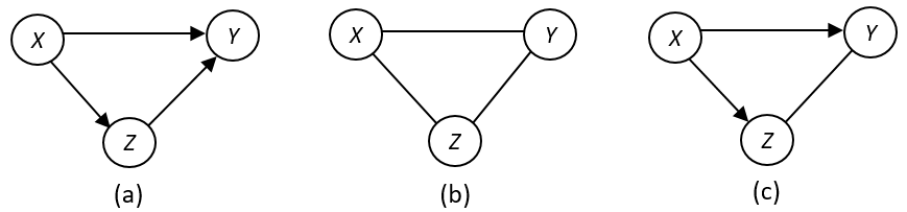
- 解释关键图模型概念(DAGs、PDAGs、CPDAGs、MAGs、PAGs)与马尔可夫等价性。
- 描述条件独立性检验(CI 测试)和 d-分离作为基础工具。
- 概括在不同方法中如何强制实现无环性及其他因果假设(CMC、CFC、因果充分性)。
- 综述时间序列特定方法及在结构恢复中先验知识的作用。
实验结果
研究问题
- RQ1用于 I.I.D. 数据和时间序列数据的因果发现的主要方法族群有哪些?
- RQ2这些方法在假设、输出图和计算性质方面的比较如何?
- RQ3常用来评估因果发现方法的数据集、基准、评估指标和工具有哪些?
- RQ4当前跨领域的因果发现挑战与实际应用有哪些?
- RQ5如何整合先验知识以提升因果发现的性能?
主要发现
- 本文提供了对因果发现方法的广泛分类法,包括约束基、分数基、FCM 基于、梯度基、混合、连续优化、基于先验知识和其他方法,适用于 I.I.D. 和时间序列数据。
- 它介绍并解释了基础概念,如 DAGs、PDAGs、CPDAGs、MAGs、PAGs、d-分离和马尔可夫等价性,并讨论它们与因果发现输出的相关性。
- 条件独立性检验和 d-分离框架是许多基于约束的方法的核心,调查了范围广泛的 CI 测试。
- 该综述涵盖常见假设(CMC、CFC、因果充分性、无环性),并讨论它们如何影响方法在实际中的适用性和性能。
- 基准数据集、评估指标和开源工具被讨论,以帮助研究者评估和应用因果发现方法。
阅读本论文
在 Nubint 阅读器中打开原文,边读边就任意段落提问。
在 Nubint 中阅读本论文本解读由 AI 根据论文原文生成,引用前请核对原文。