
[论文解读] A Survey on Fairness-aware Recommender Systems
本综述全面概述了公平性感知推荐系统,将公平性方法分类为预处理、训练中处理和后处理三个阶段。它识别了推荐流水线中的关键偏差,评估了公平性度量标准和数据集,并强调了公平性与准确性之间的权衡,同时突出了公平性与其他可信AI特性(如可解释性和鲁棒性)的整合。
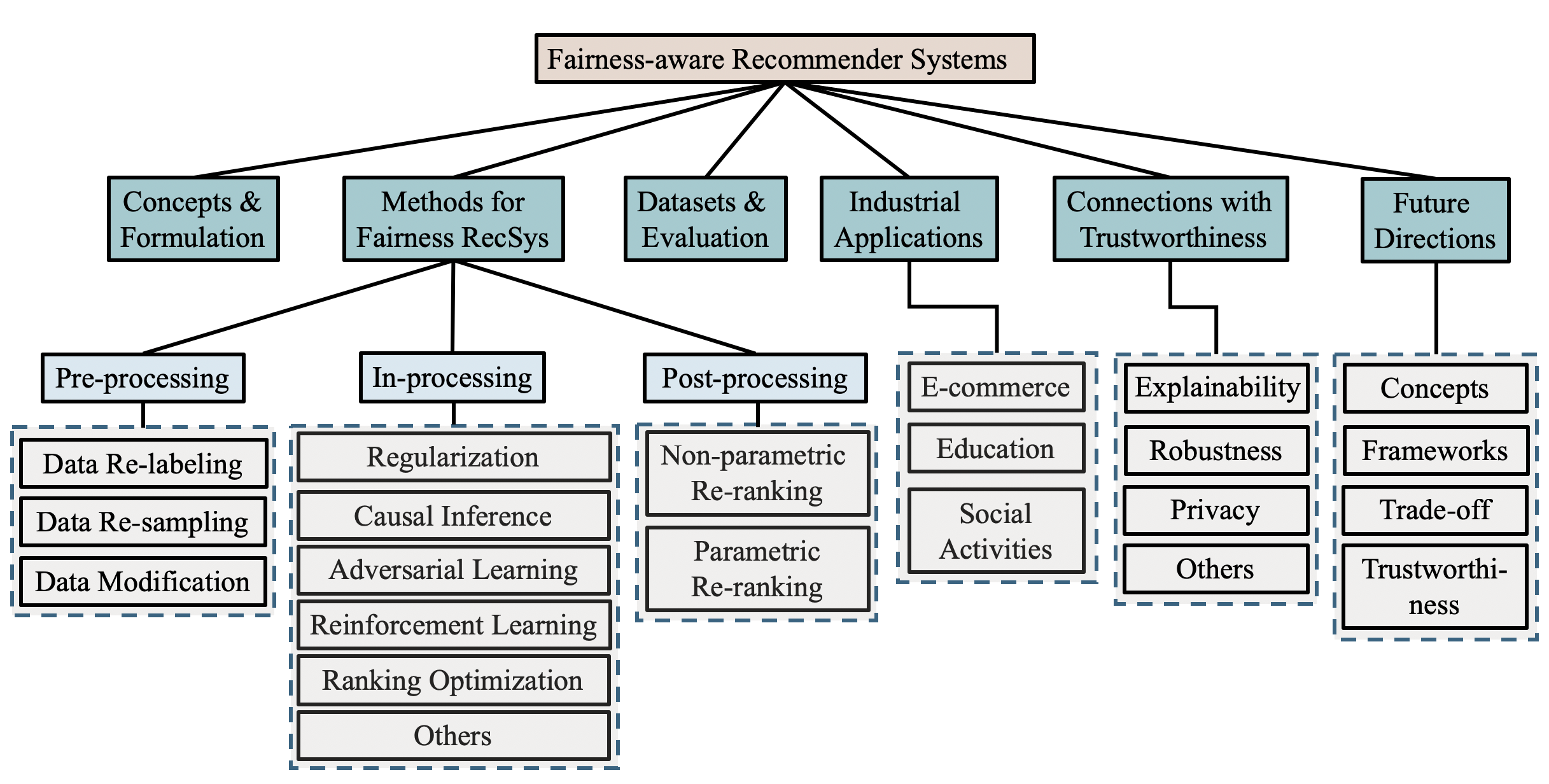
As information filtering services, recommender systems have extremely enriched our daily life by providing personalized suggestions and facilitating people in decision-making, which makes them vital and indispensable to human society in the information era. However, as people become more dependent on them, recent studies show that recommender systems potentially own unintentional impacts on society and individuals because of their unfairness (e.g., gender discrimination in job recommendations). To develop trustworthy services, it is crucial to devise fairness-aware recommender systems that can mitigate these bias issues. In this survey, we summarise existing methodologies and practices of fairness in recommender systems. Firstly, we present concepts of fairness in different recommendation scenarios, comprehensively categorize current advances, and introduce typical methods to promote fairness in different stages of recommender systems. Next, after introducing datasets and evaluation metrics applied to assess the fairness of recommender systems, we will delve into the significant influence that fairness-aware recommender systems exert on real-world industrial applications. Subsequently, we highlight the connection between fairness and other principles of trustworthy recommender systems, aiming to consider trustworthiness principles holistically while advocating for fairness. Finally, we summarize this review, spotlighting promising opportunities in comprehending concepts, frameworks, the balance between accuracy and fairness, and the ties with trustworthiness, with the ultimate goal of fostering the development of fairness-aware recommender systems.
研究动机与目标
- 系统性地对不同推荐场景中的推荐系统公平性问题进行分类。
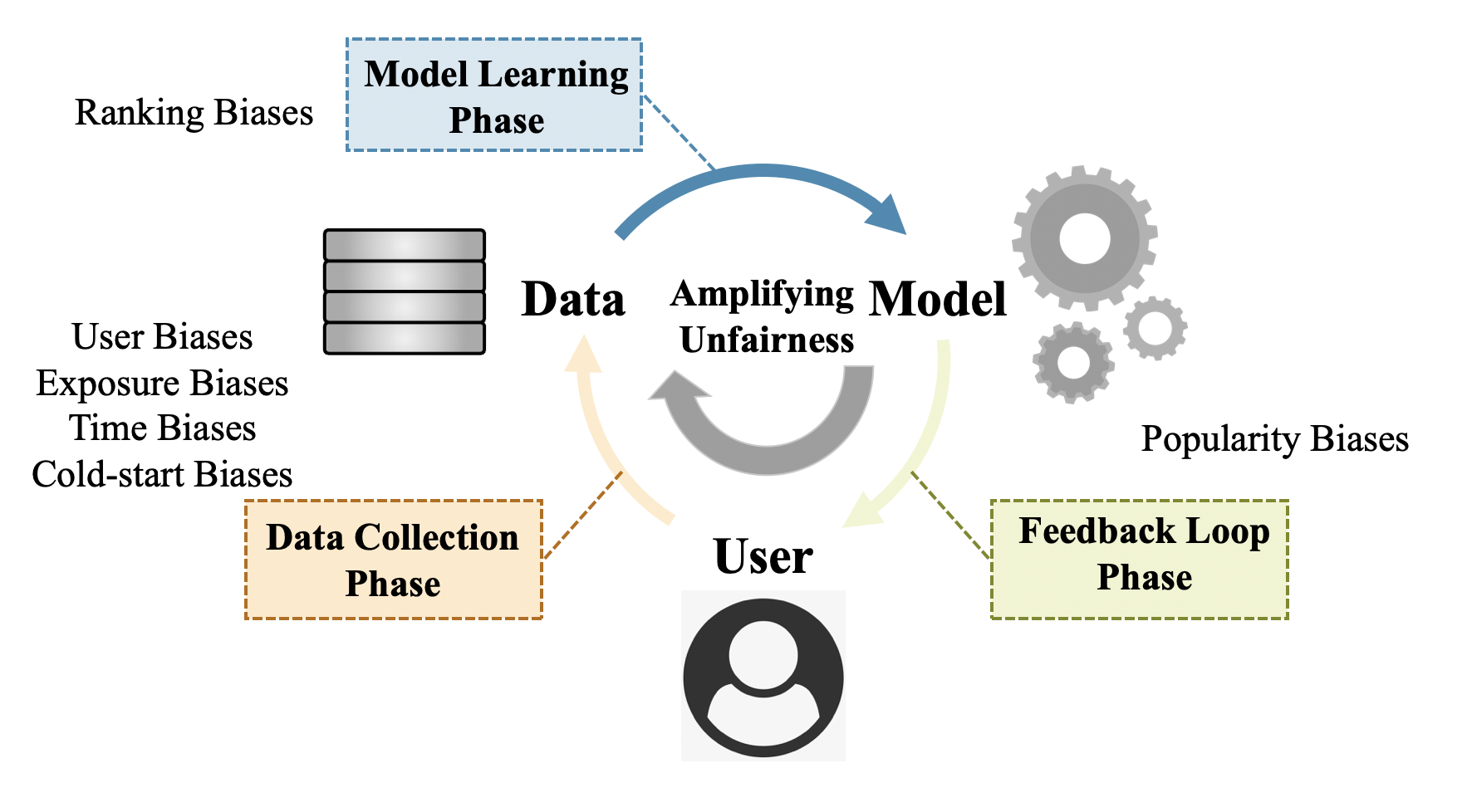
- 分析推荐生命周期中不公平现象的根本原因,包括数据偏差和模型偏差。
- 总结预处理、训练中处理和后处理阶段的公平性感知方法。
- 使用标准化数据集和度量标准评估公平性,以支持可复现的研究。
- 探讨公平性与其他可信AI特性(如可解释性、鲁棒性及隐私保护)之间的相互作用。
提出的方法
- 将公平性方法划分为三个阶段:预处理(在数据中减轻偏差)、训练中处理(在模型训练中引入公平性约束)和后处理(在输出中调整公平性)。
- 引入公平性度量标准,如人口均等性、机会均等性和待遇公平性,以量化推荐中的偏差。
- 回顾基准数据集,如Amazon、MovieLens和MOOC,用于评估电子商务、内容推荐和教育领域的公平性。
- 通过在多样化推荐场景中的实证评估,分析准确率与公平性之间的权衡。
- 通过案例研究和文献综述,分析公平性与其他可信性属性(如可解释性和鲁棒性)的整合方式。
- 提出一个未来研究框架,强调通过统一公平性与多种AI伦理原则来实现整体可信性。
实验结果
研究问题
- RQ1在推荐系统生命周期的不同阶段,各类偏差如何产生?
- RQ2在预处理、训练中处理和后处理阶段,最有效的公平性感知方法是什么?它们在性能和公平性方面的表现如何比较?
- RQ3用于衡量推荐系统中公平性的关键数据集和评估度量标准有哪些?
- RQ4在实际应用中,公平性如何与可解释性、鲁棒性等其他可信AI特性相互作用?
- RQ5在平衡公平性与推荐准确率方面面临的主要挑战是什么?这些挑战如何被缓解?
主要发现
- 公平性感知推荐系统显著减少了歧视性结果,例如在工作或贷款推荐中减少性别或种族偏见。
- 预处理方法(如重加权和数据增强)有助于缓解历史数据中的偏差,而训练中处理方法(如对抗训练)则在模型学习过程中强制实现公平性。
- 后处理技术(如重新排序和校准)可在不重新训练模型的情况下,有效调整推荐输出以满足公平性标准。
- 公平性与准确率之间存在持续的权衡,公平性提升通常伴随着推荐准确率的轻微下降。
- 越来越多的证据表明,将公平性与可解释性和鲁棒性相结合,可显著提升系统的整体可信度和用户接受度。
- 当前研究缺乏能同时优化公平性与其他可信属性的综合性框架,表明存在显著的研究空白。
阅读本论文
在 Nubint 阅读器中打开原文,边读边就任意段落提问。
在 Nubint 中阅读本论文本解读由 AI 根据论文原文生成,引用前请核对原文。