
[论文解读] A Survey on Graph Representation Learning Methods
本综述全面回顾了图表示学习方法,涵盖传统图嵌入与基于图神经网络(GNN)的方法,适用于静态图与动态图。其独特之处在于系统总结了GNN的九项关键局限性(如过平滑、过压缩与表达能力不足),并梳理了相应的解决方案,同时指明了未来研究方向,使其成为该领域研究人员及时且详尽的参考文献。
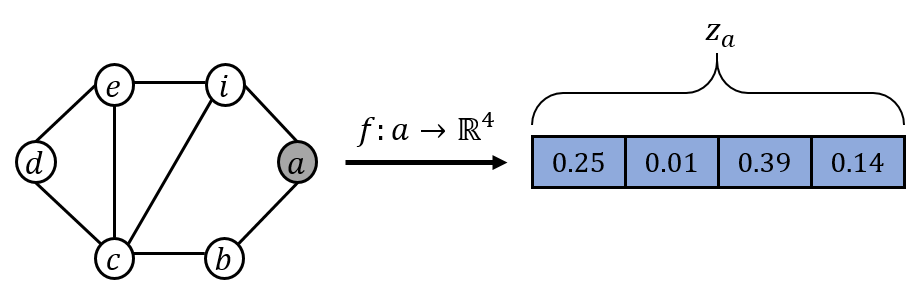
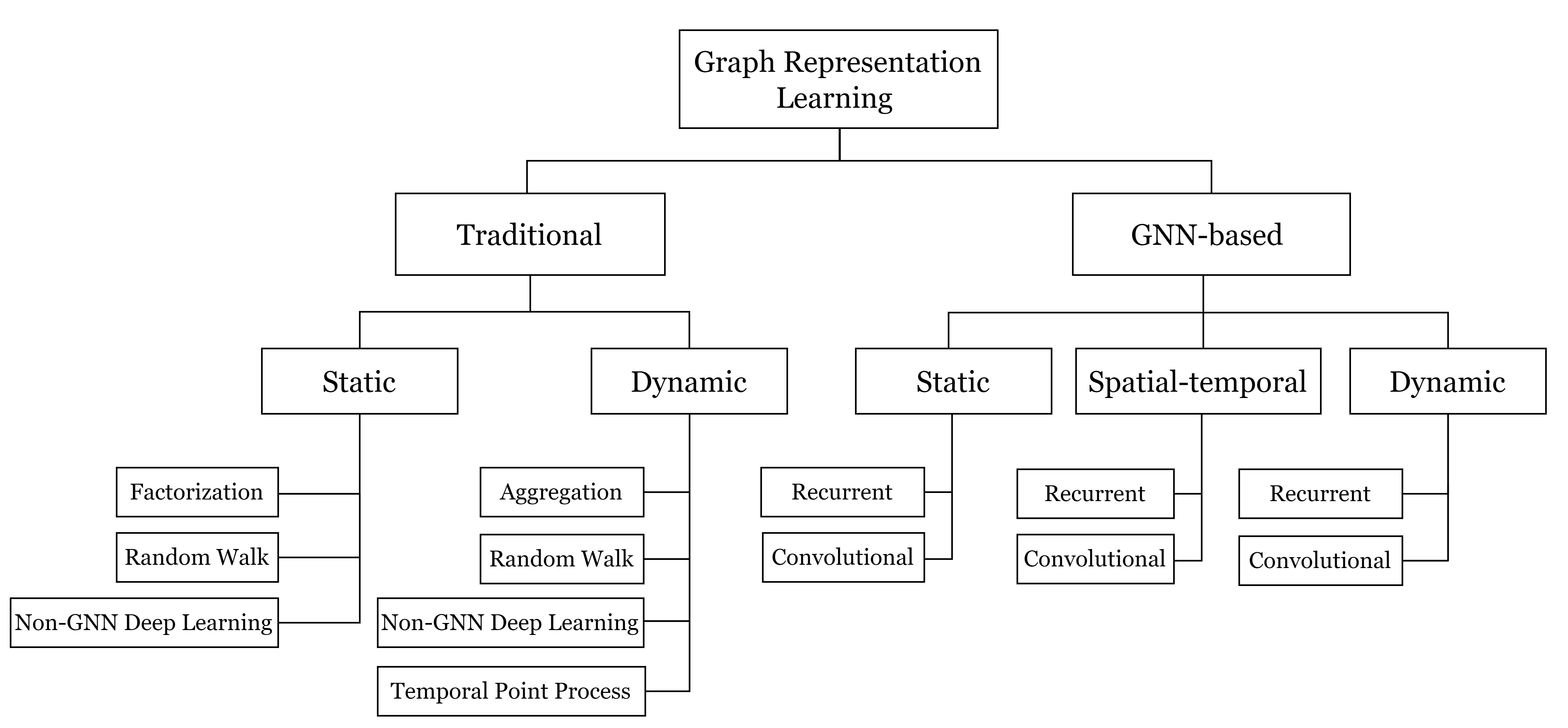
Graphs representation learning has been a very active research area in recent years. The goal of graph representation learning is to generate graph representation vectors that capture the structure and features of large graphs accurately. This is especially important because the quality of the graph representation vectors will affect the performance of these vectors in downstream tasks such as node classification, link prediction and anomaly detection. Many techniques are proposed for generating effective graph representation vectors. Two of the most prevalent categories of graph representation learning are graph embedding methods without using graph neural nets (GNN), which we denote as non-GNN based graph embedding methods, and graph neural nets (GNN) based methods. Non-GNN graph embedding methods are based on techniques such as random walks, temporal point processes and neural network learning methods. GNN-based methods, on the other hand, are the application of deep learning on graph data. In this survey, we provide an overview of these two categories and cover the current state-of-the-art methods for both static and dynamic graphs. Finally, we explore some open and ongoing research directions for future work.
研究动机与目标
- 提供图表示学习方法的统一且最新的综述,涵盖静态图与动态图的传统方法与基于GNN的方法。
- 识别并总结近期文献中提出的基于GNN方法的九项主要局限性及其对应解决方案。
- 突出展示GNN在实际生产系统中的真实应用场景,这些内容在以往综述中常被忽视。
- 识别并讨论图表示学习领域中新兴的研究方向,特别是那些未被先前综述涵盖的内容。
- 通过将静态图与动态图表示学习整合于单一全面的综述中,弥合两者之间的研究鸿沟。
提出的方法
- 将图表示学习划分为传统图嵌入(基于矩阵分解、基于随机游走、非GNN深度学习)与基于GNN的方法。
- 调研静态、时空与动态GNN架构,包括其设计原则与学习机制。
- 系统分析GNN的各类局限性,如过平滑、过压缩与表达能力不足,并总结已提出的解决方案。
- 整合2017至2022年间来自权威会议(如NeurIPS、ICML、KDD)的最新进展,包括部分2017年以前的高影响力工作。
- 通过架构、输入与损失函数的修改,将领域特定知识融入GNN中。
- 探索自然语言处理与计算机视觉领域深度学习进展向图学习迁移的潜力,尤其针对动态图学习。
实验结果
研究问题
- RQ1传统图嵌入与基于GNN的图表示学习方法之间存在哪些关键差异与权衡?
- RQ2GNN如何处理动态图?建模演化图结构的主要挑战是什么?
- RQ3GNN的主要理论与实际局限性是什么?近期研究如何应对这些问题?
- RQ4基于GNN的方法在哪些真实世界生产系统中已成功部署?
- RQ5在当前综述未涵盖的范围内,图表示学习中最具前景的未来研究方向是什么?
主要发现
- 综述识别出GNN的九项主要局限性:表达能力、过平滑、可扩展性、过压缩、长距离依赖捕捉、设计空间复杂性、子结构忽略、对同质性假设的依赖,以及灾难性遗忘。
- 基于偏微分方程(PDE)的新型GNN变体在缓解过平滑方面展现出潜力,提示了模型设计的新方向。
- 通过输入、损失函数或架构修改将领域知识融入GNN可提升特定任务性能,但该方向仍属研究不足。
- 自监督学习、对比学习与数据增强是训练低资源标签数据下GNN的有效策略,尤其在低数据场景中表现突出。
- 将计算机视觉与自然语言处理中的技术(如视频表征学习概念)迁移至图学习,可为动态图学习启发新模型设计。
- GNN已在生产环境中成功部署于电力网络监控、药物过度处方预测与学术出版物预测等应用。
阅读本论文
在 Nubint 阅读器中打开原文,边读边就任意段落提问。
在 Nubint 中阅读本论文本解读由 AI 根据论文原文生成,引用前请核对原文。