
[论文解读] A Survey on Large Language Models with some Insights on their Capabilities and Limitations
本综述回顾 LLM 基础、扩展规律、架构与新兴能力,并讨论 CoT/PoT、RAG 以及领域应用,强调能力与局限。
The rapid advancement of artificial intelligence, particularly with the development of Large Language Models (LLMs) built on the transformer architecture, has redefined the capabilities of natural language processing. These models now exhibit remarkable performance across various language-related tasks, such as text generation, question answering, translation, and summarization, often rivaling human-like comprehension. More intriguingly, LLMs have demonstrated emergent abilities extending beyond their core functions, showing proficiency in tasks like commonsense reasoning, code generation, and arithmetic. This survey paper explores the foundational components, scaling mechanisms, and architectural strategies that drive these capabilities. Emphasizing models like GPT and LLaMA, we analyze the impact of exponential data and computational growth on LLM performance, while also addressing the trade-offs associated with scaling. We also examine LLM applications across sectors, such as healthcare, finance, education, and law, highlighting their adaptability and potential to solve domain-specific challenges. Central to this work are the questions of how LLMs generalize across diverse tasks, exhibit planning, and reasoning abilities, and whether these emergent abilities can be systematically elicited or enhanced. In particular, we provide some insights into the CoT (Chain of Thought) and PoT (Plan of Thought) abilities within LLMs, focusing on how pre-training data influences their emergence. Additionally, we investigate LLM-modulo frameworks that integrate external systems, allowing LLMs to handle complex, dynamic tasks. By analyzing these factors, this paper aims to foster the ongoing discussion on the capabilities and limits of LLMs, promoting their responsible development and application in novel and increasingly complex environments.
研究动机与目标
- 评估大语言模型(LLMs)的发展及其在各领域的变革性影响。
- 分析扩展规律(KM 与 Chinchilla)以及模型规模、数据和计算如何影响性能。
- 考察新兴能力(上下文学习、链式推理、基于计划的推理)以及它们如何产生。
- 讨论在各行业中的实际应用、适应策略,以及对伦理/运营的局限性。
提出的方法
- 综述基础 LLM 概念与基于 Transformer 的架构(BERT、GPT、LLaMA、T5 等)。
- 描述扩展规律及其对模型规模、数据和计算的影响。
- 分析预训练、数据来源与适配技术(指令微调、对齐)。
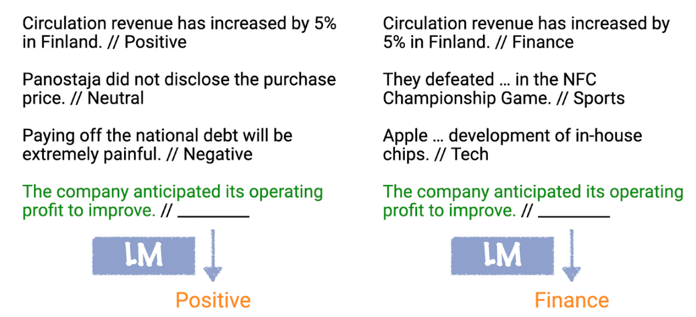
- 探索上下文学习、链式推理提示、程序型思维,以及 LLM-modulo 框架。
- 基于对 Llama 系列模型在 GSM8k 数据集上的实验,呈现对 CoT 起源的经验洞见。
- 讨论医疗、金融、教育与法律等领域的应用,并考虑伦理与环境挑战。
实验结果
研究问题
- RQ1LLMs 如何在多样任务与领域中实现泛化并展现规划与推理能力?
- RQ2哪些因素(规模、数据、架构)驱动新兴能力,是否可以系统地诱发或增强?
- RQ3扩展 LLM 的权衡与限制是什么,如何在实践中缓解?
- RQ4如何将外部系统(检索、插件)集成以应对复杂任务(LLM-modulo 框架)?
主要发现
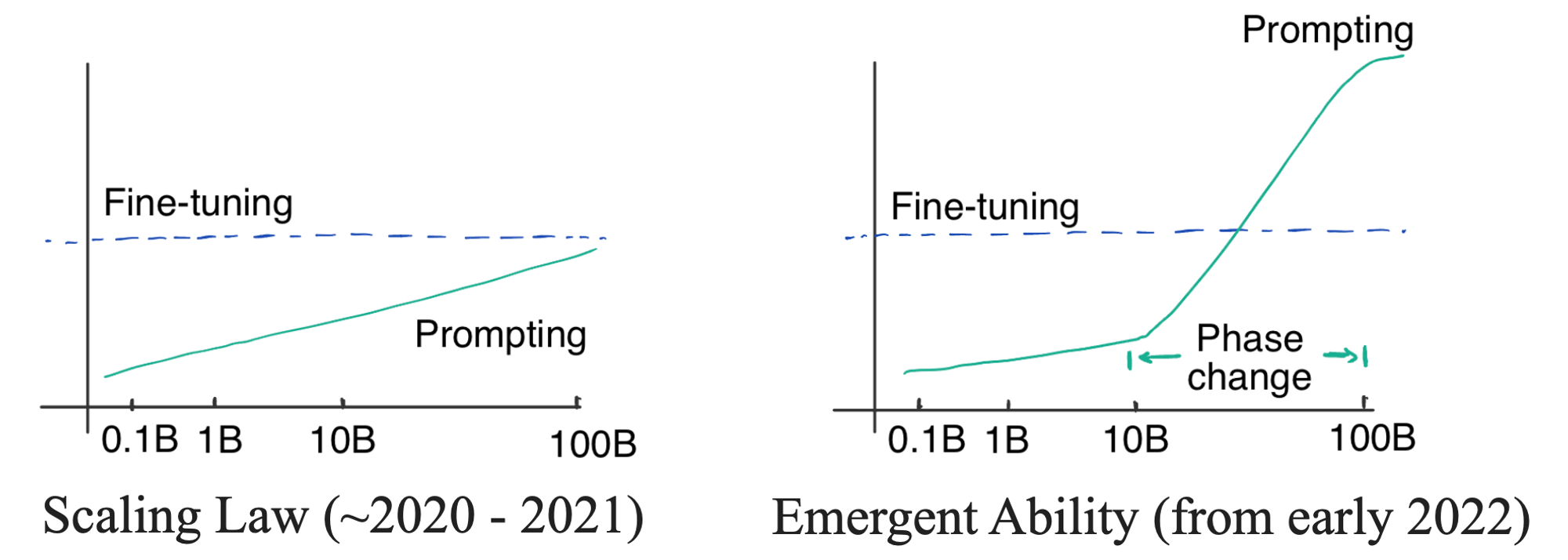
- 随着模型规模的扩大,上下文学习与链式推理提示等新兴能力出现,并因任务和模型规模而异。
- 指令微调与对齐策略能提高更大模型的任务跟随能力,性能提升在数十亿参数左右开始显现。
- 扩展规律(KM 与 Chinchilla)为在模型规模与数据之间分配计算以优化性能提供指导。
- 检索增强生成(RAG)与外部知识集成提升事实准确性与任务能力。
- LLMs 在医疗、金融、教育、法律与科学研究等领域展现出广泛适用性,同时带来伦理、环境与偏见相关的挑战。
阅读本论文
在 Nubint 阅读器中打开原文,边读边就任意段落提问。
在 Nubint 中阅读本论文本解读由 AI 根据论文原文生成,引用前请核对原文。