
[论文解读] A Survey on Recent Advances in LLM-Based Multi-turn Dialogue Systems
本综述回顾基于 LLM 的多轮对话系统,详细介绍 LLM 的类型与适应方法、开放域与任务导向对话的进展、数据集、评估指标,以及未来挑战。
This survey provides a comprehensive review of research on multi-turn dialogue systems, with a particular focus on multi-turn dialogue systems based on large language models (LLMs). This paper aims to (a) give a summary of existing LLMs and approaches for adapting LLMs to downstream tasks; (b) elaborate recent advances in multi-turn dialogue systems, covering both LLM-based open-domain dialogue (ODD) and task-oriented dialogue (TOD) systems, along with datasets and evaluation metrics; (c) discuss some future emphasis and recent research problems arising from the development of LLMs and the increasing demands on multi-turn dialogue systems.
研究动机与目标
- 总结现有 LLMs 及将 LLMs 适配到多轮对话下游任务的方法。
- 阐述多轮对话系统的最新进展,包括开放域和任务导向系统,并给出数据集和评估指标。
- 讨论由 LLM 发展及在多轮对话中日益增长的需求所带来的未来重点和研究问题。
提出的方法
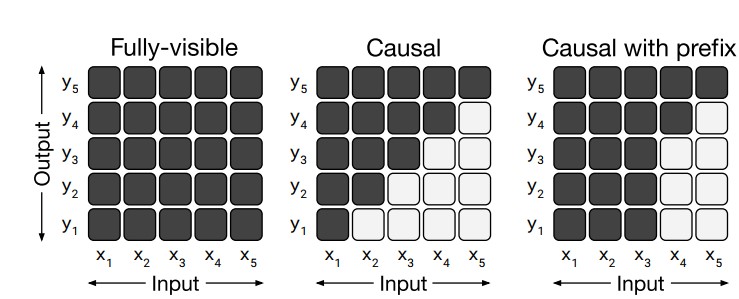
- 综述 LLM 的一般方法,包括解码器为主、编码器为主以及编码器-解码器的 Transformer 架构。
- 描述完整微调和参数高效微调(PEFT)技术,如 adapters、LoRA 和 instruction fine-tuning。
- 讨论减轻微调不稳定性和鲁棒性方法的策略(R3F、R4F、SMART、FreeLB)。
- 解释提示工程方法,包括使用离散(基于 PVP 的)提示的提示调优和连续提示,以及 PET、LM-BFF、PTR 等方法。
实验结果
研究问题
- RQ1在多轮对话系统中,常见的 LLMs 和架构族有哪些?
- RQ2将 LLMs 适配到下游 TOD/ODD 子任务(FFT、PEFT、instruction tuning)哪些方法更有效?
- RQ3在当前的 LLM 技术条件下,开放域与任务导向对话系统如何构建与评估?
- RQ4在这一不断发展的领域,哪些数据集与评估指标是标准,尚存的挑战有哪些?
主要发现
- 通过扩展规模和架构多样性(解码器为主、编码器为主、以及编码器-解码器),LLMs 在多轮对话系统中实现显著的性能提升。
- 微调可以完全微调,或通过像 adapters 和 LoRA 这样的参数高效方法来减少资源消耗,同时保留预训练知识。
- 指令微调和来自人类反馈的强化学习提升对齐和任务性能。
- 提示工程,包括离散提示(PET、LM-BFF)和无调优提示,对下游任务性能有显著影响。
- 缓解微调不稳定性至关重要,提出了如 R3F/R4F、SMART 和对抗性训练等方法。
- 新的对话特定模型及系列(GPT、LLaMA、GLM、ChatGLM、Code Llama)及其对话专用变体正在推动该领域的发展。

阅读本论文
在 Nubint 阅读器中打开原文,边读边就任意段落提问。
在 Nubint 中阅读本论文本解读由 AI 根据论文原文生成,引用前请核对原文。