
[论文解读] A Survey on the Applications of Zero-Knowledge Proofs
一个全面的综述,覆盖零知识证明(ZKPs)的实际应用,重点是 zkSNARKs、基础设施,以及区块链和非区块链用例,并探讨未来方向。
Zero-knowledge proofs (ZKPs) represent a revolutionary advance in computational integrity and privacy technology, enabling the secure and private exchange of information without revealing underlying private data. ZKPs have unique advantages in terms of universality and minimal security assumptions when compared to other privacy-sensitive computational methods for distributed systems, such as homomorphic encryption and secure multiparty computation. Their application spans multiple domains, from enhancing privacy in blockchain to facilitating confidential verification of computational tasks. This survey starts with a high-level overview of the technical workings of ZKPs with a focus on an increasingly relevant subset of ZKPs called zk-SNARKS. While there have been prior surveys on the algorithmic and theoretical aspects of ZKPs, our work is distinguished by providing a broader view of practical aspects and describing many recently-developed use cases of ZKPs across various domains. These application domains span blockchain privacy, scaling, storage, and interoperability, as well as non-blockchain applications like voting, authentication, timelocks, and machine learning. Aimed at both practitioners and researchers, the survey also covers foundational components and infrastructure such as zero-knowledge virtual machines (zkVM), domain-specific languages (DSLs), supporting libraries, frameworks, and protocols. We conclude with a discussion on future directions, positioning ZKPs as pivotal in the advancement of cryptographic practices and digital privacy across many applications.
研究动机与目标
- 提供对 ZKPs 和 zkSNARKs 的广泛、面向实践的概述,超越理论。
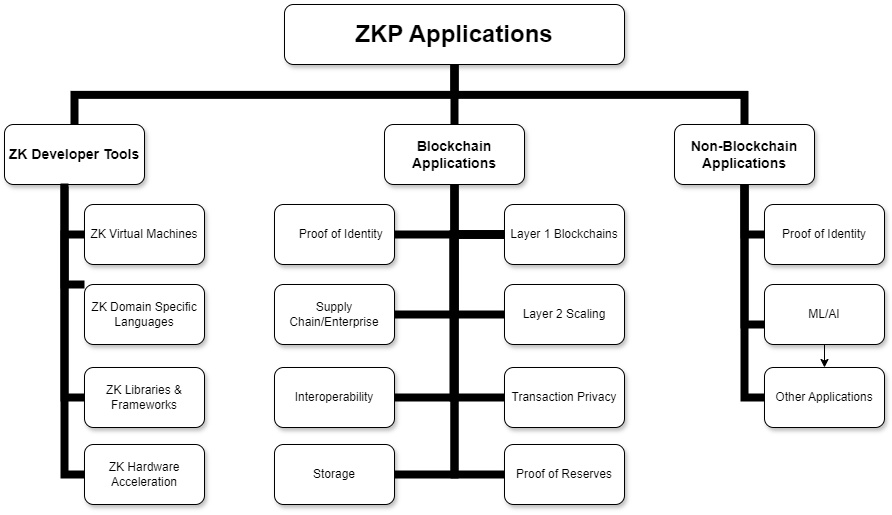
- 在区块链(隐私、扩容、存储、互操作性)和非区块链领域(投票、认证、定时锁、ML)的实际应用。
- 描述使 ZKP 部署成为可能的基础组件、基础设施和工具(zkVMs、DSLs、库、框架)。
- 将 ZKPs 与其他隐私保护方法(FHE、MPC)进行比较,并讨论权衡、设置考虑因素。
- 确定未来方向以及 ZKPs 在推动多样化应用中的密码学隐私方面的作用。
提出的方法
- 解释 SNARK 的定义和特性(简洁性、非交互性、知识性)。
- 描述 ZKP 生命周期:从前端(高层代码到电路)到后端(证明生成、验证)。
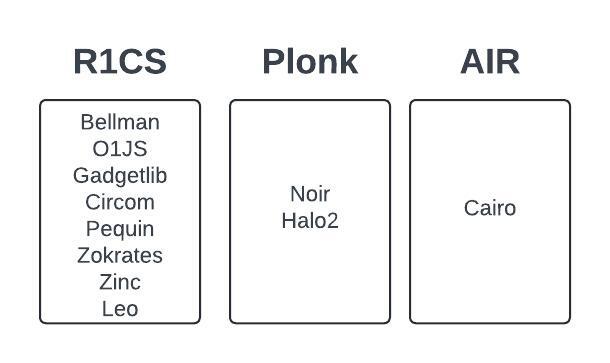
- 通过 Rank-1 Constraint Systems(R1CS)进行代数化,并将后端实现为 Quadratic Arithmetic Programs(QAP)。
- 讨论与密码学小工具的集成,如多项式承诺方案,以及 Fiat-Shamir 用于非交互式证明。
- 审视 zkVM 架构、领域特定语言,以及用于构建 ZKP 驱动应用的支持库/框架。
实验结果
研究问题
- RQ1哪些是使 zkSNARKs 成为可实践的零知识证明的基础组件和属性?
- RQ2哪些基础设施(zkVMs、DSLs、库)支持开发和部署 ZKP 驱动的应用?
- RQ3ZKPs 在区块链和非区块链领域如何应用,关键用例与挑战是什么?
- RQ4ZKP 部署和隐私计算的未来方向与尚未解决的研究方向是什么?
主要发现
- ZKPs 提供简洁的、私有的计算证明,使得在不暴露输入或过程的情况下进行验证成为可能。
- zkSNARKs 通过 Fiat-Shamir 实现非交互性,是现代系统中实际、公开可验证证明的核心。
- 本文将 ZKPs 与 FHE、MPC 进行对比,突出其通用性与较低的安全前提作为优势。
- 一个广泛的基础设施生态系统(zkVMs、zkDSLs、库、协议)支持构建 ZKP 驱动的应用。
- ZKPs 适用于区块链特定需求(隐私、扩容、互操作性)以及更广泛的领域(投票、认证、ML、定时锁)。
- 未来方向强调 ZKPs 在多样化应用中对密码学实践与数字隐私的扩展作用。
阅读本论文
在 Nubint 阅读器中打开原文,边读边就任意段落提问。
在 Nubint 中阅读本论文本解读由 AI 根据论文原文生成,引用前请核对原文。