
[论文解读] Adaptive Gains to Super-Twisting Technique for Sliding Mode Design
本文提出一种自适应超-twisting算法(STA),用于二阶滑模控制,通过使用三阶滑模观测器精确估计扰动大小,消除抖振并降低控制增益,无需低通滤波器。该方法实现有限时间收敛与鲁棒性,仅需调节一个参数,已在受扰动线性时不变(LTI)系统上通过仿真验证。
This paper studies the super-twisting algorithm (STA) for adaptive sliding mode design. The proposed method tunes the two gains of STA on line simultaneously such that a second order sliding mode can take place with small rectifying gains. The perturbation magnitude is obtained exactly by employing a third-order sliding mode observer in opposition to the conventional approximations by using a first order low pass filter. While driving the sliding variable to the sliding mode surface, one gain of the STA automatically converges to an adjacent area of the perturbation magnitude in finite time. The other gain is adjusted by the above gain to guarantee the robustness of the STA. This method requires only one parameter to be adjusted. The adjustment is straightforward because it just keeps increasing until it fulfills the convergence constraints. For large values of the parameter, chattering in the update law of the two gains is avoided by employing a geometry based backward Euler integration method. The usefulness is illustrated by an example of designing an equivalent control based sliding mode control (ECBC-SMC) with the proposed adaptive STA for a perturbed LTI system.
研究动机与目标
- 解决传统超-twisting算法中抖振与高控制增益的问题。
- 消除在自适应增益调节中依赖低通滤波器近似等效控制的依赖。
- 通过精确扰动估计,实现实时、鲁棒的双超-twisting增益自适应。
- 在最小控制努力下确保有限时间收敛与鲁棒性。
- 通过仅需一个可调参数简化调参过程。
提出的方法
- 设计一个三阶滑模观测器,精确估计扰动大小,替代低通滤波器的近似。
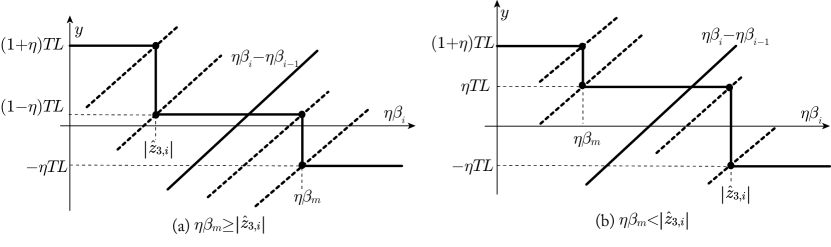
- 将观测器动态表述为微分包含,以支持隐式欧拉积分,实现抖振抑制。
- 基于李雅普诺夫理论设计自适应增益更新律,确保鲁棒性与有限时间收敛。
- 增益β根据精确扰动大小进行自适应调整,而增益α则按比例调整以维持鲁棒性。
- 对更新律应用基于几何的后向欧拉积分方法,防止大增益值引起的抖振。
- 将该方法集成到受扰动LTI系统的等效控制型滑模控制器(ECB-SMC)中。
实验结果
研究问题
- RQ1通过精确扰动估计,超-twisting算法能否在最小控制增益下实现有限时间收敛?
- RQ2在不依赖低通滤波器的前提下,如何消除自适应增益更新中的抖振?
- RQ3使用三阶滑模观测器对增益自适应精度与鲁棒性有何影响?
- RQ4自适应增益机制能否在最小化控制努力的同时确保鲁棒性?
- RQ5与基于低通滤波的常规自适应律相比,该方法在收敛速度与增益大小方面表现如何?
主要发现
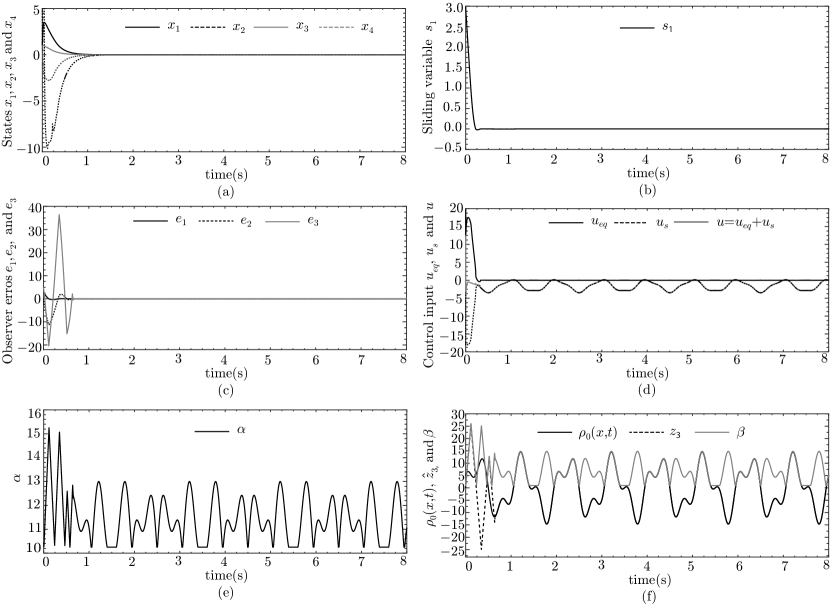
- 三阶滑模观测器成功精确估计扰动大小,实现超-twisting增益的精确自适应。
- 自适应增益更新律确保β收敛至|ρ₀(x,t)|/η,实现最小可能增益的同时保持鲁棒性。
- 状态x渐近收敛至零,滑模变量s₁在有限时间内达到零,即使存在扰动。
- 观测器误差e在1秒内收敛至零,早于状态收敛,实现快速且独立的增益自适应。
- 增益α按比例调整至β,确保鲁棒性且避免过度放大。
- 由于更新律采用基于几何的后向欧拉积分,即使L值较大,抖振也得到有效消除。
阅读本论文
在 Nubint 阅读器中打开原文,边读边就任意段落提问。
在 Nubint 中阅读本论文本解读由 AI 根据论文原文生成,引用前请核对原文。