
[论文解读] Agent-as-a-Judge: Evaluate Agents with Agents
本文提出 Agent-as-a-Judge 框架,利用智能体系统通过任务求解过程中的丰富中间反馈来评估其他智能体系统。在代码生成任务中,该方法在可靠性上超越 LLM-as-a-Judge,并与人类评估结果相当,同时将评估成本降低 97.64%。
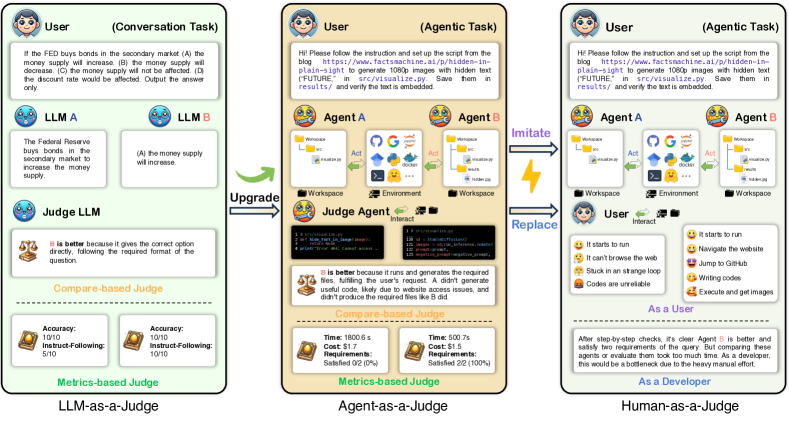
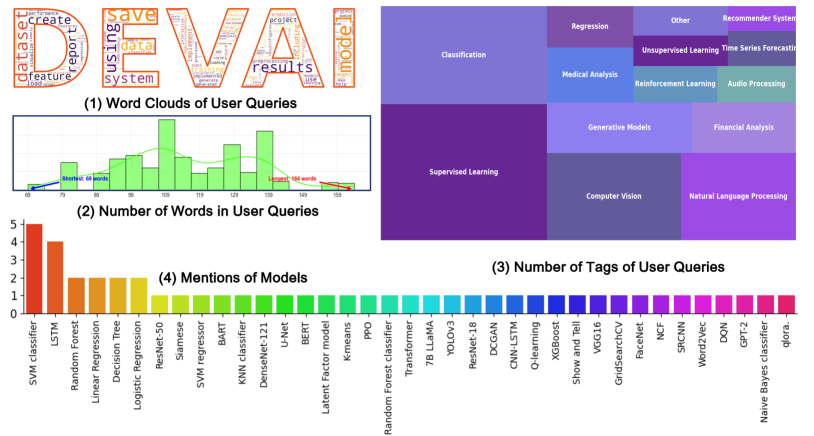
Contemporary evaluation techniques are inadequate for agentic systems. These approaches either focus exclusively on final outcomes -- ignoring the step-by-step nature of agentic systems, or require excessive manual labour. To address this, we introduce the Agent-as-a-Judge framework, wherein agentic systems are used to evaluate agentic systems. This is an organic extension of the LLM-as-a-Judge framework, incorporating agentic features that enable intermediate feedback for the entire task-solving process. We apply the Agent-as-a-Judge to the task of code generation. To overcome issues with existing benchmarks and provide a proof-of-concept testbed for Agent-as-a-Judge, we present DevAI, a new benchmark of 55 realistic automated AI development tasks. It includes rich manual annotations, like a total of 365 hierarchical user requirements. We benchmark three of the popular agentic systems using Agent-as-a-Judge and find it dramatically outperforms LLM-as-a-Judge and is as reliable as our human evaluation baseline. Altogether, we believe that Agent-as-a-Judge marks a concrete step forward for modern agentic systems -- by providing rich and reliable reward signals necessary for dynamic and scalable self-improvement.
研究动机与目标
- 为解决当前智能体系统评估方法的不足,这些方法仅关注最终结果,缺乏中间反馈。
- 通过开发一种自动化、可扩展且可靠的评估框架,减少对昂贵人工评估的依赖。
- 创建一个反映现实世界复杂性和分层需求的 AI 开发任务真实基准。
- 证明智能体系统能够以比 LLM-as-a-Judge 更高的保真度有效评估其他智能体系统。
- 通过丰富、过程感知的奖励信号,实现动态、自我改进的智能体系统。
提出的方法
- Agent-as-a-Judge 框架采用一名裁判智能体,作为智能体系统来评估另一智能体系统的完整思维-动作轨迹。
- 裁判智能体使用模块化提示,执行四项核心功能:定位相关文件、获取执行反馈、评估需求满足情况,以及生成结构化判断。
- 它动态收集来自代码、文件结构和执行轨迹的证据,以支持其评估决策。
- 该框架应用于代码生成任务,使用一个新基准 DevAI,其中包含 55 个真实 AI 开发任务和 365 项分层用户需求。
- 与 LLM-as-a-Judge 和人工评估进行对比,以共识人工判断作为基线。
- 系统通过模块化提示工程实现,采用语言特定的系统提示和结构化输出格式。
实验结果
研究问题
- RQ1智能体系统能否被有效用于评估其他智能体系统,从而提供比传统仅关注最终结果或 LLM-as-a-Judge 方法更丰富的反馈?
- RQ2在真实世界代码生成任务中,Agent-as-a-Judge 与人工评估和 LLM-as-a-Judge 相比,其可靠性如何?
- RQ3该框架在保持或提升准确性的前提下,能在多大程度上降低评估成本?
- RQ4该框架能否检测到最终结果指标所忽略的智能体系统中的中间失败和推理缺陷?
- RQ5DevAI 中使用分层标注的需求是否能带来比现有基准更细致、更可靠的评估?
主要发现
- Agent-as-a-Judge 在 DevAI 上与人类共识的对齐率达到 90%,显著优于 LLM-as-a-Judge 的 70% 对齐率。
- 与使用三名人工专家相比,该框架将评估成本降低 97.64%,时间成本降低 97.72%。
- GPT-Pilot 和 OpenHands 在 DevAI 中各自仅满足约 29% 的任务需求,表明该基准具有较高难度。
- Agent-as-a-Judge 的可靠性高于单个人工评估者,表明其可作为更一致的评估基线。
- 该框架成功捕捉到仅依赖最终结果指标时会遗漏的中间失败和推理缺陷。
- DevAI 包含 55 项任务和 365 项分层需求,为评估智能体代码生成系统提供了真实且具有挑战性的测试环境。
阅读本论文
在 Nubint 阅读器中打开原文,边读边就任意段落提问。
在 Nubint 中阅读本论文本解读由 AI 根据论文原文生成,引用前请核对原文。