
[论文解读] AI-Powered Augmented Reality for Satellite Assembly, Integration and Test
本论文提出了一种基于微软 HoloLens 2 的人工智能增强现实系统,用于卫星装配、集成与测试(AIT)流程,通过基于计算机视觉的物体检测、6D 姿态估计和光学字符识别(OCR)实现实时、上下文感知的引导。该系统在合成数据和一种新型自动标注模型(SAMAL)的支持下,实现了超过 95% 的物体检测准确率,以及高达 98.36% 的数值 OCR 准确率,数据标注速度提升至原来的 20 倍。
The integration of Artificial Intelligence (AI) and Augmented Reality (AR) is set to transform satellite Assembly, Integration, and Testing (AIT) processes by enhancing precision, minimizing human error, and improving operational efficiency in cleanroom environments. This paper presents a technical description of the European Space Agency's (ESA) project "AI for AR in Satellite AIT," which combines real-time computer vision and AR systems to assist technicians during satellite assembly. Leveraging Microsoft HoloLens 2 as the AR interface, the system delivers context-aware instructions and real-time feedback, tackling the complexities of object recognition and 6D pose estimation in AIT workflows. All AI models demonstrated over 70% accuracy, with the detection model exceeding 95% accuracy, indicating a high level of performance and reliability. A key contribution of this work lies in the effective use of synthetic data for training AI models in AR applications, addressing the significant challenges of obtaining real-world datasets in highly dynamic satellite environments, as well as the creation of the Segmented Anything Model for Automatic Labelling (SAMAL), which facilitates the automatic annotation of real data, achieving speeds up to 20 times faster than manual human annotation. The findings demonstrate the efficacy of AI-driven AR systems in automating critical satellite assembly tasks, setting a foundation for future innovations in the space industry.
研究动机与目标
- 降低洁净间环境中卫星 AIT 流程的人为错误,提升效率。
- 解决动态卫星制造环境中真实世界训练数据稀缺的问题。
- 开发一种实时、离线运行的增强现实系统,用于卫星装配过程中技术人员的现场引导。
- 通过新型合成数据与自动标注流程,加速数据标注。
- 实现在复杂、动态演变的卫星工作空间中,对物体检测、6D 姿态估计和 OCR 的鲁棒、高精度人工智能推理。
提出的方法
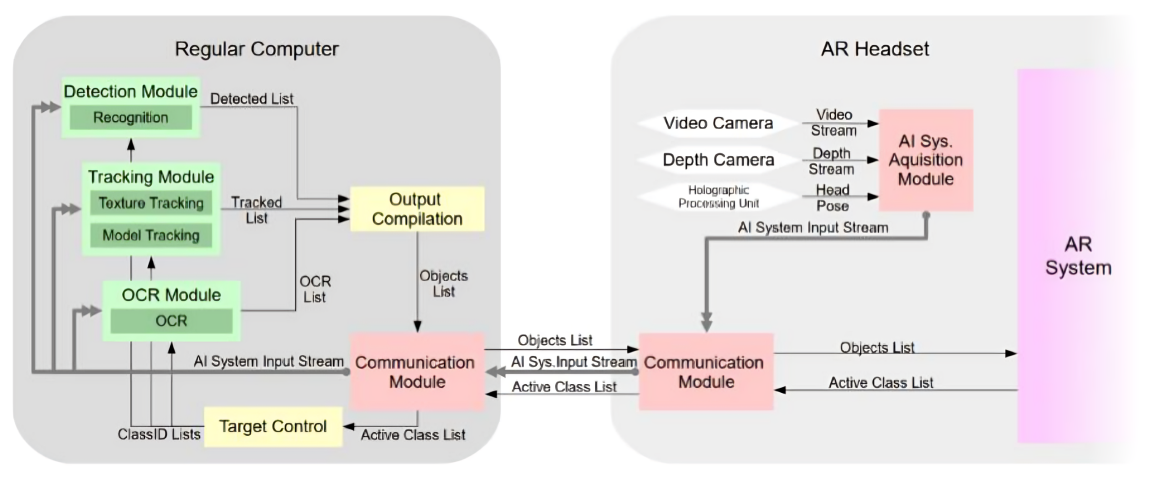
- 系统使用微软 HoloLens 2 实时捕获 RGB、深度和惯性传感器数据,支持设备端与设备外处理。
- 采用两阶段计算机视觉流程:基于 YOLOv5 的模型执行物体检测,通过专用回归头实现 6D 姿态估计。
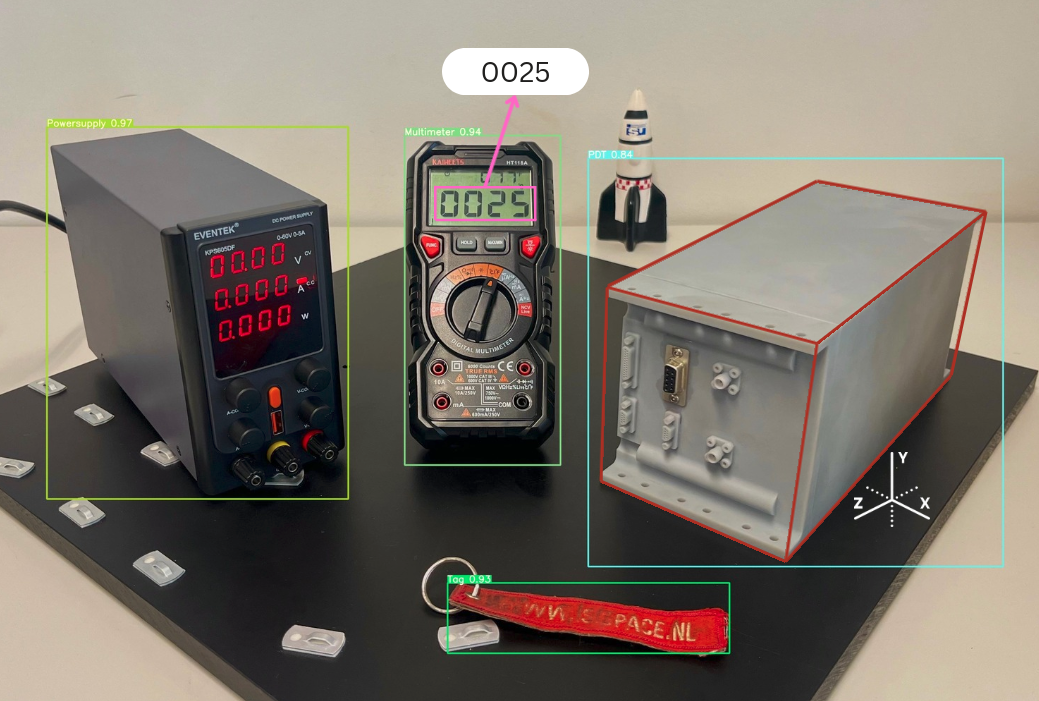
- 光学字符识别(OCR)采用基于 CRNN 的模型,该模型在合成数据上进行训练,用于数值和字母数字内容的读取。
- 通过卫星组件的 3D 模型生成合成数据,以模拟多样的光照和视角条件,提升模型泛化能力。
- 采用“用于自动标注的分割一切模型”(SAMAL)实现实例分割与边界框自动标注,使标注时间最多减少 20 倍。
- 系统设计为离线运行,确保在安全、受控的洁净间环境中的可靠性。
实验结果
研究问题
- RQ1人工智能增强现实系统能否在卫星 AIT 工作流中实现实时、高精度的物体检测与 6D 姿态估计?
- RQ2当真实世界数据稀缺时,合成数据在训练动态卫星组件识别的人工智能模型方面效果如何?
- RQ3通过 SAMAL 实现的自动化数据标注在多大程度上能显著缩短标注时间,同时不损害模型性能?
- RQ4OCR 模型在真实条件下对静态或缓慢变化的仪表盘显示内容能否实现高精度读取?
- RQ5将实时计算机视觉与增强现实头戴设备集成,如何提升卫星装配过程中技术人员的引导效果并减少错误?
主要发现
- 物体检测模型达到 95.3% 的准确率,显著超过可靠 AIT 应用所需的 70% 阈值。
- 6D 姿态估计模型表现出超过 70% 的准确率,表明在实时约束下仍具备强劲性能。
- OCR 流程在数值读取中达到 96.03% 的准确率,经训练的 CRNN 模型在真实标注边界框上达到 98.36% 的准确率。
- SAMAL 模型使自动数据标注速度达到人工标注的 20 倍,显著提升数据处理流水线效率。
- OCR 识别的推理速度达到 188.82 FPS,满足实时性要求,同时保持高准确率。
- 经训练的 OCR 模型在准确率上较预训练的 EasyOCR 模型高出超过 96 个百分点,证明了合成数据微调的有效性。
阅读本论文
在 Nubint 阅读器中打开原文,边读边就任意段落提问。
在 Nubint 中阅读本论文本解读由 AI 根据论文原文生成,引用前请核对原文。