
[论文解读] An Overview of Diffusion Models: Applications, Guided Generation, Statistical Rates and Optimization
对扩散模型的全面综述,涵盖它们的应用、条件引导机制、理论属性和优化框架,重点关注无条件与条件扩散模型及其采样复杂性与引导设计。
Diffusion models, a powerful and universal generative AI technology, have achieved tremendous success in computer vision, audio, reinforcement learning, and computational biology. In these applications, diffusion models provide flexible high-dimensional data modeling, and act as a sampler for generating new samples under active guidance towards task-desired properties. Despite the significant empirical success, theory of diffusion models is very limited, potentially slowing down principled methodological innovations for further harnessing and improving diffusion models. In this paper, we review emerging applications of diffusion models, understanding their sample generation under various controls. Next, we overview the existing theories of diffusion models, covering their statistical properties and sampling capabilities. We adopt a progressive routine, beginning with unconditional diffusion models and connecting to conditional counterparts. Further, we review a new avenue in high-dimensional structured optimization through conditional diffusion models, where searching for solutions is reformulated as a conditional sampling problem and solved by diffusion models. Lastly, we discuss future directions about diffusion models. The purpose of this paper is to provide a well-rounded theoretical exposure for stimulating forward-looking theories and methods of diffusion models.
研究动机与目标
- 在视觉、音频、生命科学、强化学习与优化等领域对扩散模型的新兴应用进行综述。
- 总结无条件扩散模型在分数学习、估计与采样方面的理论进展。
- 介绍条件扩散模型的理论发展以及引导在形塑分布中的作用。
- 将扩散模型与黑箱优化及高维结构化优化相连接。
- 讨论将扩散模型与随机控制及鲁棒性相连接的未来方向。
提出的方法
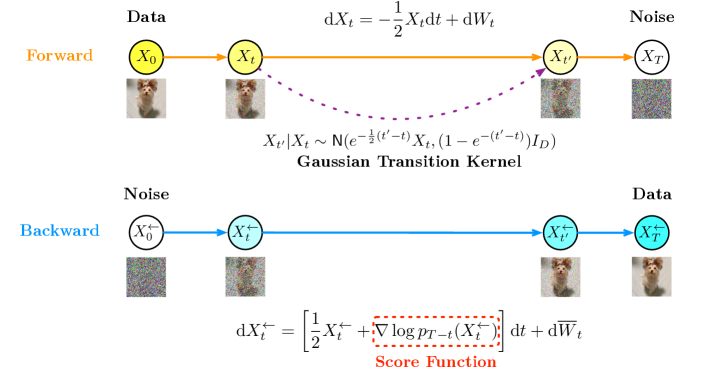
- 通过前向和后向随机微分方程及其离散化来描述连续时间扩散模型的形式化理论。
- 解释条件扩散模型如何通过条件分数与实际学习方法来融入引导。
- 回顾分数匹配和去噪分数匹配作为分数函数的核心学习目标。
- 总结高维数据下分数近似、估计与分布学习的理论结果。
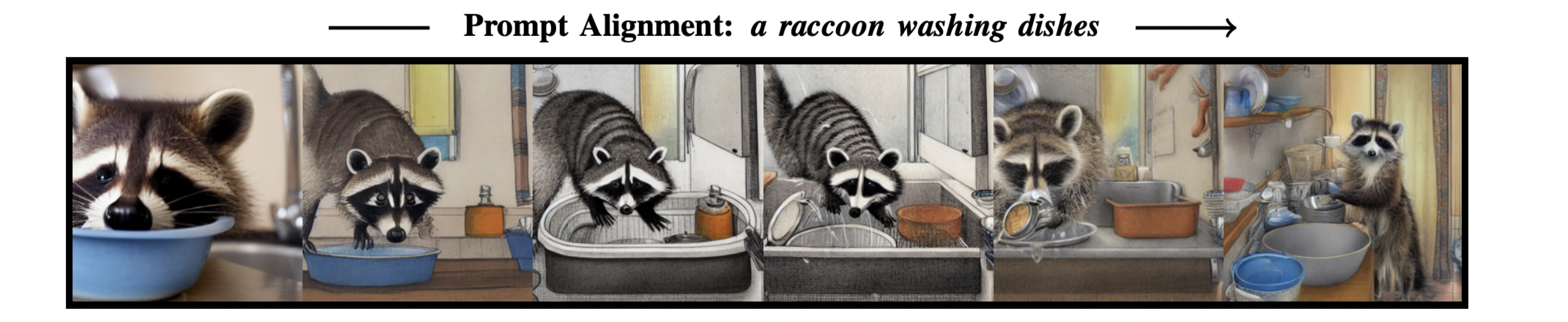
- 讨论引导(有分类器/无分类器引导)在实现任务特定的条件生成中的作用。
- 概述扩 diffusion 模型在黑箱优化与结构化解搜索中的应用。
实验结果
研究问题
- RQ1扩散模型能否在高维或结构化设置中以高精度和高效率学习数据分布,且样本复杂度是多少?
- RQ2条件扩散模型如何生成与引导对齐的分布,应该如何设计和评估引导?
- RQ3关于学习分数函数以及使用扩散模型进行采样/分布估计的理论保证是什么?
- RQ4扩散模型如何用于高维优化和黑箱奖励引导任务?
- RQ5扩散模型与随机控制、鲁棒优化等更广泛领域之间的联系是什么?
主要发现
- 本文综合了无条件与条件扩散模型,概述正向与反向过程的公式化及实用的分数估计。
- 它强调分数匹配和去噪分数匹配作为核心训练目标,包括分数爆炸与早停等挑战。
- 它讨论了各种网络架构(U-Net、Transformer)及其在分数近似和数据效率中的作用。
- 它涵盖了在实际系统中使用的采样加速技术和潜在扩散方法。
- 它将扩散引导生成与黑箱优化相联系,展示条件扩散模型如何在给定目标奖励的条件下产生高质量解。
- 它确定了将扩散模型与随机控制、鲁棒性以及离散扩散变体相连的未来方向。
阅读本论文
在 Nubint 阅读器中打开原文,边读边就任意段落提问。
在 Nubint 中阅读本论文本解读由 AI 根据论文原文生成,引用前请核对原文。