
[论文解读] Applications and Advances of Artificial Intelligence in Music Generation:A Review
本论文系统性综述基于AI的音乐生成,详细介绍符号、音频和混合方法、关键模型与数据集、评估方法,以及在各领域的应用,并讨论挑战与未来方向。
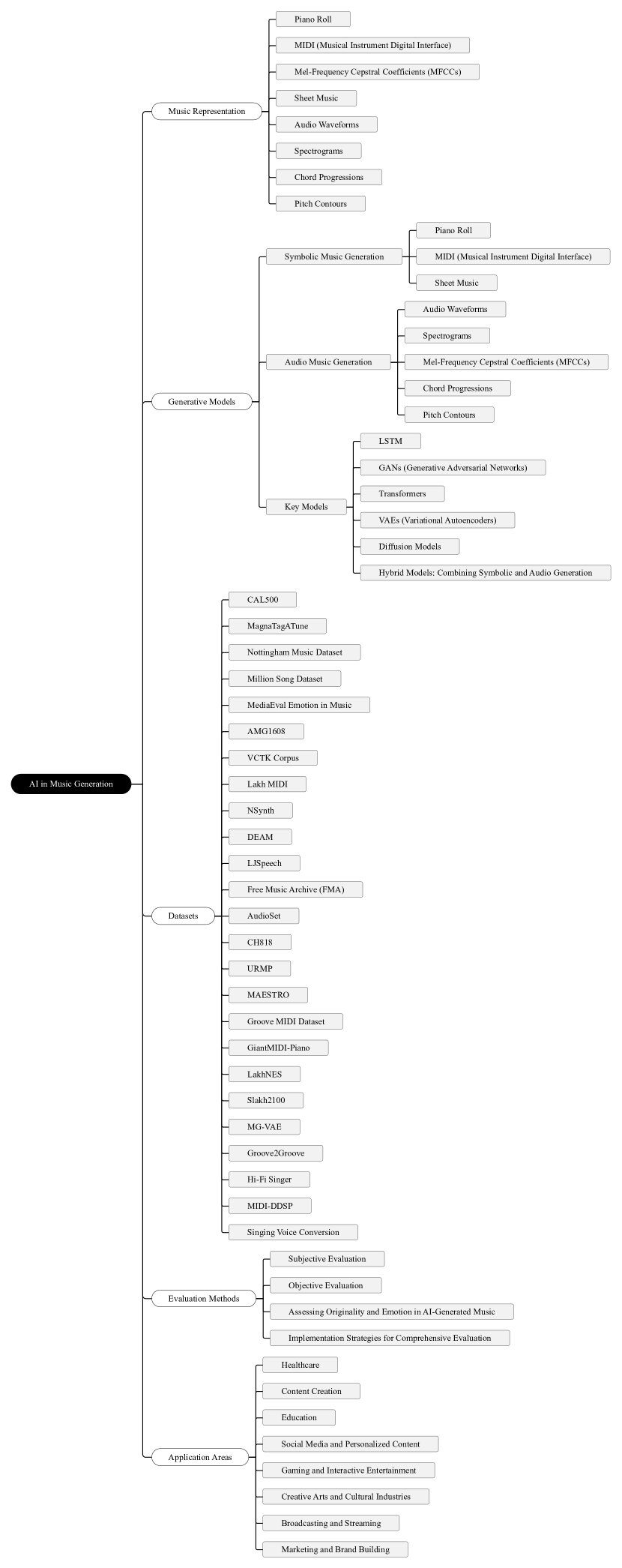
In recent years, artificial intelligence (AI) has made significant progress in the field of music generation, driving innovation in music creation and applications. This paper provides a systematic review of the latest research advancements in AI music generation, covering key technologies, models, datasets, evaluation methods, and their practical applications across various fields. The main contributions of this review include: (1) presenting a comprehensive summary framework that systematically categorizes and compares different technological approaches, including symbolic generation, audio generation, and hybrid models, helping readers better understand the full spectrum of technologies in the field; (2) offering an extensive survey of current literature, covering emerging topics such as multimodal datasets and emotion expression evaluation, providing a broad reference for related research; (3) conducting a detailed analysis of the practical impact of AI music generation in various application domains, particularly in real-time interaction and interdisciplinary applications, offering new perspectives and insights; (4) summarizing the existing challenges and limitations of music quality evaluation methods and proposing potential future research directions, aiming to promote the standardization and broader adoption of evaluation techniques. Through these innovative summaries and analyses, this paper serves as a comprehensive reference tool for researchers and practitioners in AI music generation, while also outlining future directions for the field.
研究动机与目标
- 提供一个全面的框架,用于对符号、音频和混合AI音乐生成方法进行分类和比较。
- 综述AI音乐生成领域中模型、数据集和评估方法的现有文献。
- 分析AI生成音乐在各领域的实际应用与实时交互。
- 识别音乐质量评估中的挑战,并提出标准化与未来研究方向。
提出的方法
- 构建一个系统框架,对符号、音频和混合生成方法进行分类。
- 综述代表性模型(GAN、Transformers、VAE、扩散)及其能力/局限性。
- 总结常用数据集及其在模型训练中的作用。
- 讨论评估方法及在评估音乐质量方面的挑战。
- 探索符号-音频混合框架和级联扩散/分层方法。
- 概述未来研究方向,以实现标准化和更广泛的应用。
实验结果
研究问题
- RQ1音乐生成中使用的主要AI方法(符号、音频、混合)及其相对优缺点是什么?
- RQ2有哪些数据集和评估方法是常见的,它们如何影响生成音乐的质量?
- RQ3AI生成音乐的实际应用领域及其需求是什么?
- RQ4在音乐质量、一致性和音色控制方面存在哪些关键挑战,未来方向如何解决?
主要发现
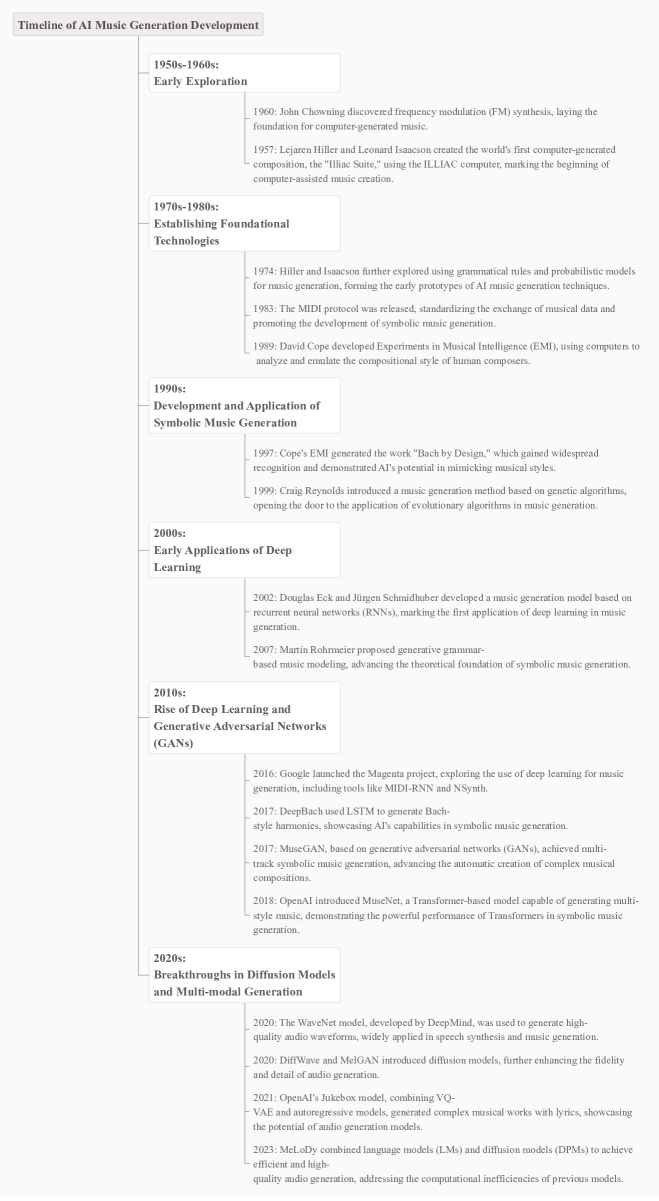
- 从符号(MIDI/钢琴卷帘)到音频(波形、声谱图),以及日益增长的混合模型,AI音乐生成在持续发展。
- Transformers、GANs和扩散模型是生成结构化、多样化且高质量音乐的核心,扩散模型实现了高保真音频。
- 混合框架将符号结构与丰富的音频音色相结合,提升连贯性与表现力。
- 大量数据集和自监督或分层学习提升模型鲁棒性,但也带来计算与评估挑战。
- 音乐质量评估仍然是一个重大挑战,促使推动标准化方法和更广泛的评估框架。
- 应用领域广泛,包括实时交互、教育、医疗和内容创作。
阅读本论文
在 Nubint 阅读器中打开原文,边读边就任意段落提问。
在 Nubint 中阅读本论文本解读由 AI 根据论文原文生成,引用前请核对原文。