
[论文解读] Are Defenses for Graph Neural Networks Robust?
该论文在自适应攻击下评估了7种流行的GNN防御,并发现大多数防御几乎没有鲁棒性提升,甚至有些比未防御基线表现更差;它还提供设计强自适应攻击的方法论并提出鲁棒性单元测试。
A cursory reading of the literature suggests that we have made a lot of progress in designing effective adversarial defenses for Graph Neural Networks (GNNs). Yet, the standard methodology has a serious flaw - virtually all of the defenses are evaluated against non-adaptive attacks leading to overly optimistic robustness estimates. We perform a thorough robustness analysis of 7 of the most popular defenses spanning the entire spectrum of strategies, i.e., aimed at improving the graph, the architecture, or the training. The results are sobering - most defenses show no or only marginal improvement compared to an undefended baseline. We advocate using custom adaptive attacks as a gold standard and we outline the lessons we learned from successfully designing such attacks. Moreover, our diverse collection of perturbed graphs forms a (black-box) unit test offering a first glance at a model's robustness.
研究动机与目标
- 对GNN鲁棒性提出的49种防御进行综述,涵盖图结构、架构和训练类别。
- 为7种具有代表性的防御设计定制的自适应攻击,以衡量真正的鲁棒性。
- 提供透明的方法论和实用的GNN防御鲁棒评估指南。
- 提供一套鲁棒性单元测试集合(扰动图)以快速评估防御鲁棒性。
提出的方法
- 使用扩展分类法对防御进行分类,涵盖图预处理、训练修改和架构改编。
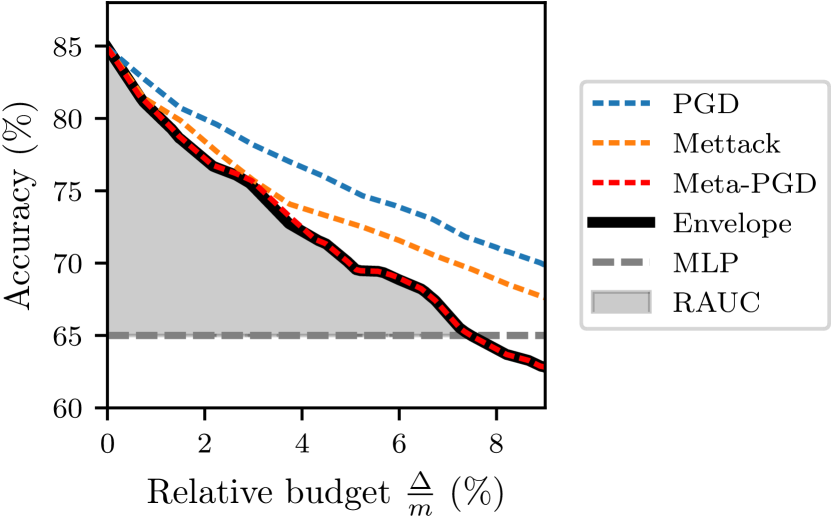
- 开发并应用强自适应攻击(包括 FGA、PGD、Metattack、Meta-PGD),对模型和防御具有完全知识。
- 为全局(测试集层面)和局部(每节点)扰动建立一个带预算的 L0 扰动框架,包括污染和逃避设置。
- 调整攻击损失函数(诸如 LM、TLM、PM 的对数边际变体)和超参数以最大化攻击强度。
- 演示如何处理梯度问题、不可微分组件,以及攻击在模型之间的转移,从而形成稳健的评估协议。
- 提供一个案例研究(SVD-GCN、ProGNN),说明如何针对组合防御设计自适应攻击。
实验结果
研究问题
- RQ1在自适应(白盒)攻击下,流行的GNN防御有多鲁棒?
- RQ2在污染和逃逸、局部和全局设置下,防御是否提供有意义的鲁棒提升?
- RQ3在自适应攻击下,防御暴露了哪些共同弱点,是否存在可通用的扰动绕过多种防御?
- RQ4一组扰动图是否可以作为GNN鲁棒性实用单元测试?
- RQ5如 Cora ML 与 Citeseer 等数据集上,防御性能和鲁棒性如何变化?
主要发现
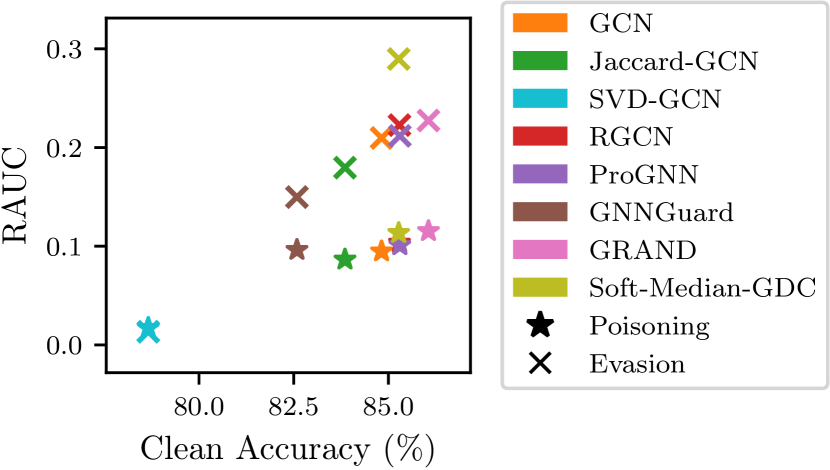
- 自适应攻击在平均上将防御的鲁棒性从非自适应评估中降低约40%。
- 近一半的防御在自适应攻击下的表现甚至不及未防御的GCN;部分防御几乎没有鲁棒性提升,甚至更差。
- 防御效果取决于数据集;Cora ML和Citeseer上鲁棒性提升并不一致。
- 在这一领域中,更高的干净准确度并不意味着更低的鲁棒性;一些鲁棒防御在攻击下保持甚至超过基线准确率。
- 自适应攻击揭示了每种防御的不同攻击向量,表明没有一刀切的扰动;攻击的可转移性很常见但并非普遍。
- 作者提供了一个鲁棒性单元测试:来自自适应攻击的扰动图在大多数情况下可转移,成为一种实用的评估资源。
阅读本论文
在 Nubint 阅读器中打开原文,边读边就任意段落提问。
在 Nubint 中阅读本论文本解读由 AI 根据论文原文生成,引用前请核对原文。