
[论文解读] Assessing the Benefits and Risks of Quantum Computers
本论文调查量子计算机的潜在好处与网络安全风险,认为近期期量子设备在出现密码破解能力之前可能带来实际价值,并强调采用量子安全密码学。
Quantum computing is an emerging technology with potentially far-reaching implications for national prosperity and security. Understanding the timeframes over which economic benefits and national security risks may manifest themselves is vital for ensuring the prudent development of this technology. To inform security experts and policy decision makers on this matter, we review what is currently known on the potential uses and risks of quantum computers, leveraging current research literature. The maturity of currently-available quantum computers is not yet at a level such that they can be used in production for large-scale, industrially-relevant problems, and they are not believed to currently pose security risks. We identify 2 large-scale trends -- new approximate methods (variational algorithms, error mitigation, and circuit knitting) and the commercial exploration of business-relevant quantum applications -- which, together, may enable useful and practical quantum computing in the near future. Crucially, these methods do not appear likely to change the required resources for cryptanalysis on currently-used cryptosystems. From an analysis we perform of the current and known algorithms for cryptanalysis, we find they require circuits of a size exceeding those that can be run by current and near-future quantum computers (and which will require error correction), though we acknowledge improvements in quantum algorithms for these problems are taking place in the literature. In addition, the risk to cybersecurity can be well-managed by the migration to new, quantum-safe cryptographic protocols, which we survey and discuss. Given the above, we conclude there is a credible expectation that quantum computers will be capable of performing computations which are economically-impactful before they will be capable of performing ones which are cryptographically-relevant.
研究动机与目标
- 评估量子计算的潜在社会与经济收益。
- 评估量子计算机带来的网络安全风险,尤其是密码分析风险。
- 确定在近期促成有用量子计算的趋势(变分算法、误差缓解、电路拼接)。
- 评估具备密码学相关能力的时间线相对于商业有用能力的时间线。
- 提供在部署量子安全密码学方面的政策与实际指南。
提出的方法
- 评审并综合关于量子算法、误差缓解与电路拼接的当前文献。
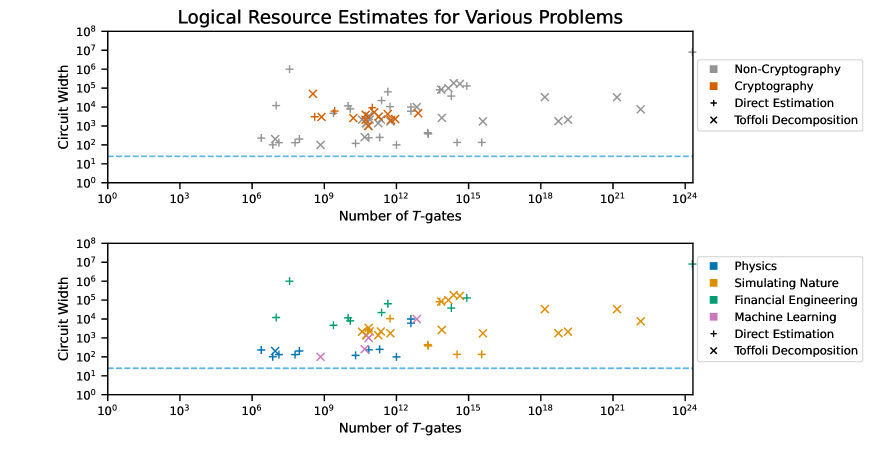
- 分析在密码分析任务与非密码分析任务中,规模化需求以及容错和纠错的作用。
- 利用现有算法知识,比较密码分析与有用的量子应用的资源需求。
- 分析量子硬件、云访问与商业探索的成熟度,以推断近期期望的价值与网络安全风险。
- 调查如 QKD、QRNG 与 PQC 等量子安全密码学方法,并讨论实际采用的注意事项。
实验结果
研究问题
- RQ1与具备密码学相关能力相比,经济上有价值的量子计算的时间表预计为何?
- RQ2近期期量子算法和技术是否能在不完全容错的情况下对当前密码系统进行密码分析?
- RQ3存在哪些迁移到量子安全密码学的策略,以及它们的部署有多实际?
- RQ4变分方法、误差缓解和电路拼接如何影响近期期量子计算解决实际问题的可行性?
主要发现
- 目前的量子计算机还未达到用于大规模工业问题的水平,也不被认为会带来直接的安全风险。
- 三个主要的近期期趋势(变分算法、误差缓解、电路拼接)可能使现有硬件实现有用的量子计算。
- 现阶段的密码分析资源需求对于近期期设备仍然过大;要破解广泛使用的密码系统需要容错。
- 量子安全的密码协议可以有效缓解网络安全风险,讨论了实际采用的路径。
- 量子计算机可能在成为密码学相关能力之前就具备经济上有影响的计算能力。
- 需要政策指导,在促进量子收益与管理网络安全风险之间取得平衡。
阅读本论文
在 Nubint 阅读器中打开原文,边读边就任意段落提问。
在 Nubint 中阅读本论文本解读由 AI 根据论文原文生成,引用前请核对原文。