
[论文解读] AUTOLYCUS: Exploiting Explainable AI (XAI) for Model Extraction Attacks against Interpretable Models
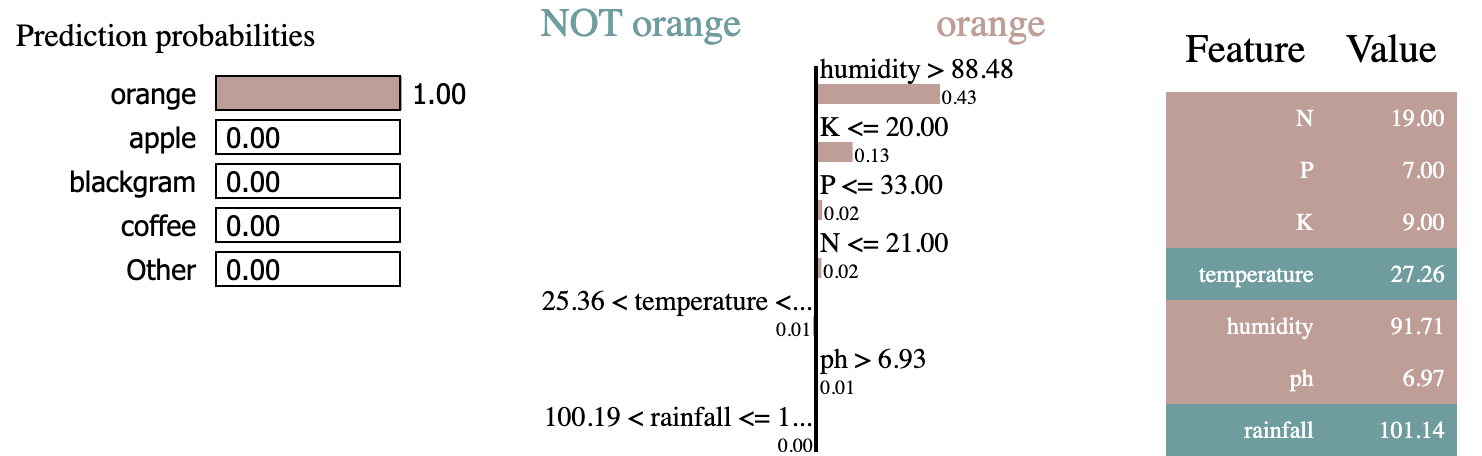
AUTOLYCUS 是一种新颖的模型提取攻击方法,利用 LIME 解释来显著降低在窃取决策树和逻辑回归等白盒机器学习模型时的查询成本。通过使用解释生成自适应、边界感知的查询,该攻击在最多减少 60 倍查询次数的情况下,实现了与最先进方法相当的代理模型准确率。
Explainable Artificial Intelligence (XAI) aims to uncover the decision-making processes of AI models. However, the data used for such explanations can pose security and privacy risks. Existing literature identifies attacks on machine learning models, including membership inference, model inversion, and model extraction attacks. These attacks target either the model or the training data, depending on the settings and parties involved. XAI tools can increase the vulnerability of model extraction attacks, which is a concern when model owners prefer black-box access, thereby keeping model parameters and architecture private. To exploit this risk, we propose AUTOLYCUS, a novel retraining (learning) based model extraction attack framework against interpretable models under black-box settings. As XAI tools, we exploit Local Interpretable Model-Agnostic Explanations (LIME) and Shapley values (SHAP) to infer decision boundaries and create surrogate models that replicate the functionality of the target model. LIME and SHAP are mainly chosen for their realistic yet information-rich explanations, coupled with their extensive adoption, simplicity, and usability. We evaluate AUTOLYCUS on six machine learning datasets, measuring the accuracy and similarity of the surrogate model to the target model. The results show that AUTOLYCUS is highly effective, requiring significantly fewer queries compared to state-of-the-art attacks, while maintaining comparable accuracy and similarity. We validate its performance and transferability on multiple interpretable ML models, including decision trees, logistic regression, naive bayes, and k-nearest neighbor. Additionally, we show the resilience of AUTOLYCUS against proposed countermeasures.
研究动机与目标
- 探究可解释人工智能(XAI)工具(如 LIME)是否可被利用以促进模型提取攻击。
- 开发一种查询高效的模型提取方法,利用 LIME 解释在黑盒环境中针对白盒模型进行攻击。
- 评估 AUTOLYCUS 在极低查询预算下重建与目标模型高度相似的代理模型的有效性。
- 评估现有防御措施(如在解释或训练数据中注入噪声)对所提出的攻击的防御效果。
- 探讨 XAI 工具在商业机器学习服务中是否增加了模型提取风险的广泛影响。
提出的方法
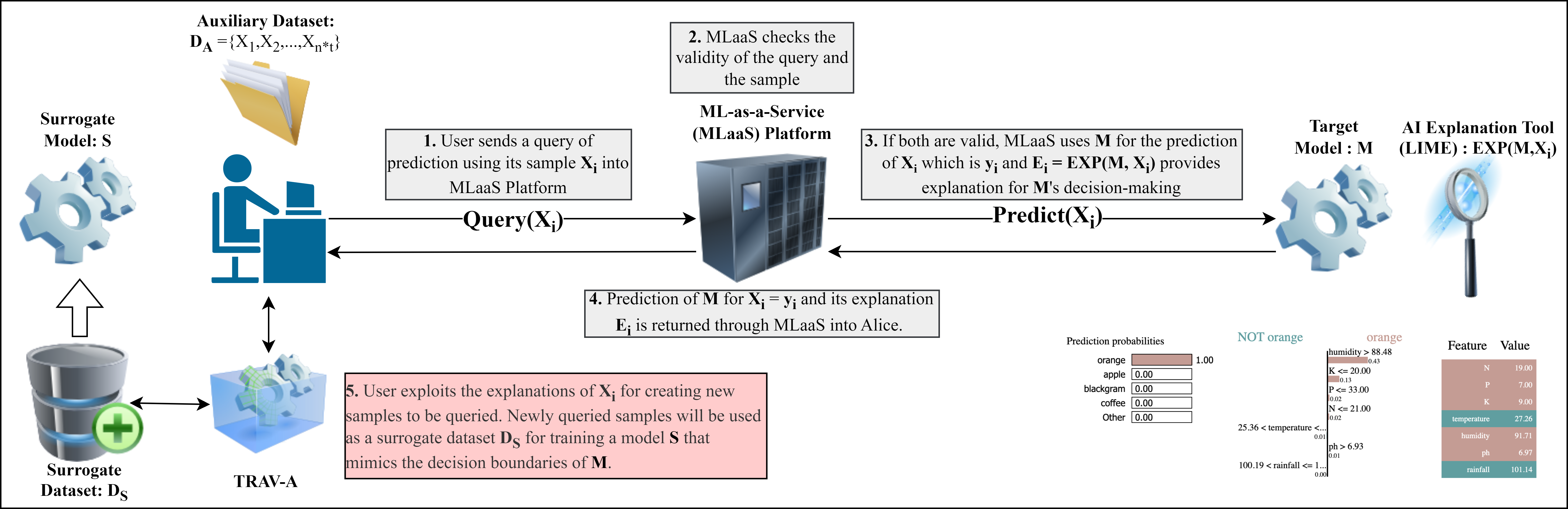
- AUTOLYCUS 通过分析先前查询的 LIME 解释,自适应地生成查询,以瞄准模型的决策边界。
- 它利用 LIME 生成的局部代理模型来推断特征重要性和方向性,从而生成具有信息量、接近边界的样本数据。
- 该攻击通过迭代地使用这些自适应样本查询目标模型,并在每一步重新训练代理模型,以提高与目标模型的拟合度。
- 该方法依赖于 LIME 的模型无关性和可解释性,无需访问模型参数即可重建决策边界。
- 它采用类似线搜索的策略,基于 LIME 的解释输出结果,探索决策边界附近的区域。
- 该方法将 LIME 的局部解释转化为可操作的查询生成启发式规则,从而减少对随机或盲目查询的依赖。
实验结果
研究问题
- RQ1LIME 解释是否可被利用以减少成功完成模型提取所需的查询次数?
- RQ2AUTOLYCUS 在重建既准确又在结构上与白盒模型高度相似的代理模型方面效果如何?
- RQ3现有防御措施(如在解释或训练数据中注入噪声)在多大程度上仍能有效抵御 XAI 驱动的模型提取攻击?
- RQ4AUTOLYCUS 在不同表格型数据集和模型类型(如决策树和逻辑回归)上的性能表现如何?
- RQ5在复杂模型或非表格型数据(如图像)中,AUTOLYCUS 的局限性是什么,尤其是在 LIME 解释对单个特征的可解释性较低的情况下?
主要发现
- 与最先进攻击相比,AUTOLYCUS 在保持与目标模型相当的代理模型准确率和相似度的同时,将查询预算减少了最多 60 倍。
- 该攻击在五个基准数据集上均实现了高代理模型准确率,表明其在多种表格型数据分布下的鲁棒性。
- 利用 LIME 解释可生成高度信息丰富的查询,高效探测决策边界,显著优于盲查询策略。
- 实证结果表明,通过在 LIME 解释或训练数据中添加噪声等防御措施对 AUTOLYCUS 均无效,表明当前防御机制存在关键漏洞。
- 由于 LIME 解释将像素组视为整体单位而非单个特征,该攻击在图像分类任务中效果较差,限制了对单个特征的可解释性。
- 在具有大量关键特征的复杂模型中,该方法的性能受限,部分分支或决策路径可能因辅助数据有限和概率重建的局限性而未能充分捕捉。
阅读本论文
在 Nubint 阅读器中打开原文,边读边就任意段落提问。
在 Nubint 中阅读本论文本解读由 AI 根据论文原文生成,引用前请核对原文。