
[论文解读] Better speech synthesis through scaling
TorToise 将自回归解码与 DDPMs 结合用于文本到语音,由 CLVP 重排序模型引导,在高真实感和多声道语音合成方面取得良好表现,且使用开源权重和数据。
In recent years, the field of image generation has been revolutionized by the application of autoregressive transformers and DDPMs. These approaches model the process of image generation as a step-wise probabilistic processes and leverage large amounts of compute and data to learn the image distribution. This methodology of improving performance need not be confined to images. This paper describes a way to apply advances in the image generative domain to speech synthesis. The result is TorToise -- an expressive, multi-voice text-to-speech system. All model code and trained weights have been open-sourced at https://github.com/neonbjb/tortoise-tts.
研究动机与目标
- 推动将 TTS 的规模化和通用架构扩展到超越传统受限模型。
- 利用自回归解码生成文本对齐的语音令牌,利用扩散模型产生高质量的频谱图。
- 引入语音条件输入以捕捉语音特征与语调。
- 使用对比判别器(CLVP)对候选结果进行重排序以提高真实感。
- 展示在大规模、多样化数据集上的训练以提升合成质量。
提出的方法
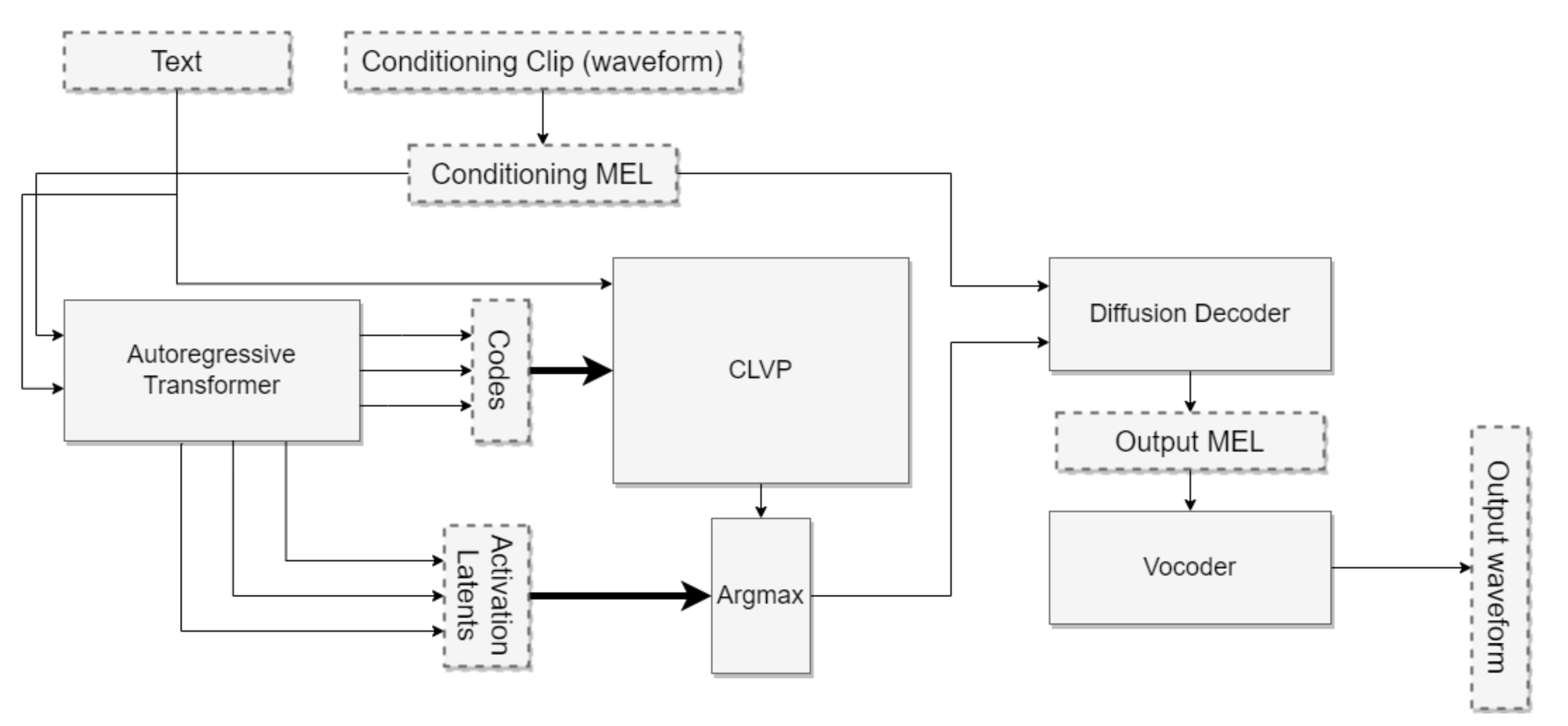
- 将受文本和语音条件编码约束的自回归解码器结合,以预测语音令牌。
- 训练扩散解码器将语音令牌转换为 MEL 谱图,再转为波形。
- 引入一个 CLVP 模型对文本-语音对进行评分以对输出进行重排序。
- 通过在 AR 潜在空间上对扩散模型进行微调来实现“TorToise Trick”,以提高效率和质量。
- 使用基于 LibriTTS + HiFiTTS 的大型数据集,加上 49,000 小时的扩展有声书/播客数据集用于训练。
- 推理阶段对多个 AR 输出进行采样,使用 CLVP 进行重排序,并通过扩散和声码器解码最佳候选。
实验结果
研究问题
- RQ1将自回归与扩散式模型进行扩展是否能在多声道上提升 TTS 的真实感?
- RQ2引入语音条件输入是否能减少搜索空间并提升韵律和语音特征?
- RQ3对比性语音-文本模型是否能有效地对 TTS 输出进行重排序以提高质量?
- RQ4在极大且多样化的数据集上训练对 TTS 性能有何影响?
- RQ5将 AR 解码和 DDPM 的组合在质量和延迟方面与传统 TTS 流水线相比如何?
主要发现
- 据称 TorToise 通过利用通用型变压器架构和大规模数据,在真实感方面超越先前的 TTS 模型。
- 一个大型高质量数据集(LibriTTS、HiFiTTS)以及一个 49k 小时的扩展示本实现强劲表现。
- 结合语音条件和 TorToise Trick 的 AR+DDPM 架构实现高质量的语音合成。
- CLVP 重排序使顶级输出的高效选择成为可能,在推理阶段减少仅靠扩散生成的依赖。
- 推理阶段对 AR 使用 nucleus 采样,对 DDIM 基于的扩散采用特定调度,以权衡质量和速度。
阅读本论文
在 Nubint 阅读器中打开原文,边读边就任意段落提问。
在 Nubint 中阅读本论文本解读由 AI 根据论文原文生成,引用前请核对原文。