
[论文解读] Calibration in Deep Learning: A Survey of the State-of-the-Art
本综述评估了最前沿的深度学习校准方法,将其分为四大类,并讨论校准挑战、度量指标及未来方向,包括大模型和大型语言模型。
Calibrating deep neural models plays an important role in building reliable, robust AI systems in safety-critical applications. Recent work has shown that modern neural networks that possess high predictive capability are poorly calibrated and produce unreliable model predictions. Though deep learning models achieve remarkable performance on various benchmarks, the study of model calibration and reliability is relatively under-explored. Ideal deep models should have not only high predictive performance but also be well calibrated. There have been some recent advances in calibrating deep models. In this survey, we review the state-of-the-art calibration methods and their principles for performing model calibration. First, we start with the definition of model calibration and explain the root causes of model miscalibration. Then we introduce the key metrics that can measure this aspect. It is followed by a summary of calibration methods that we roughly classify into four categories: post-hoc calibration, regularization methods, uncertainty estimation, and composition methods. We also cover recent advancements in calibrating large models, particularly large language models (LLMs). Finally, we discuss some open issues, challenges, and potential directions.
研究动机与目标
- 定义模型校准,并识别深度学习中校准失配的根本原因。
- 综述并对近来的校准方法及其基本原理进行分类。
- 解释校准度量及其偏差,并讨论在大型模型和LLMs上的应用。
- 突出尚待解决的问题、挑战,以及未来研究的潜在方向。
提出的方法
- 将校准方法分为后验校准、正则化、不确定性估计和组合。
- 通过将过参数化、过拟合和过度置信与校准联系起来来解释原理。
- 总结测量指标,如ECE、MCE、CECE和AECE,并讨论可信度图。
- 讨论对大规模预训练模型和LLMs的校准,包括零-shot和少样本设置。
- 提供对尚待解决的问题和未来研究方向的讨论。
实验结果
研究问题
- RQ1现代深度网络中校准失配的原因是什么,如何缓解?
- RQ2在不同设置(后验、正则化、不确定性、组合)中,哪些有效的校准方法及其权衡?
- RQ3校准度量如何反映可靠性,这些度量存在哪些偏差?
- RQ4如何在大模型和LLMs中有效实现校准,包括零-shot/少样本场景?
主要发现
- 由于过参数化和对训练数据的过拟合,校准误差往往随模型规模和容量增大而上升。
- 后验校准方法如温度缩放及其扩展在不重新训练的情况下提供了数据高效的校准。
- 基于正则化和可微校准代理在训练过程中可以提高校准,有时计算成本不同。
- 数据增强和混合可以改善校准和泛化,尤其在分布转移及分布外数据场景。
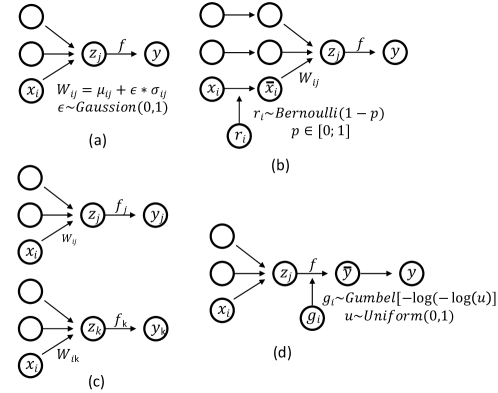
- 不确定性估计方法(贝叶斯网络、MC dropout、集成)在提供校准的同时进行不确定性量化,但需要多次推断和更高的计算量。
- 对大型模型,包括LLMs和视觉-语言模型的校准,带来独特的挑战与机遇,诸如原型校准和情境校准等方法显示出潜力。
阅读本论文
在 Nubint 阅读器中打开原文,边读边就任意段落提问。
在 Nubint 中阅读本论文本解读由 AI 根据论文原文生成,引用前请核对原文。