
[论文解读] Call for Papers -- The BabyLM Challenge: Sample-efficient pretraining on a developmentally plausible corpus
这是对 BabyLM Challenge 的征稿,提供三个轨道,围绕小规模预训练、以发展阶段可理解的数据以及共用评估管线。
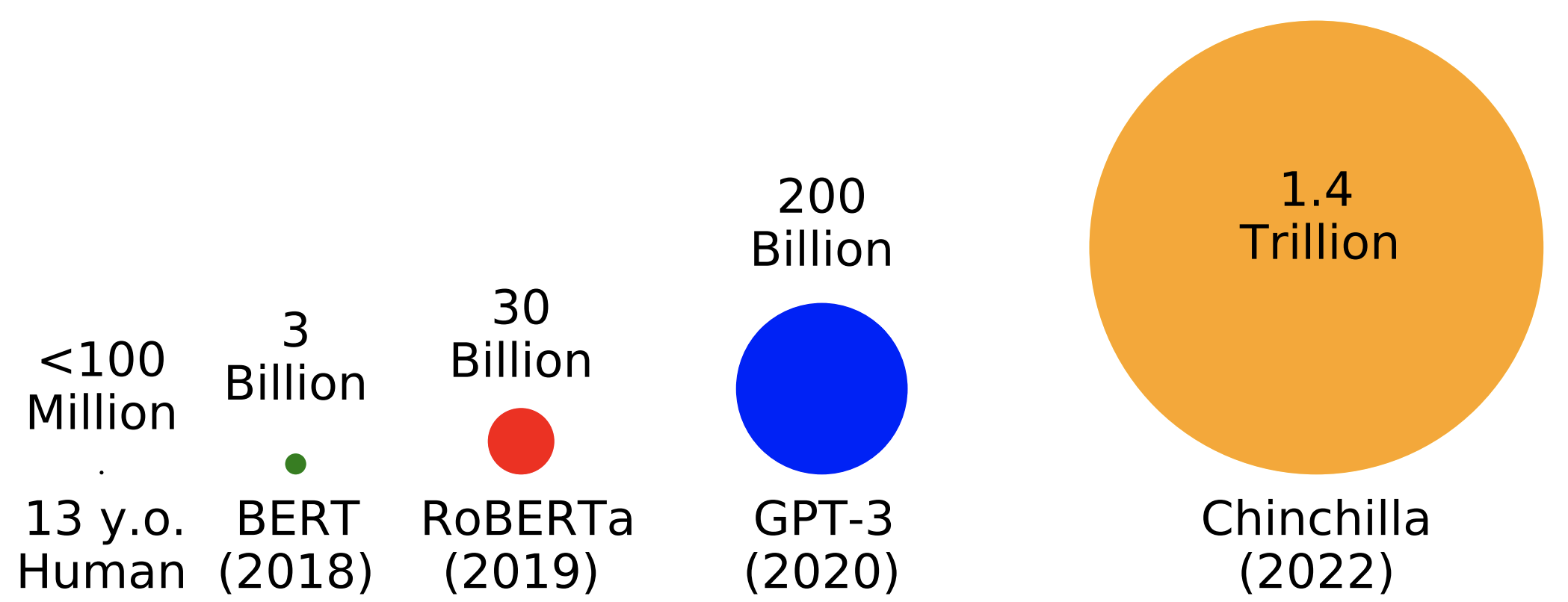
We present the call for papers for the BabyLM Challenge: Sample-efficient pretraining on a developmentally plausible corpus. This shared task is intended for participants with an interest in small scale language modeling, human language acquisition, low-resource NLP, and cognitive modeling. In partnership with CoNLL and CMCL, we provide a platform for approaches to pretraining with a limited-size corpus sourced from data inspired by the input to children. The task has three tracks, two of which restrict the training data to pre-released datasets of 10M and 100M words and are dedicated to explorations of approaches such as architectural variations, self-supervised objectives, or curriculum learning. The final track only restricts the amount of text used, allowing innovation in the choice of the data, its domain, and even its modality (i.e., data from sources other than text is welcome). We will release a shared evaluation pipeline which scores models on a variety of benchmarks and tasks, including targeted syntactic evaluations and natural language understanding.
研究动机与目标
- 促进在接近人类语言输入规模的有限数据量上进行预训练研究。
- 通过使大学预算规模参与来民主化预训练研究。
- 探索提升数据效率和语言模型认知可行性的技术。
- 为 NLP 中的认知科学与语言学洞察提供平台。
- 提供一个透明的评估管线,覆盖多任务基准。
提出的方法
- 三条轨道(Strict、Strict-small、Loose),数据集固定或数据限制灵活。
- 发展阶段可理解的预训练语料,少于1亿词,重点是转写语音。
- 共享评估管线,兼容 HuggingFace transformers,用于评分和下游任务。
- 基线模型来自已建立的语言模型(OPT、RoBERTa、T5)并在固定数据集上训练。
实验结果
研究问题
- RQ1当数据限于接近人类规模(1,000万 vs 1亿词)时,语言模型的预训练表现如何?
- RQ2在发展阶段可理解的数据约束下,哪些架构、目标或课程学习策略能提升数据效率?
- RQ3在受限数据下,模型在有针对性的句法评估和自然语言理解上表现如何?
- RQ4在严格与宽松数据限制下训练时,资源与效率的权衡是什么?
主要发现
- 三轨设置(Strict、Strict-small、Loose),具有明确的数据约束和共享评估管线。
- 一组固定的数据集,总计约1亿词,覆盖多样领域(儿童向语音、对话、儿童读物、维基百科、字幕)。
- 1,000万词的 Strict 轨道和1亿词的 Loose 轨道,便于探索数据高效预训练方法。
- 基线模型(来自 OPT、RoBERTa、T5 家族)将提供,为比较提供一个朴素的起点。
- 评估强调效率、认知可行性和下游 NLP 任务,提供 Colab 基础管线以便广泛访问。
阅读本论文
在 Nubint 阅读器中打开原文,边读边就任意段落提问。
在 Nubint 中阅读本论文本解读由 AI 根据论文原文生成,引用前请核对原文。