
[论文解读] Can Large Language Models Solve Robot Routing?
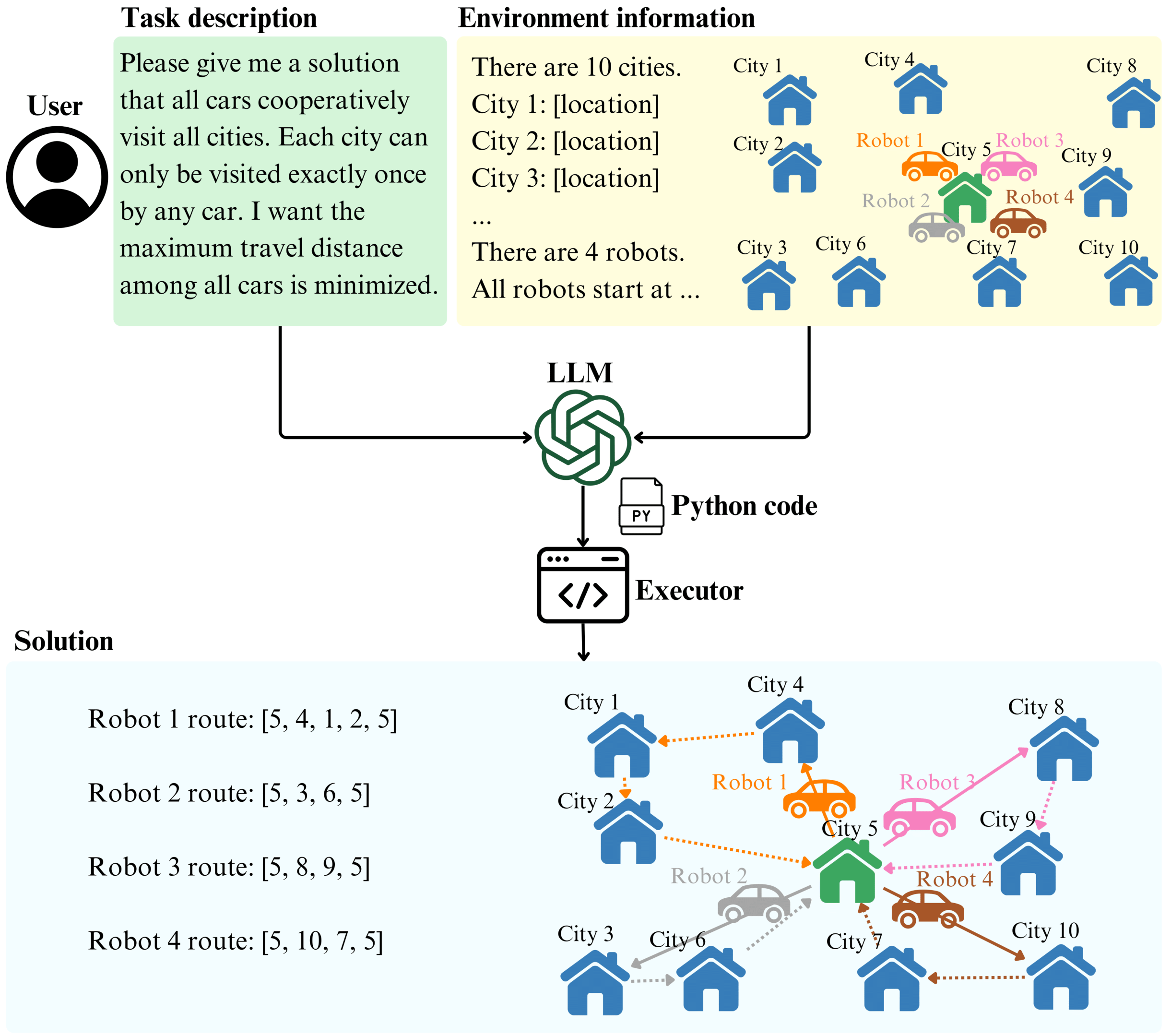
本文研究了大型语言模型(LLMs)是否仅通过自然语言任务描述即可解决车辆路径问题(VRPs)。提出了一种文本到代码的提示框架,使 LLM 能够从自然语言描述生成可执行的 Python 代码,在 GPT-4 上实现了 56% 的可行性、40% 的最优性以及 53% 的效率;自省机制进一步使各项指标性能提升了 15–16%。敏感性分析表明,缺少细节会使性能下降 4–5%。
Routing problems are common in mobile robotics, encompassing tasks such as inspection, surveillance, and coverage. Depending on the objective and constraints, these problems often reduce to variants of the Traveling Salesman Problem (TSP), with solutions traditionally derived by translating high-level objectives into an optimization formulation and using modern solvers to arrive at a solution. Here, we explore the potential of Large Language Models (LLMs) to replace the entire pipeline from tasks described in natural language to the generation of robot routes. We systematically investigate the performance of LLMs in robot routing by constructing a dataset with 80 unique robot routing problems across 8 variants in both single and multi-robot settings. We evaluate LLMs through three frameworks: single attempt, self-debugging, and self-debugging with self-verification and various contexts, including mathematical formulations, pseudo-code, and related research papers. Our findings reveal that both self-debugging and self-verification enhance success rates without significantly lowering the optimality gap. We observe context-sensitive behavior - providing mathematical formulations as context decreases the optimality gap but significantly decreases success rates and providing pseudo-code and related research papers as context does not consistently improve success rates or decrease the optimality gap. We identify key challenges and propose future directions to enhance LLM performance in solving robot routing problems. Our source code is available on the project website: https://sites.google.com/view/words-to-routes/.
研究动机与目标
- 评估 LLM 仅通过自然语言任务描述求解车辆路径问题(VRPs)的能力。
- 识别在无需微调的情况下,LLM 求解 VRP 时最有效的提示范式。
- 通过自省框架提升 LLM 性能,实现通过自我调试和自我验证进行解决方案优化。
- 评估 LLM 在 VRP 场景下对不完整或模糊任务描述的敏感性。
- 开发一种机制,使 LLM 能够从用户处请求澄清,以提高任务描述的完整性。
提出的方法
- 构建了一个包含 21 种 VRP 变体(10 种单车辆,11 种多车辆)的基准数据集,提供详细且无歧义的任务描述。
- 评估了四种 LLM 提示范式,发现从自然语言直接生成代码的文本到代码方法性能最佳。
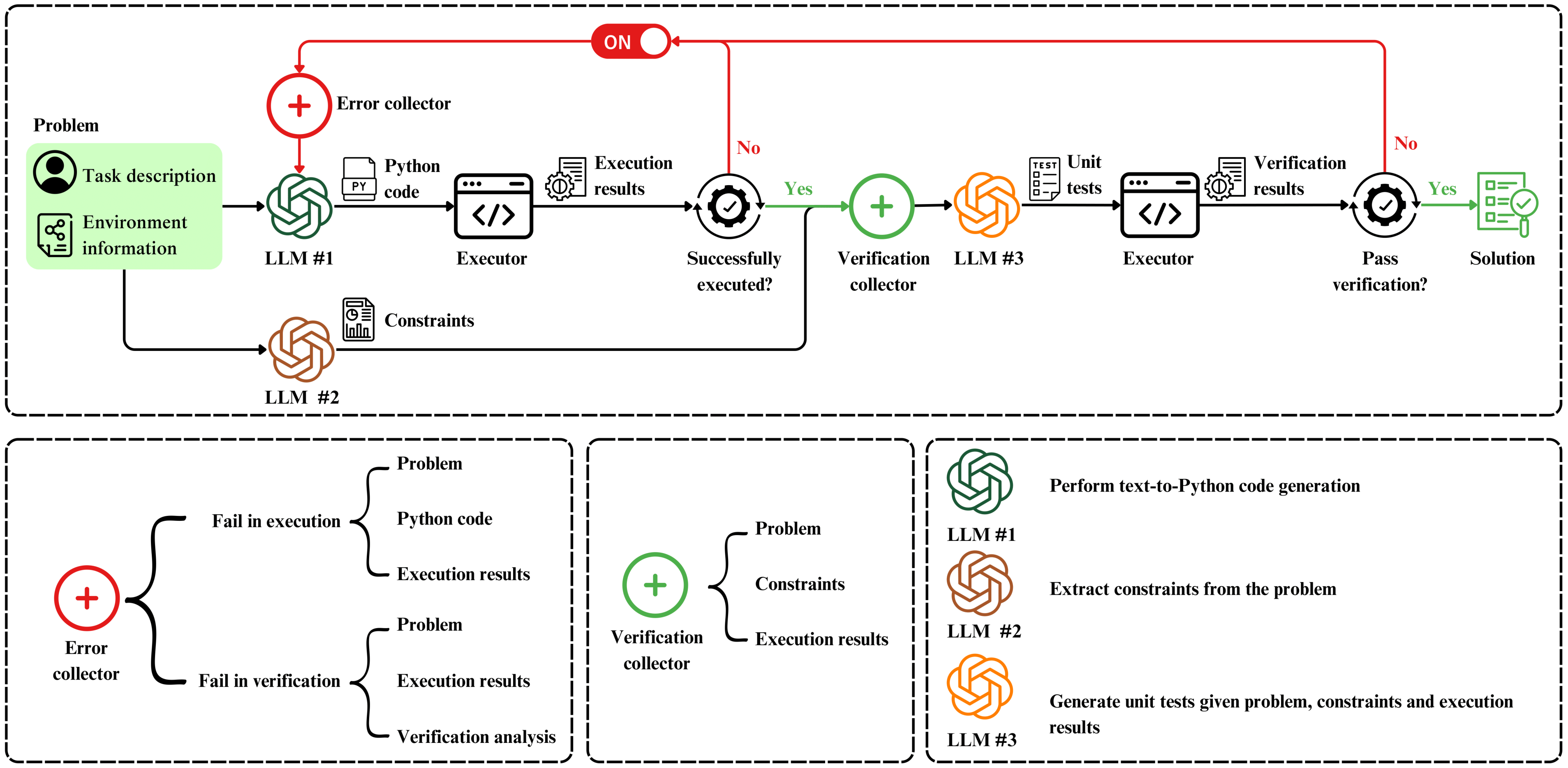
- 提出了一种自省框架,LLM 通过自我调试和自我验证迭代优化解决方案,从而提升可行性、最优性和效率。
- 设计了一种用户交互机制,LLM 能够检测描述不完整的情况,并提出针对性问题以获取缺失信息。
- 在零样本提示设置下,对多种 LLM(包括 GPT-4、Claude 3 Opus 和 Gemini 1.0 Pro)进行了性能评估。
- 从自然语言描述生成可执行的 Python 代码,并使用真实基准验证解决方案。
实验结果
研究问题
- RQ1LLM 是否能够在不进行微调的情况下,仅通过自然语言任务描述求解车辆路径问题?
- RQ2在文本到代码、代码到文本或混合方法等提示范式中,哪一种在求解 VRP 时性能最高?
- RQ3通过自我调试和自我验证实现的自省机制,如何提升 LLM 在 VRP 任务中的性能?
- RQ4即使核心含义得以保留,LLM 对自然语言任务描述中缺失或省略的细节有多敏感?
- RQ5基于 LLM 的机制是否能有效识别不完整任务描述,并通过请求澄清来提升解决方案质量?
主要发现
- 直接使用文本到代码提示方法在 GPT-4 上表现最佳,在 21 种 VRP 基准上分别达到 56% 的可行性、40% 的最优性以及 53% 的效率。
- 所提出的自省框架使 GPT-4 的性能相比零样本提示分别提升了 16% 的可行性、7% 的最优性以及 15% 的效率。
- 在保留核心含义的前提下省略任务描述中的细节,使 GPT-4 的性能下降 4% 的可行性、4% 的最优性以及 5% 的效率。
- Claude 3 Opus 表现优于 Gemini 1.0 Pro,但逊于 GPT-4,总体实现 45% 的可行性、16% 的最优性以及 40% 的效率。
- 交互式澄清机制在部分任务(如 TSPTW 和 CMTSP)中提升了性能,但在其他任务中未能提升,原因在于 LLM 提出了无关问题。
- GPT-4 在复杂任务中难以识别缺失细节,对于 SOP 任务仅 30% 的成功率检测到不完整性,表明其在自我评估方面存在局限。
阅读本论文
在 Nubint 阅读器中打开原文,边读边就任意段落提问。
在 Nubint 中阅读本论文本解读由 AI 根据论文原文生成,引用前请核对原文。