
[论文解读] CaRE: Finding Root Causes of Configuration Issues in Highly-Configurable Robots
CaRE 是一种基于因果关系的方法,通过学习配置选项与性能指标之间的因果结构,诊断高度可配置机器人系统中功能故障的根本原因。它通过平均因果效应估计识别出高影响的配置参数,并展示了因果模型从仿真环境到物理机器人的可迁移性,从而实现在不同平台上的精确故障诊断。
Robotic systems have subsystems with a combinatorially large configuration space and hundreds or thousands of possible software and hardware configuration options interacting non-trivially. The configurable parameters are set to target specific objectives, but they can cause functional faults when incorrectly configured. Finding the root cause of such faults is challenging due to the exponentially large configuration space and the dependencies between the robot's configuration settings and performance. This paper proposes CaRE -- a method for diagnosing the root cause of functional faults through the lens of causality. CaRE abstracts the causal relationships between various configuration options and the robot's performance objectives by learning a causal structure and estimating the causal effects of options on robot performance indicators. We demonstrate CaRE's efficacy by finding the root cause of the observed functional faults and validating the diagnosed root cause by conducting experiments in both physical robots (Husky and Turtlebot 3) and in simulation (Gazebo). Furthermore, we demonstrate that the causal models learned from robots in simulation (e.g., Husky in Gazebo) are transferable to physical robots across different platforms (e.g., Husky and Turtlebot 3).
研究动机与目标
- 解决在组合配置空间庞大的高度可配置机器人系统中诊断功能故障的挑战。
- 克服预测模型在捕捉因果关系、应对环境变化以及确保跨平台可迁移性方面的局限性。
- 通过建模配置选项对任务性能目标的因果效应,实现对根本原因的准确诊断。
- 验证在仿真环境中学习的因果模型是否可迁移至不同的物理机器人平台。
- 提供一个支持干预性与反事实推理的框架,以实现机器人领域中稳健的性能调试。
提出的方法
- CaRE 从观测数据构建因果结构模型,识别可操作变量(配置选项)、不可操作变量(性能指标)以及性能目标。
- 利用结构学习算法学习潜在的因果图,以表示配置参数与系统结果之间的依赖关系。
- 基于 do-演算的干预方法,估计每个配置选项对性能目标的平均因果效应(ACE)。
- 通过分析从配置选项到性能下降的因果路径,识别根本原因,优先关注因果影响最大的选项。
- 因果模型在仿真环境(如 Gazebo 中的 Husky)的数据上进行训练,并在物理机器人(Husky 和 Turtlebot 3)上进行验证。
- 通过在不重新训练的情况下将仿真中学习的模型应用于物理机器人,评估其可迁移性,展示跨平台泛化能力。
实验结果
研究问题
- RQ1因果推断能否有效识别在复杂配置空间中高度可配置机器人系统的功能故障的根本原因?
- RQ2在仿真环境中学习的因果模型在具有不同软硬件堆栈的不同物理机器人平台上如何实现可迁移性?
- RQ3在环境变化或意外条件下,因果模型在诊断错误配置方面相较于预测模型的优越程度如何?
- RQ4哪些配置选项对任务成功率和性能下降指标具有最高的因果效应?
- RQ5基于学习到的因果模型进行干预性与反事实分析,能否为系统调优与调试提供可操作的洞察?
主要发现
- CaRE 在仿真和物理机器人系统中均成功诊断出功能故障,包括 Husky 和 Turtlebot 3。
- 在仿真中学习的因果模型(如 Gazebo 中的 Husky)可无需重新训练即迁移至不同平台的物理机器人(如 Husky 和 Turtlebot 3)。
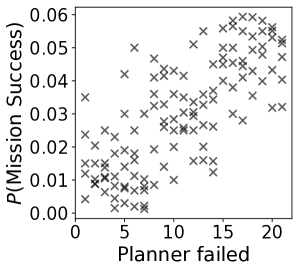
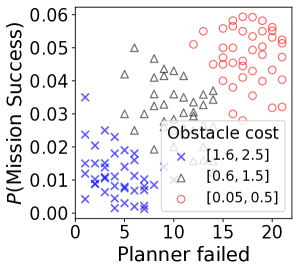
- 因果模型优于纯预测模型,能够正确识别规划器故障与任务成功率之间的负相关关系,避免产生虚假关联。
- 平均因果效应最高的配置选项被识别为性能下降的主要贡献因素,从而实现针对性调优。
- 该框架支持准确的反事实推理,例如预测在假设配置变更下的结果。
- 该方法通过实现数据高效、可迁移的故障诊断,减少了对人工经验与昂贵物理测试的依赖。
阅读本论文
在 Nubint 阅读器中打开原文,边读边就任意段落提问。
在 Nubint 中阅读本论文本解读由 AI 根据论文原文生成,引用前请核对原文。